
What Is the Difference Between Organic and 100% Organic Skincare?
 Dec, 1 2025
Ever stared at a skincare bottle thinking, ‘Is this really organic-or just pretending to be?’ You’re not alone. The labels on organic skincare can be confusing. One product says ‘organic,’ another says ‘100% organic,’ and both promise the same thing: purity, safety, and nature in a jar. But here’s the truth-there’s a real, legal difference between them. And it matters more than you think.
What Does ‘Organic’ Actually Mean on a Skincare Label?
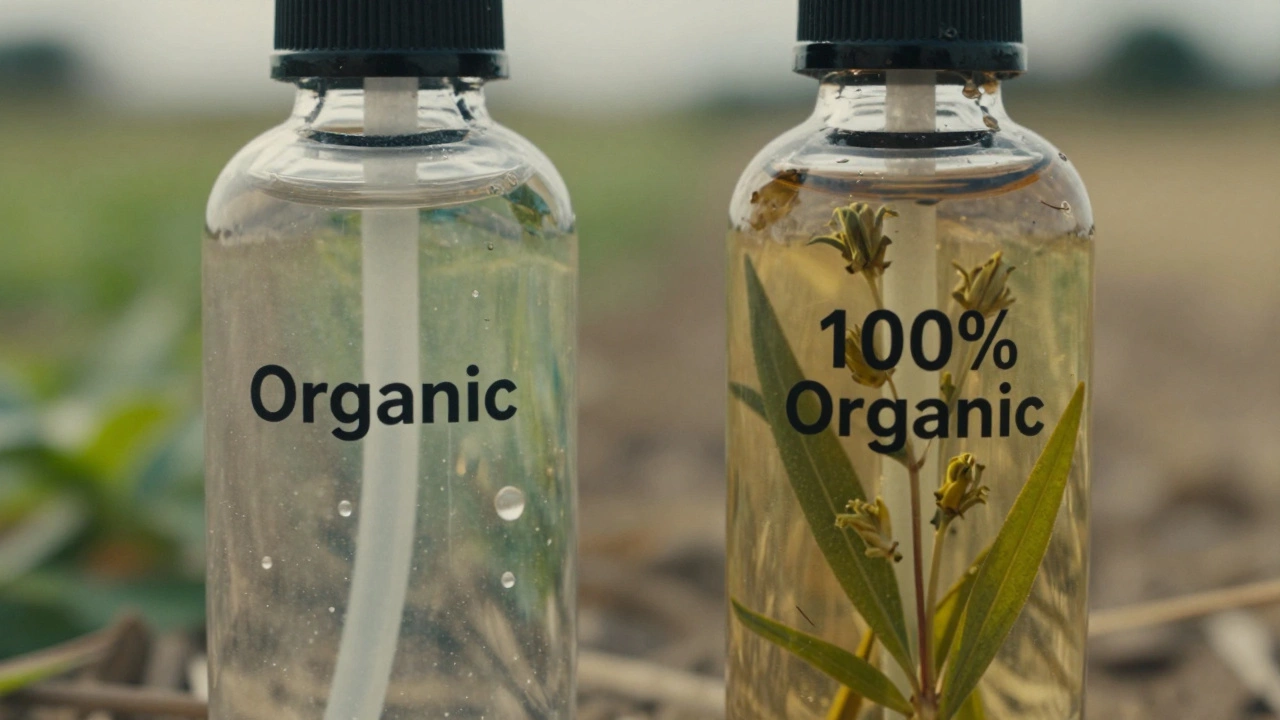
When you see ‘organic’ on a skincare product, it usually means at least 70% of the ingredients are certified organic. That leaves up to 30% that can be non-organic-synthetic preservatives, fragrances, or even petroleum-based derivatives. These ingredients aren’t banned, just not required to be organic. Think of it like a smoothie labeled ‘made with organic fruit’-it has some real fruit, but also sugar, water, and maybe artificial flavoring.
The USDA organic standards apply to food, but skincare doesn’t fall under the same federal rules. Instead, third-party certifiers like COSMOS, Ecocert, or the USDA’s National Organic Program (NOP) step in. They set rules for what counts as organic in cosmetics. But here’s the catch: if a brand says ‘organic’ without showing a certifier’s logo, they’re not legally bound to prove it. That’s where greenwashing happens.
What Does ‘100% Organic’ Really Mean?
Now, ‘100% organic’ isn’t just marketing fluff. It’s a strict designation. To earn this label, every single ingredient in the product-except water and salt-must be certified organic. No synthetic fragrances. No parabens. No phthalates. No silicones. Nothing that’s been chemically altered or derived from petroleum.
Products labeled ‘100% organic’ must also be processed without irradiation or genetically modified organisms (GMOs). The manufacturing facility has to be certified to prevent cross-contamination with non-organic products. This isn’t just a label-it’s a full supply chain audit. Brands like Dr. Hauschka, True Botanicals, and Tata Harper meet this standard. Their labels don’t just say ‘organic’-they show the certifier’s seal, often with a list of approved ingredients you can verify.
Why the Difference Matters for Your Skin
It’s not just about ethics. It’s about what’s touching your skin. Your skin absorbs up to 60% of what you apply. If a product says ‘organic’ but contains 30% synthetic chemicals, those can still trigger irritation, breakouts, or long-term sensitivity-especially if you have eczema, rosacea, or hormonal acne.
Studies from the Environmental Working Group (EWG) show that products labeled ‘organic’ but not ‘100% organic’ still contain allergens like fragrance blends and parabens at rates similar to conventional products. But products labeled ‘100% organic’ have a 92% lower chance of containing skin-irritating chemicals, based on EWG’s Skin Deep database from 2024.
If you’re trying to heal your skin barrier or avoid endocrine disruptors, ‘100% organic’ gives you real protection. ‘Organic’ just gives you a better marketing story.
How to Spot the Real Deal
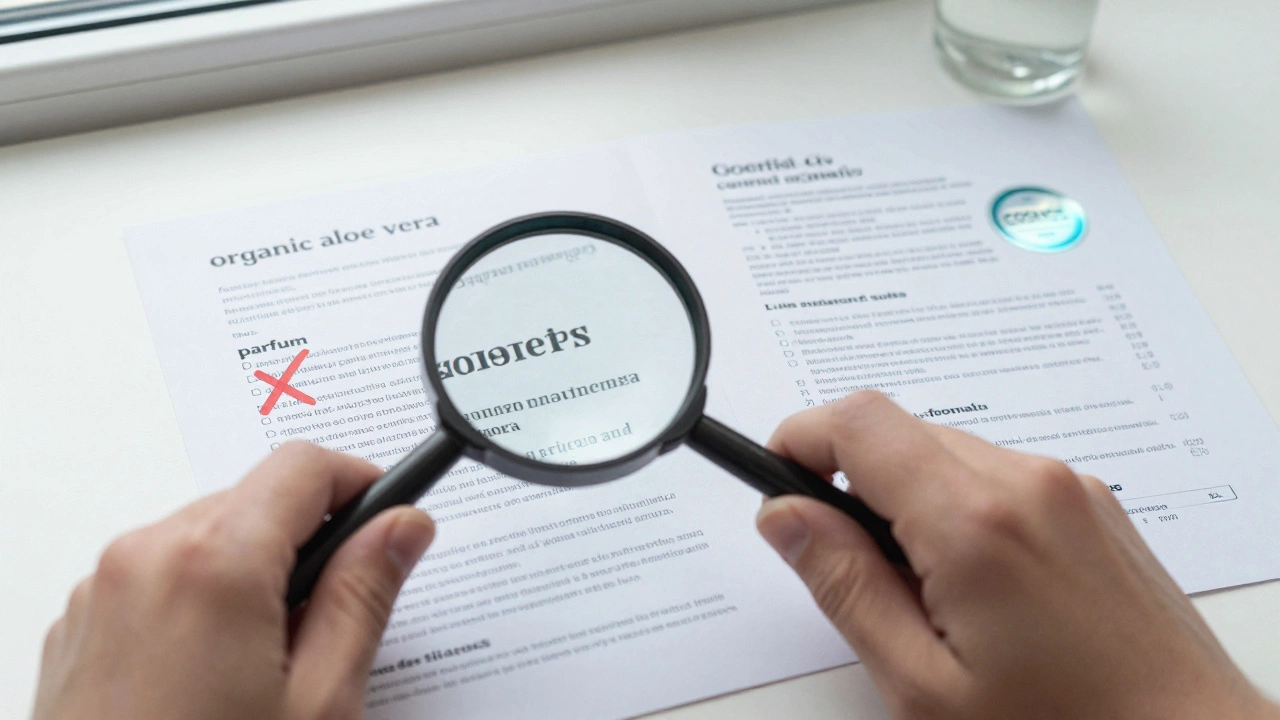
Don’t trust the word ‘organic’ on the front of the bottle. Look for these three things:
- The certifier’s logo-USDA Organic, COSMOS, Ecocert, or NSF Organic. These are the only seals that mean something.
- The ingredient list-If it says ‘organic aloe vera’ and then ‘parfum’ or ‘phenoxyethanol,’ it’s not 100% organic.
- The percentage-If the label doesn’t say ‘100% organic,’ assume it’s only 70%.
Some brands use phrases like ‘made with organic ingredients’ or ‘95% natural’ to confuse you. That’s not the same as certified organic. And ‘natural’? That’s a legal loophole. There’s no standard for ‘natural’ in skincare. It could mean anything-even a plant extract processed with industrial solvents.
What About ‘Natural’ vs. ‘Organic’?
‘Natural’ and ‘organic’ are not interchangeable. ‘Natural’ means something came from nature. ‘Organic’ means it was grown without synthetic pesticides, herbicides, or GMOs, and processed without harsh chemicals.
Take lavender oil. A ‘natural’ lavender oil could be extracted using hexane, a toxic solvent. An ‘organic’ lavender oil is steam-distilled from plants grown without chemicals. The end result might smell the same-but one is clean, and the other could be leaving residue on your skin.
Organic isn’t just about ingredients. It’s about farming practices, water use, soil health, and worker safety. When you choose 100% organic, you’re supporting regenerative agriculture-not just avoiding toxins.
What You’re Paying For
Yes, 100% organic skincare costs more. A 2-ounce serum might run $45-$85. A similar ‘organic’ product from a mainstream brand might be $25. Why the gap?
Organic farming yields less. It takes more land, more labor, and more time. Organic certification costs thousands of dollars per product line. Small brands can’t cut corners. They don’t have the budget to fake it.
When you pay more for 100% organic, you’re paying for transparency. You’re paying for a supply chain you can trace. You’re paying for a product that doesn’t just avoid toxins-but actively supports the planet.
When ‘Organic’ Might Be Enough
There are cases where ‘organic’ (70%) is still a good step. If you’re just starting your journey away from conventional skincare, switching to a product with 70% organic ingredients is better than sticking with full synthetic formulas. It reduces your chemical load. It’s progress.
But if you’re sensitive, pregnant, or managing chronic skin issues, ‘organic’ isn’t enough. You need the full 100%. There’s no middle ground when your skin is reacting to hidden ingredients.
Final Takeaway: Read the Fine Print
There’s no such thing as ‘almost organic.’ Either your product meets the standard-or it doesn’t. ‘Organic’ means 70% or more. ‘100% organic’ means every single active ingredient is certified. One gives you peace of mind. The other gives you proof.
Next time you pick up a bottle, flip it over. Find the certifier. Check the ingredient list. Ask yourself: is this truly clean-or just cleverly labeled?
Can a product be called organic without being certified?
Yes, but it’s misleading. In the U.S., the USDA only enforces ‘organic’ labeling for food. Skincare brands can use the word ‘organic’ without certification-but if they don’t display a recognized certifier’s logo (like USDA, COSMOS, or Ecocert), they’re not legally required to prove it. Always look for the seal.
Is 100% organic skincare better for acne-prone skin?
Often, yes. Acne-prone skin is sensitive to pore-clogging ingredients and synthetic fragrances. Products labeled 100% organic exclude these irritants and use non-comedogenic plant oils like jojoba or squalane instead. Many dermatologists recommend 100% organic options for patients with inflammatory acne or rosacea because they reduce the risk of flare-ups.
Do 100% organic products expire faster?
Yes, they often do. Without synthetic preservatives like parabens or phenoxyethanol, 100% organic products rely on natural alternatives like radish root ferment or vitamin E. These are less potent and degrade faster. Most 100% organic products last 6-12 months after opening. Always check the PAO symbol (the open jar icon) on the packaging.
Are there any 100% organic skincare brands you can trust?
Yes. Brands like Dr. Hauschka, True Botanicals, Tata Harper, and Pai Skincare are certified by COSMOS or USDA. They publish full ingredient transparency and third-party test results. Avoid brands that don’t list their certifier or hide behind vague terms like ‘plant-based’ or ‘eco-friendly’ without proof.
Can I trust ‘organic’ labels from other countries?
It depends. EU-certified COSMOS and Ecocert are reliable. Australia’s ACO and Canada’s Ecocert are also trusted. But labels from countries without strong organic regulations (like some Asian or South American brands) may not meet U.S. standards. Always look for the certifier’s logo-not just the word ‘organic.’