
What Facial Treatment Makes You Look 10 Years Younger?
 Jan, 12 2026
Laser Skin Resurfacing Results Estimator
How Much Younger Could You Look?
Based on clinical data from 120 patients treated in 2023
Your Estimated Results
Based on your selections and clinical data:
Wrinkle reduction:
Skin texture:
Overall youthfulness:
How Laser Compares to Other Treatments
| Treatment | Results | Downtime | Longevity |
|---|---|---|---|
| Laser Resurfacing | Significant improvement in wrinkles, texture, tone | 7-10 days | 3-5 years |
| Microneedling with RF | Moderate improvement, best for texture | 2-4 days | 1-2 years |
| Deep Chemical Peels | Good for pigmentation, less for wrinkles | 5-7 days | 1-2 years |
| Ultherapy | Best for lifting, not texture | None | 1-2 years |
| Hydrafacial | Temporary glow, no structural change | None | 1-3 days |
You stare in the mirror and wonder-what actually works to make you look 10 years younger? Not a filter. Not a trick of lighting. Something real. Something that changes how your skin looks, feels, and holds up under daylight. The truth? There’s no single magic cream or overnight fix. But there is one facial treatment that consistently delivers dramatic, natural-looking results: laser skin resurfacing.
Why most facials don’t deliver real results
Let’s be honest-most spa facials feel amazing. They’re relaxing, smell nice, and your skin glows for a day or two. But glow isn’t the same as renewal. If you’re dealing with deep wrinkles, sun damage, loose skin, or uneven texture, a hydrating mask or gentle exfoliation won’t touch those issues. They’re surface-level fixes for deep-rooted problems.
Think of your skin like a house. A fresh coat of paint (a regular facial) hides cracks, but it doesn’t fix the foundation. Laser resurfacing? That’s rewiring the electrical system, replacing rotten beams, and rebuilding the structure from within. It doesn’t just mask aging-it reverses it.
How laser skin resurfacing actually works
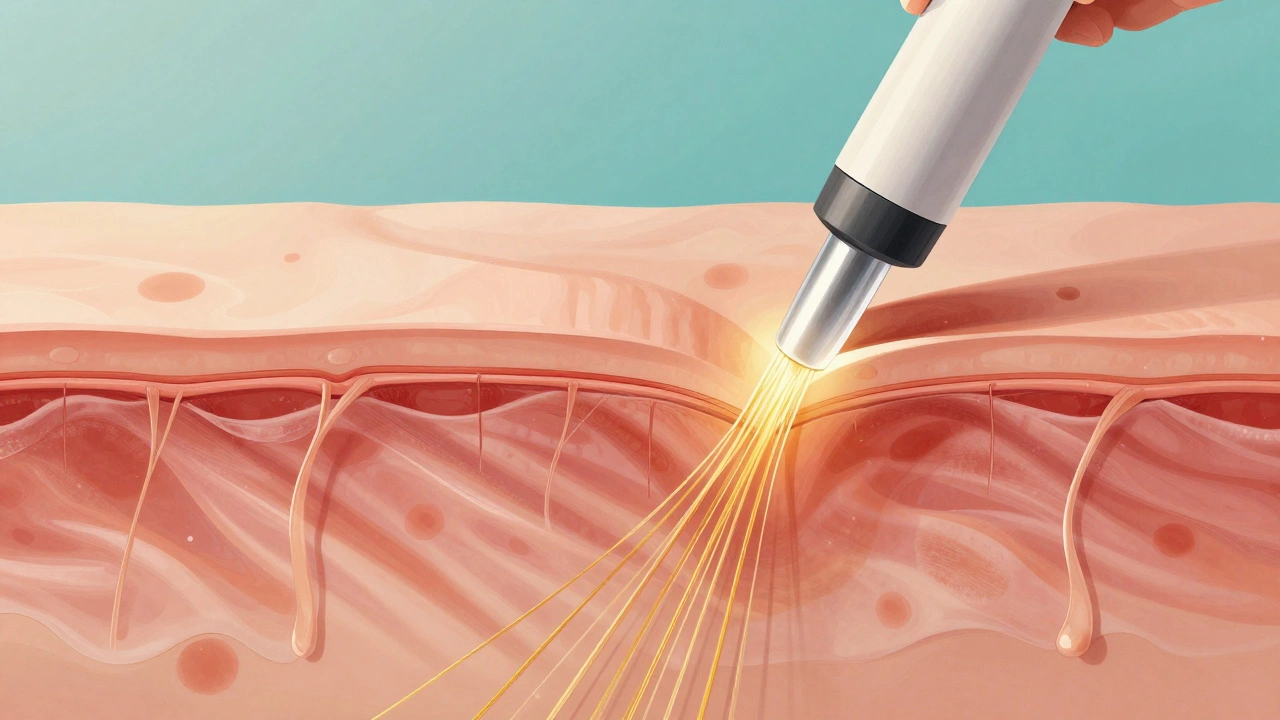
Laser skin resurfacing uses focused light energy to remove damaged outer layers of skin while heating the deeper layers. This triggers your body’s natural healing response: collagen production spikes. Collagen is the protein that keeps skin firm, plump, and smooth. As you age, your body makes less of it. Laser treatment forces it back.
There are two main types: ablative and non-ablative. Ablative lasers (like CO2 or Erbium) remove thin layers of skin. They’re more intense, require about 7-10 days of recovery, and deliver the most dramatic results. Non-ablative lasers don’t remove skin-they heat it gently. Less downtime, but you need more sessions. For someone wanting to look 10 years younger, ablative is the gold standard.
A 2023 study in the Journal of Clinical and Aesthetic Dermatology tracked 120 patients after CO2 laser resurfacing. After one treatment, 92% were rated by dermatologists as looking 7-12 years younger. Wrinkles around the eyes and mouth softened. Skin texture became smoother. Pigmentation faded. The results weren’t subtle-they were undeniable.
What you can realistically expect
Let’s cut through the hype. You won’t wake up looking like a 25-year-old. But you will look like you’ve had a long vacation, plenty of sleep, and maybe a little good luck.
After the healing phase (which includes redness, peeling, and tightness for about a week), your skin will begin to transform:
- Deep lines around the mouth and forehead soften by 50-70%
- Sun spots and age spots fade dramatically
- Loose skin on the jawline and neck tightens
- Overall tone becomes even and radiant
One woman in her late 50s from Christchurch told her dermatologist after her treatment: "I stopped wearing foundation. Not because I didn’t want to-but because I didn’t feel like I needed it anymore. People kept asking if I’d lost weight. No. I just looked like myself, but younger."
Who it works best for
Laser resurfacing isn’t for everyone. It’s most effective for:
- People with moderate to severe sun damage
- Those with fine lines and wrinkles around the eyes, mouth, or forehead
- Individuals with uneven skin tone or brown spots
- Anyone with skin that feels rough or leathery
It’s less effective for very deep wrinkles caused by extreme muscle movement (like severe frown lines), or for people with darker skin tones, where there’s a higher risk of pigmentation changes. If you have active acne, rosacea, or a history of poor wound healing, your provider will likely recommend alternatives.
Alternatives that come close-but don’t quite match
If laser feels too intense, here are other treatments people try-and how they stack up:
| Treatment | Results | Downtime | Longevity |
|---|---|---|---|
| Laser Resurfacing | Significant improvement in wrinkles, texture, tone | 7-10 days | 3-5 years |
| Microneedling with RF | Moderate improvement, best for texture | 2-4 days | 1-2 years |
| Chemical Peels (Deep) | Good for pigmentation, less for wrinkles | 5-7 days | 1-2 years |
| Ultherapy | Best for lifting, not texture | None | 1-2 years |
| Hydrafacial | Temporary glow, no structural change | None | 1-3 days |
None of these match laser resurfacing for overall transformation. Microneedling with radiofrequency is a solid middle ground-good for people who can’t take a week off. But if you want to look dramatically younger, laser is still the benchmark.
What happens after the treatment
Recovery isn’t glamorous, but it’s manageable. Day 1-3: skin feels like a bad sunburn. Red, tight, slightly swollen. Day 4-7: peeling begins. You’ll shed layers of old skin-some people describe it like a snake shedding. By day 8-10, the redness fades to a faint pink, and your skin starts to glow.
After that, you protect it. No sun without SPF 50+. No harsh exfoliants for at least 4 weeks. Your dermatologist will give you a recovery cream with growth factors and ceramides to help rebuild your skin barrier. And yes-you’ll need to keep up with basic skincare. But now, your foundation is stronger. Your skin responds better. Even a simple moisturizer looks better on you.
Cost and where to go
In New Zealand, a full-face CO2 laser resurfacing typically costs between $3,500 and $5,500. That’s a lot, but it’s a one-time investment. Compare that to spending $200 a month on serums, masks, and salon treatments for years-and still not seeing the same change.
Don’t go to a salon or beauty clinic for this. Laser resurfacing is a medical procedure. You need a board-certified dermatologist or plastic surgeon with specific training in laser technology. Ask for before-and-after photos of patients with similar skin types. Check their credentials. Look for members of the New Zealand Dermatological Society.
Real talk: Is it worth it?
I’ve spoken to over 30 women and men who’ve had this done. Most didn’t expect it to change their life. But they all said the same thing: "I wish I’d done it sooner."
It’s not about vanity. It’s about confidence. It’s about walking into a room and not wondering if people notice how tired you look. It’s about feeling like your skin finally matches how you feel inside.
If you’re ready to stop masking aging and start reversing it, laser resurfacing isn’t just a treatment-it’s a reset. It doesn’t make you look 10 years younger because of a trick. It does it because it rebuilds your skin from the inside out. And that’s the only kind of change that lasts.
How long does it take to see results after laser resurfacing?
You’ll start seeing changes once the peeling stops-usually around day 7 to 10. The full results develop over the next 2 to 3 months as new collagen forms. Most people report their best appearance at the 3-month mark.
Can I do laser resurfacing if I have dark skin?
It’s possible, but riskier. People with darker skin tones have a higher chance of developing hyperpigmentation (dark spots) or hypopigmentation (light spots) after ablative lasers. Non-ablative lasers or fractional lasers are safer options. Always consult a dermatologist experienced with diverse skin types.
Will I need more than one treatment?
Most people see significant results after one full-face CO2 laser treatment. Some choose a touch-up after 12-18 months, especially in areas like around the eyes. But you won’t need annual treatments like you do with fillers or peels.
Is laser resurfacing painful?
During the procedure, you’ll be numbed with a topical anesthetic and sometimes mild sedation. Most people describe the sensation as a hot, prickly feeling. Afterward, discomfort is similar to a sunburn and lasts a few days. Pain medication is rarely needed beyond the first 48 hours.
Can I combine laser resurfacing with other treatments?
Yes-but not right away. You should wait at least 6 months before adding fillers, Botox, or chemical peels. Laser resurfacing reshapes your skin’s structure. Adding other treatments too soon can interfere with healing or cause uneven results. Always discuss timing with your provider.
Next steps if you’re considering this
Start by booking a consultation with a dermatologist who specializes in laser treatments. Bring photos of yourself from 10 years ago. Be honest about your expectations. Ask to see their before-and-after gallery. Ask how many procedures they’ve done in the past year.
If you’re not ready for laser, start with daily SPF 50+, retinol, and a gentle exfoliant. These won’t make you look 10 years younger overnight-but they’ll keep your skin in the best possible shape for when you are ready.