
USDA Organic: What It Really Means for Skincare and Cosmetics
When you see USDA Organic, a certification by the United States Department of Agriculture that verifies agricultural products meet strict organic farming and processing standards. Also known as USDA Certified Organic, it means the product contains at least 95% organically produced ingredients—no synthetic pesticides, GMOs, or sewage sludge. But here’s the catch: USDA Organic doesn’t automatically apply to skincare or cosmetics. The USDA only certifies food, feed, and fiber. So when a moisturizer says "USDA Organic," it’s either using organic ingredients that qualify for the label, or it’s borrowing the trust of the name without full compliance.
That’s where organic certification, a third-party verification process that audits ingredients, sourcing, and manufacturing to ensure they meet organic standards. Also known as certified organic, it’s what brands like Eminence Organic Skincare go through to prove their claims. Not every brand does this. Some use the word "organic" loosely because there’s no federal law in the U.S. that regulates the term for cosmetics—unlike food. The FDA doesn’t define "organic" for skincare, so anyone can slap it on a bottle. But if they’re USDA certified, that’s a different story. It means every step, from the farm where the aloe was grown to the factory where it was bottled, was inspected and approved.
Then there’s natural vs organic, a common confusion where "natural" means ingredients come from plants or minerals, but can still be heavily processed or contain synthetic additives. Also known as clean beauty, this label has no legal definition and is often used for marketing. A product can be 100% natural and still contain alcohol, parabens, or synthetic fragrances. But USDA Organic? No. That’s the real filter. It’s why products like organic moisturizers with USDA certification cost more—they’re not just labeled differently, they’re made differently. Fewer fillers. More active botanicals. No hidden synthetics.
If you care about what touches your skin, USDA Organic isn’t just a trend—it’s a transparency standard. It tells you exactly where your ingredients came from and how they were grown. It’s why dermatologists and skincare professionals often recommend certified organic products for sensitive or reactive skin: less irritation, fewer unknowns. But don’t assume every "organic" brand is USDA certified. Check the label. Look for the green and white USDA seal. If it’s not there, the claim isn’t verified.
What you’ll find in the posts below are real breakdowns of what organic means in skincare, why some brands charge more for it, how to spot the difference between natural and certified organic, and which products actually deliver on their promises. No hype. Just facts you can use to choose what’s right for your skin—and your values.
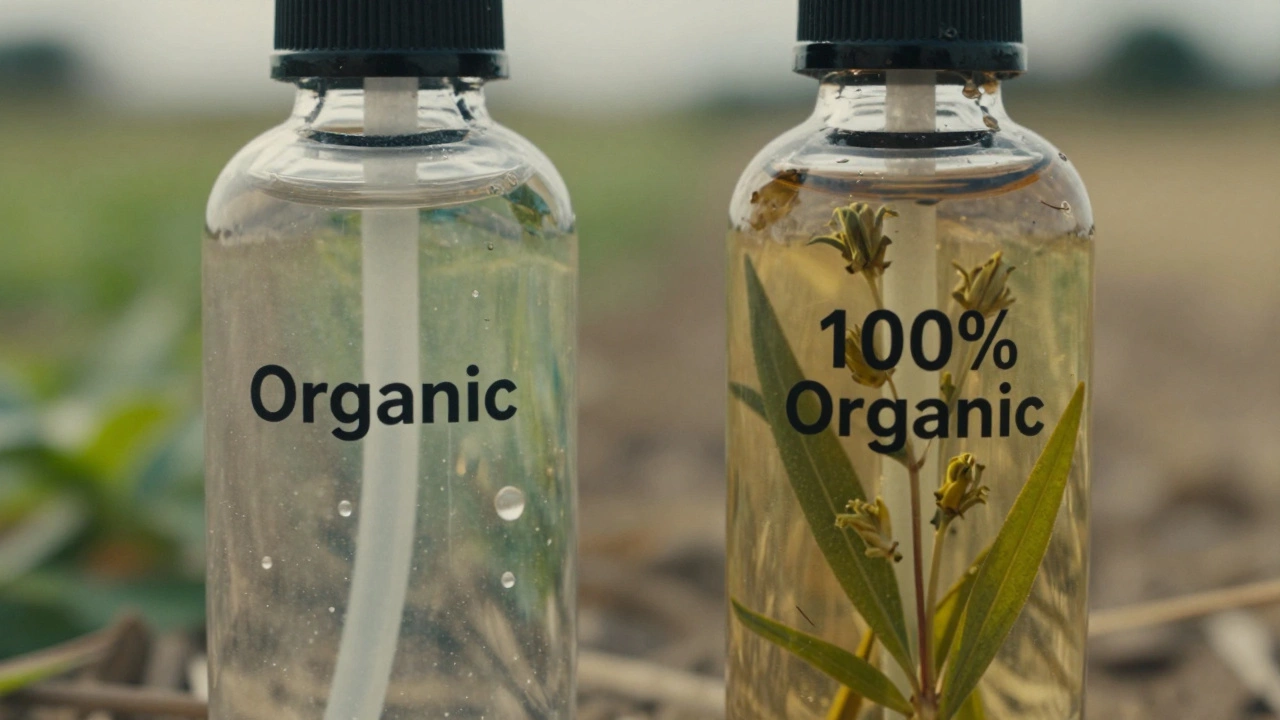
What Is the Difference Between Organic and 100% Organic Skincare?
Understand the real difference between organic and 100% organic skincare. Learn what certifications mean, why it matters for your skin, and how to spot genuine products vs. greenwashing.