
Does Ipsy Own Birchbox? The Truth About Beauty Box Rivalry
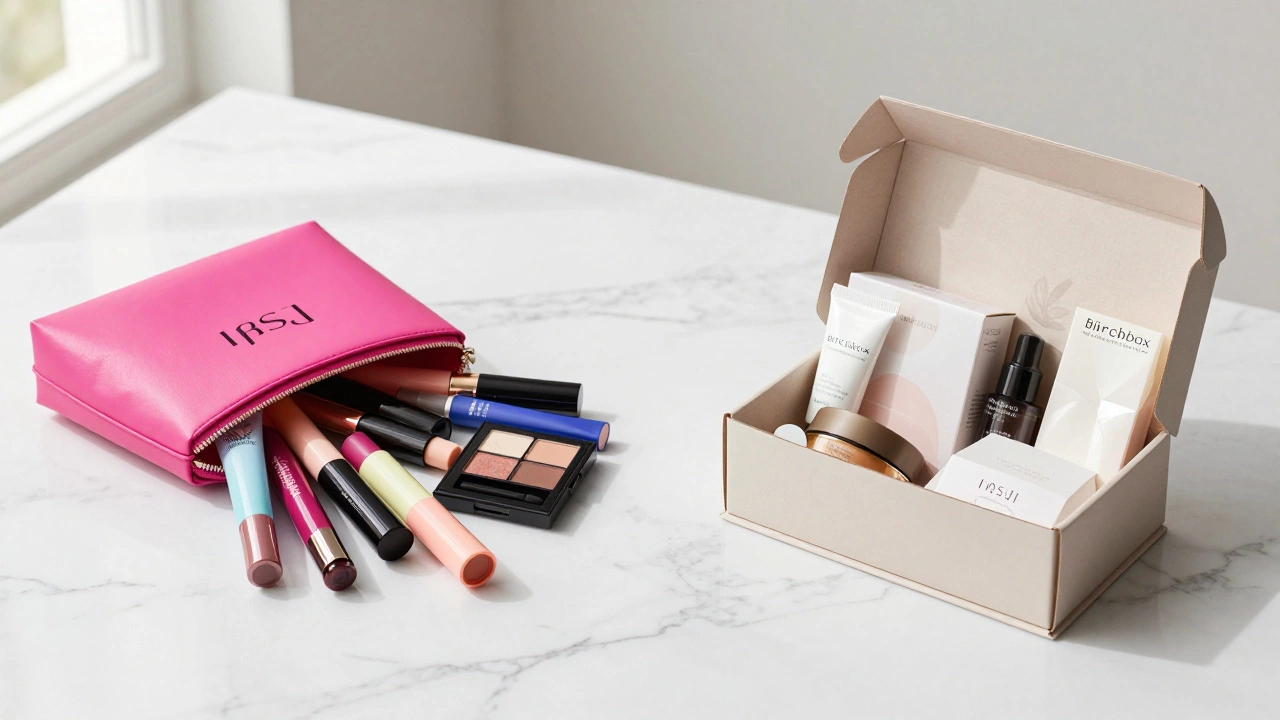 Jul, 12 2026
Beauty Box Matchmaker: Ipsy vs. Birchbox
1. What is your primary goal?
2. How much control do you want?
3. What fits your budget?
Answer 3 questions to find your match.
You’ve probably noticed that Ipsy and Birchbox often show up in the same conversations. Both are giants in the world of beauty subscription boxes, sending curated samples to your door every month. It’s easy to assume they’re part of the same corporate family, especially since they share similar business models and target audiences. But does one actually own the other?
The short answer is no. Ipsy does not own Birchbox. They are completely separate companies with different owners, histories, and strategic directions. In fact, they have been fierce competitors for over a decade, fighting for the same shelf space in consumers’ bathrooms and budgets.
The Origins: Who Started What?
To understand why people confuse their ownership, you have to look at where they started. Birchbox was founded in 2010 by Katia Beauchamp and Hayley Barna. It is widely credited as the company that popularized the concept of the beauty subscription box. Before Birchbox, getting free samples meant standing in line at Sephora or waiting for mailers from department stores. Birchbox changed the game by delivering a personalized mix of full-size and sample products directly to subscribers.
Ipsy, originally known as Glamsquad, launched its subscription service later, in 2011. Founded by Michelle Phan, Craig Bobak, and others, Ipsy entered the market with a slightly different angle. While Birchbox focused on discovery and premium curation, Ipsy leaned heavily into community, social media influence, and affordability. Ipsy grew rapidly, leveraging Phan’s massive YouTube following to build a brand that felt more like a friend recommending products than a retailer selling them.
Because both companies exploded in popularity around the same time during the early 2010s boom of direct-to-consumer startups, many assumed a merger happened. It didn’t. Instead, they raced against each other, expanding their product lines and customer bases independently.
Ownership Structures: Private vs. Public
One of the biggest differences between the two lies in their financial structures, which makes an acquisition even less likely today.
Birchbox remains a privately held company. After years of operating independently, it was acquired by LVMH (Moët Hennessy Louis Vuitton) in 2017. LVMH, the luxury goods conglomerate that owns brands like Dior, Louis Vuitton, and Sephora, bought Birchbox to gain insights into younger consumers and test new products. Being under the LVMH umbrella gives Birchbox access to high-end luxury brands that smaller competitors can’t touch.
Ipsy took a different path. It went public on the New York Stock Exchange in 2021 under the ticker symbol IPSY. This means Ipsy is owned by shareholders, including institutional investors and individual stockholders. As a public company, Ipsy is required to disclose its financial performance regularly, making its revenue, subscriber growth, and profit margins transparent to the public.
This divergence in ownership-private luxury backing versus public market accountability-creates distinct pressures for each company. Birchbox answers to LVMH’s long-term brand strategy, while Ipsy answers to quarterly earnings reports and investor expectations.
Business Models: How They Differ
While both companies send boxes of beauty products, their approaches to curation and pricing are quite different. Understanding these differences helps explain why they haven’t merged and why they appeal to slightly different types of customers.
| Feature | Ipsy | Birchbox |
|---|---|---|
| Monthly Cost | $13-$25 (depending on tier) | $15 |
| Product Size | Mostly samples/travel sizes | Mix of samples and full-size items |
| Curation Style | Quiz-based, mass-market appeal | Editorial-led, premium focus |
| Brand Partnerships | Drugstore and mid-range brands | Luxury and niche indie brands |
| Customization | High (choose shades/products) | Low (editorial selection) |
Ipsy offers multiple tiers, such as Ipsy Glam Bag and Ipsy Siren. The standard Glam Bag costs $13 a month and includes five products, mostly in sample sizes. Subscribers take a detailed quiz to customize their preferences, allowing them to choose specific shades of foundation, lipstick, and eye shadow. This level of customization is a key selling point for Ipsy, as it reduces the frustration of receiving products that don’t match your skin tone or preference.
Birchbox keeps things simpler. For $15 a month, you receive three products, which may include full-size items. The curation is driven by editors rather than algorithms. You indicate your general preferences, but the final selection is made by Birchbox’s team. This approach allows Birchbox to feature higher-end brands that might not offer samples, leveraging its relationship with LVMH to include products from luxury houses.
Why the Confusion Persists
If they are so different, why do people still ask if Ipsy owns Birchbox? There are a few reasons for this persistent myth.
First, the market consolidation trend in e-commerce has led to many mergers. Amazon acquired Whole Foods; Facebook bought Instagram and WhatsApp. It’s natural to assume that two dominant players in a niche market would eventually combine forces. However, the beauty subscription space has remained fragmented, with several strong competitors coexisting.
Second, both companies have expanded beyond their original offerings. Ipsy now operates a retail platform called Ipsy Connect, which partners with retailers like Ulta Beauty to offer samples with purchases. Birchbox has also evolved, focusing more on editorial content and brand partnerships. These overlapping expansions can blur the lines between what each company does.
Third, marketing collaborations sometimes create the illusion of partnership. Brands often work with multiple subscription services simultaneously. A single cosmetic brand might appear in both an Ipsy bag and a Birchbox in the same month, leading consumers to wonder if there is a deeper connection between the two platforms.
Competitive Landscape: Other Players in the Game
Ipsy and Birchbox are not the only options available. The beauty subscription market has grown significantly, with new entrants targeting specific niches. Understanding the broader landscape helps clarify why Ipsy and Birchbox remain independent-they are competing not just with each other, but with a wide array of specialized services.
- Birchbox Man: A spinoff from Birchbox focused on men’s grooming products.
- Boxycharm: Offers full-size makeup products for a higher price point, appealing to those who want value over variety.
- Allure Beauty Box: Curated by Allure magazine, featuring high-end skincare and makeup.
- FabFitFun: A seasonal box that includes lifestyle and wellness products alongside beauty items.
Each of these competitors targets a different segment of the market. Boxycharm appeals to makeup enthusiasts who prefer full-size products, while FabFitFun attracts a broader audience interested in self-care and lifestyle. This fragmentation means that neither Ipsy nor Birchbox has achieved a monopoly, reducing the incentive for a merger.
Future Outlook: Will They Ever Merge?
Looking ahead, the likelihood of Ipsy acquiring Birchbox-or vice versa-remains low. Ipsy’s status as a public company makes acquisitions complex and subject to shareholder approval. Any major purchase would need to demonstrate clear financial benefits, which is challenging given the saturated nature of the subscription market.
Birchbox, backed by LVMH, is unlikely to be sold unless it aligns with the conglomerate’s broader strategic goals. LVMH has shown interest in digital innovation and direct-to-consumer channels, but it also values the exclusivity of its luxury brands. Selling Birchbox could conflict with these priorities.
Instead of merging, both companies are likely to continue innovating within their respective models. Ipsy may expand its retail partnerships and enhance its customization algorithms. Birchbox might deepen its ties with luxury brands and explore new categories like fragrance or hair care. The competition will drive both companies to improve their offerings, benefiting consumers through better products and services.
Choosing Between Ipsy and Birchbox
So, which one should you pick? It depends on what you value most in a subscription box.
If you love trying new products without committing to full-size purchases, and you appreciate having control over the shades and types of products you receive, Ipsy is probably the better choice. Its lower price point and high level of customization make it ideal for beginners or those on a budget.
If you prefer a more curated experience with access to luxury brands, and you don’t mind paying a bit more for potentially full-size items, Birchbox might be worth considering. Its editorial approach ensures that you receive products that are currently trending or highly rated by experts.
Ultimately, neither company owns the other. They are distinct entities with unique strengths and weaknesses. By understanding their differences, you can make an informed decision about which subscription best fits your beauty routine and budget.
Does Ipsy own Birchbox?
No, Ipsy does not own Birchbox. They are separate companies with different ownership structures. Ipsy is a publicly traded company, while Birchbox is owned by the luxury conglomerate LVMH.
Who owns Birchbox?
Birchbox is owned by LVMH Moët Hennessy Louis Vuitton, a French multinational corporation specializing in luxury goods. LVMH acquired Birchbox in 2017.
Is Ipsy a private or public company?
Ipsy is a public company. It trades on the New York Stock Exchange under the ticker symbol IPSY. This means it is owned by shareholders who buy and sell its stock.
Which is better: Ipsy or Birchbox?
The better option depends on your preferences. Ipsy is generally cheaper and offers more customization, making it great for trying samples. Birchbox features higher-end brands and sometimes includes full-size products, appealing to those seeking luxury discovery.
Can you get full-size products in Ipsy?
Yes, occasionally. While most products in the standard Ipsy Glam Bag are samples or travel-sized, the higher-tier Ipsy Siren bag often includes full-size items. Additionally, Ipsy sometimes includes full-size products in the regular bag as a bonus.
Did Birchbox go out of business?
No, Birchbox is still operational. Despite changes in the subscription market, it continues to serve subscribers with its curated beauty boxes, supported by its parent company LVMH.
What is the difference between Ipsy and Birchbox pricing?
Ipsy’s standard Glam Bag costs $13 per month, while Birchbox costs $15 per month. Ipsy offers a higher-priced tier called Siren for $25, which includes more and larger products.
Are Ipsy and Birchbox cruelty-free?
Both companies aim to include cruelty-free products, but they do not guarantee that every item is cruelty-free. They partner with various brands, some of which may test on animals where required by law. Subscribers should check individual product details if this is a priority.