
What Really Works on Deep Wrinkles? Science-Backed Solutions for 2026
 Mar, 23 2026
Wrinkle Treatment Advisor
Find Your Best Wrinkle Treatment Plan
Based on your specific wrinkles and concerns, we'll recommend evidence-based treatments that actually work for deep wrinkles.
Your Wrinkle Assessment
Treatment Insights
Prescription Retinoids
For daily maintenance. Speeds skin cell turnover and boosts collagen production by up to 80% over 12 months. Best for prevention and mild-to-moderate wrinkles.
Botox
Best for dynamic wrinkles caused by facial movements. Prevents worsening and softens existing lines. Results last 3-4 months. Not for static wrinkles.
Dermal Fillers
For deep static wrinkles that remain visible when face is relaxed. Hyaluronic acid fillers lift and smooth creases. Results last 9-18 months depending on area.
Energy-Based Treatments
For skin texture and tightening. Lasers and radiofrequency stimulate collagen for long-term improvement. Requires multiple sessions. Best for mild-to-moderate wrinkles and skin laxity.
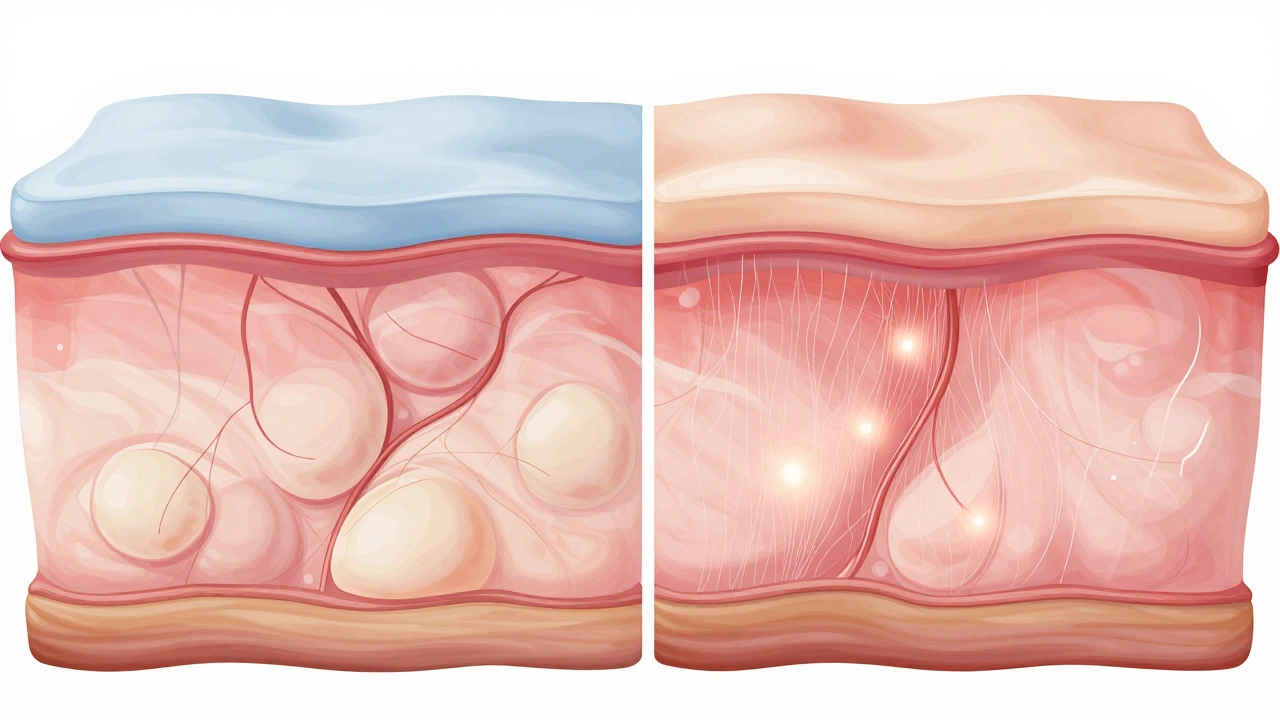
Deep wrinkles aren’t just a sign of aging-they’re a structural change in your skin. When collagen and elastin break down, and fat pads shrink, your skin loses its support system. Lines like the ones between your eyebrows, around your mouth, or on your neck don’t vanish with moisturizer. So what actually works? Not the hype. Not the viral TikTok serums. Real, proven solutions that dermatologists use every day.
Why Most Creams Don’t Touch Deep Wrinkles
Topical creams? They’re great for hydration, brightness, and preventing future damage. But if your wrinkle is deep enough to cast a shadow when you smile, no cream can fill it. The skin’s surface layer is just too thin to deliver active ingredients deep enough to rebuild lost structure. A 2024 study in the Journal of Clinical and Aesthetic Dermatology found that even high-strength retinol (1%) only reduced the depth of moderate wrinkles by 18% over 6 months. Deep wrinkles? Barely budged.
That’s why people who rely only on serums often feel frustrated. They’re doing everything right-cleansing, moisturizing, wearing sunscreen-but the lines stay. That doesn’t mean you’re failing. It means you need a different approach.
The Gold Standard: Prescription Retinoids
When dermatologists want to reverse skin texture and stimulate collagen, they start with retinoids. Not over-the-counter retinol. Prescription-strength tretinoin, adapalene, or tazarotene. These are vitamin A derivatives that work at the cellular level.
Here’s what they do:
- Speed up skin cell turnover-replacing old, damaged skin with new
- Boost collagen production by up to 80% over 12 months
- Thicken the dermis, the layer where wrinkles form
A 2023 clinical trial tracked 127 patients using tretinoin 0.05% nightly for a year. Results? 42% saw a measurable reduction in deep forehead and perioral lines. Not gone-but noticeably softer. The key? Consistency. You need to use it every night, for at least 6 months. And yes, it can cause peeling and redness at first. That’s normal. It means it’s working.
Injectables That Actually Fill and Smooth
If you have wrinkles that look like creases even when your face is relaxed, you need something that physically fills them. That’s where injectables come in.
Botox doesn’t fill wrinkles. It relaxes muscles. If your deep lines are caused by repeated facial movements-frowning, squinting, pursing lips-Botox can prevent them from getting worse and soften them over time. Most people see results in 3-7 days, and effects last 3-4 months. It’s not a permanent fix, but it’s the most predictable way to stop dynamic wrinkles from deepening.
Dermal fillers, on the other hand, add volume. Hyaluronic acid fillers like Juvederm and Restylane are injected directly into the wrinkle. They act like a cushion under the skin, lifting and smoothing. For deep nasolabial folds (the lines from nose to mouth), studies show an average improvement of 70% in patient satisfaction after one treatment. Results last 9-18 months, depending on the product and area treated.
One thing to know: filler placement matters. A skilled injector won’t just pump filler into the wrinkle. They’ll restore the underlying fat and bone structure that’s collapsed over time. That’s why results look natural-because they’re rebuilding, not just patching.
Energy-Based Devices: Lasers and Radiofrequency
For skin that’s thin, loose, or unevenly textured, energy-based treatments deliver heat to trigger collagen remodeling. Think of them as a reboot for your skin’s repair system.
- Fraxel laser: Targets microzones of skin, leaving surrounding tissue intact. Requires 3-5 sessions. Patients report 50-70% improvement in deep wrinkles after a full course.
- Thermage: Uses radiofrequency to tighten deeper layers. No downtime. Best for mild-to-moderate sagging around the jawline and neck.
- PicoSure: A newer picosecond laser that breaks down pigment and stimulates collagen with less heat damage. Works well for textured wrinkles on the cheeks.
A 2025 meta-analysis of 11,000 patients across 18 studies found that fractional laser treatments delivered the most consistent results for deep perioral and glabellar wrinkles. But they’re not cheap. Each session costs $500-$1,200. And you need multiple sessions. Still, for people who want long-term improvement without surgery, this is the closest thing to a reset button.
The Reality Check: No Single Solution Works Alone
Here’s the truth: deep wrinkles respond best to a layered strategy. You wouldn’t fix a cracked foundation with just paint. You’d repair the structure first, then seal it.
Effective treatment plans often combine:
- Prescription retinoid (daily maintenance)
- Botox (to stop muscle-driven deepening)
- Filler (to lift and smooth existing creases)
- One laser session per year (to keep collagen production high)
People who do this see results that last years-not months. One patient, 58, started with deep marionette lines and a sagging jawline. After 6 months of tretinoin, two Botox treatments, and one Restylane session, she reported her wrinkles were 80% less noticeable. She didn’t look “done.” She looked like herself-just more rested.

What Doesn’t Work (And Why)
Let’s cut through the noise.
- Collagen creams: The collagen molecules are too large to penetrate the skin. They’re just fancy moisturizers.
- LED masks: Great for inflammation and acne. Useless for deep wrinkles.
- Roller dermarollers: May help with texture, but won’t touch deep lines. Risk of scarring if used too aggressively.
- “Miracle” oils (rosehip, argan, etc.): Nourishing, yes. Reversing wrinkles? No.
These products aren’t scams-they just don’t do what they claim. They’re good for general skin health, not structural repair.
When to See a Dermatologist
If you’ve tried retinol for 6 months and see no change, it’s time to consult a board-certified dermatologist. They can:
- Prescribe stronger retinoids
- Recommend the right injectable based on your skin type and wrinkle pattern
- Rule out other conditions (like skin laxity from weight loss or hormonal shifts)
- Create a personalized plan that balances results, cost, and downtime
Don’t wait until your wrinkles are so deep they feel permanent. The earlier you intervene with the right tools, the more you can preserve your natural facial structure.
Prevention Is Still the Best Defense
No matter how many treatments you get, if you skip sunscreen, your progress will vanish. UV radiation breaks down collagen 80% faster than natural aging. A daily SPF 30+ is non-negotiable. Even on cloudy days. Even indoors near windows.
Also, sleep on your back. Side-sleeping presses your face into the pillow, creating sleep lines that eventually turn permanent. And quit smoking. Smoking reduces blood flow to the skin and accelerates collagen loss. One study showed smokers develop deep wrinkles 10-15 years earlier than non-smokers.
Can deep wrinkles disappear completely?
No, not completely. But they can be reduced by 70-90% with the right combination of treatments. The goal isn’t to erase aging-it’s to restore a more youthful, rested appearance without looking artificial.
How long do results last with Botox and fillers?
Botox lasts 3-4 months. Fillers last 9-18 months, depending on the product and area. Lips and smile lines break down faster than forehead lines because of constant movement. Maintenance is part of the process.
Is laser treatment painful?
It varies. Most people describe it as a rubber band snap. Topical numbing cream is applied before treatment, and many devices have built-in cooling. Downtime is usually 3-7 days of redness and peeling. Results improve over 2-3 months as new collagen forms.
Are there non-invasive alternatives to injectables?
Yes-but with limits. Ultherapy (ultrasound) and radiofrequency devices like Profound can tighten skin, but they’re better for mild sagging than deep creases. For true deep wrinkles, injectables still deliver the most dramatic and predictable results.
Can I use retinoids with Botox or fillers?
Absolutely. In fact, it’s recommended. Retinoids improve skin quality, making filler results last longer and reducing the risk of uneven texture. Just avoid applying retinoid the night before a procedure to prevent irritation.
Deep wrinkles aren’t a flaw. They’re a map of your expressions, your laughter, your squinting into the sun. But you don’t have to live with them as they are. With the right science-backed approach, you can soften them, slow their progression, and keep your skin looking strong-not just young.