
What Not to Do After a Facial: Essential Aftercare Tips
 Feb, 1 2026
Post-Facial Aftercare Tracker
Follow These Steps for Optimal Healing
Track your post-facial care to avoid redness, breakouts, and irritation. Check items you're following correctly.
Recommended Actions
Essential Habits
You just left the spa, your skin glows, and you feel amazing. But if you don’t know what to avoid after a facial, that glow could turn into redness, breakouts, or even irritation. A facial isn’t just about what the esthetician does-it’s about what you do (or don’t do) afterward. Skipping the right aftercare can undo hours of professional work in just a few hours.
Don’t Touch Your Face
Your skin is fresh, sensitive, and possibly slightly irritated after extractions or exfoliation. Even if your face feels tight or itchy, resist the urge to touch, pick, or rub it. Your hands carry bacteria, oils, and dirt-even if you washed them. Picking at a newly cleared pore can reopen it, cause infection, or leave a scar. A study from the Journal of Clinical and Aesthetic Dermatology found that 78% of post-facial breakouts were linked to touching the face within 24 hours. Let your skin heal. If you must adjust your hair or glasses, use clean hands and be gentle.Avoid Sun Exposure
After a facial, your skin is more vulnerable to UV damage. Chemical peels, microdermabrasion, or even deep cleansing can strip away the top layer of skin, leaving it exposed. Sunburn doesn’t just hurt-it delays healing and can cause dark spots that last for months. Even on a cloudy day in Wellington, UV rays are strong enough to damage freshly treated skin. Wait at least 48 hours before spending time outside without heavy protection. When you do go out, use a mineral-based sunscreen with zinc oxide or titanium dioxide. Avoid chemical sunscreens for the first couple of days-they can sting and irritate sensitive skin.Hold Off on Makeup
It’s tempting to cover up any redness or slight swelling with foundation, but makeup clogs pores and traps bacteria. Your skin is breathing and healing right now. Applying makeup too soon can lead to clogged pores, breakouts, or even allergic reactions if your skin is reacting to the products used during the facial. Wait at least 12 to 24 hours before putting anything on your face. If you absolutely need coverage, use a clean sponge to dab on a light, non-comedogenic tinted moisturizer. Wash your brushes and sponges after-contaminated tools are a common cause of post-facial breakouts.No Sweat or Heat
Sweating is great for your health, but not right after a facial. Hot yoga, saunas, steam rooms, and intense workouts raise your body temperature and open your pores wide. That sounds good, but after a facial, your pores are clean and exposed. Sweat, dirt, and bacteria can easily slip in and cause irritation or pimples. Avoid anything that makes you sweat for at least 24 hours. That includes hot showers, too. Stick to lukewarm water when washing your face. High heat can also strip moisture from skin that’s already in recovery mode.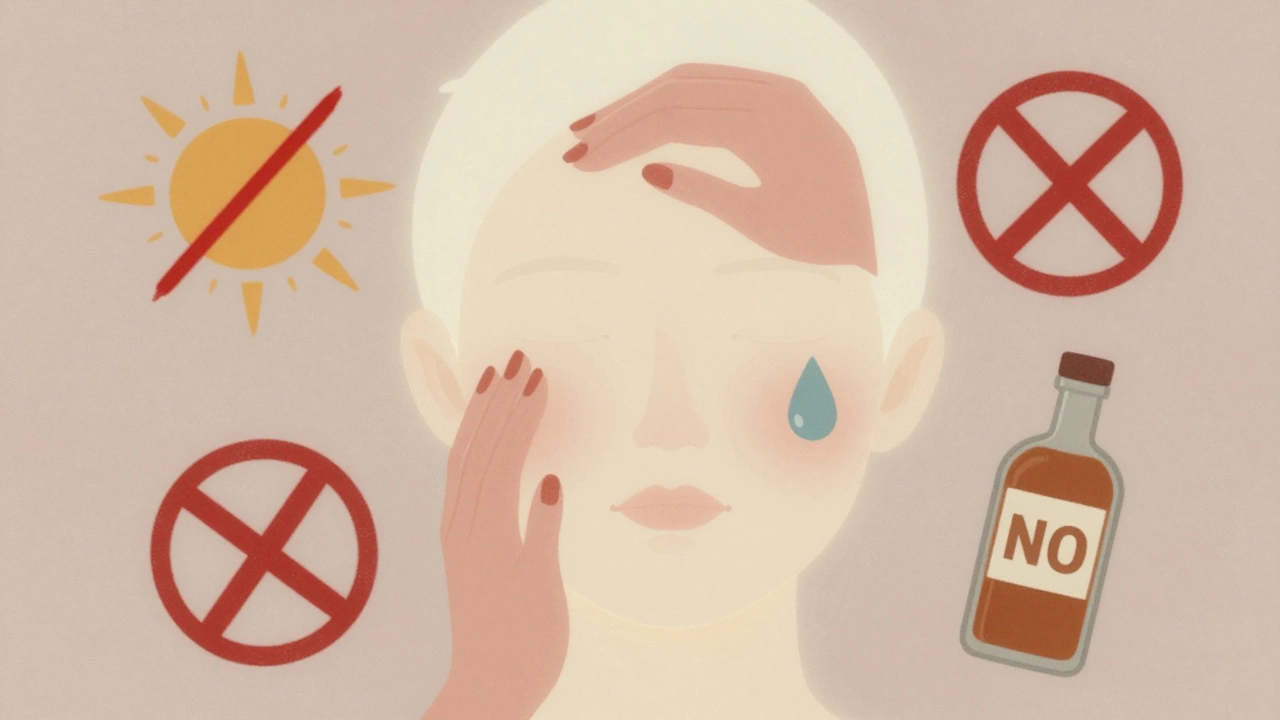
Don’t Use Active Skincare Products
Retinoids, AHAs, BHAs, vitamin C serums, and other potent actives are powerful-but they’re not your friend right after a facial. These ingredients can be too harsh on skin that’s been exfoliated, extracted, or peeled. Using them too soon can cause burning, peeling, or prolonged redness. Even if you normally use them daily, pause for 3 to 5 days. Your skin needs time to rebuild its barrier. Stick to gentle cleansers, hydrating toners, and fragrance-free moisturizers during this window. Think of it like resting a sprained ankle-you wouldn’t run a marathon on it the next day.Avoid Alcohol-Based Products
Toners, astringents, and wipes that contain alcohol might feel refreshing, but they’re a disaster after a facial. Alcohol dries out the skin and disrupts the natural moisture barrier you just worked hard to restore. Even if your skin feels oily, don’t reach for a harsh toner. Your skin may overproduce oil in response to dryness, leading to more breakouts. Look for products labeled “alcohol-free” and avoid anything with ethanol, denatured alcohol, or isopropyl alcohol in the first five ingredients. Instead, use hydrating ingredients like hyaluronic acid, ceramides, or aloe vera.Don’t Skip Moisturizer
Some people think their skin is too oily or too “clean” to need moisturizer after a facial. That’s a myth. Cleansing and exfoliating remove natural oils, and without moisture, your skin will fight back by producing even more oil. Dehydrated skin also looks dull and feels tight. Use a lightweight, non-comedogenic moisturizer within 5 minutes of washing your face. This locks in hydration and helps your skin recover faster. If your facial included a peel, look for moisturizers with soothing ingredients like niacinamide or panthenol.
Wait Before Trying New Products
It’s easy to get excited and want to try that new serum you’ve been eyeing. But your skin is in recovery mode. Introducing new products too soon can trigger reactions you wouldn’t normally have. Even natural or organic products can cause irritation when your skin is compromised. Wait at least 5 to 7 days before adding anything new to your routine. If you do introduce something, test it on your jawline first. If there’s no reaction in 24 hours, it’s probably safe to use on your whole face.Don’t Expect Instant Results
Some people think a facial should fix everything overnight. But real skin improvement takes time. Redness, slight swelling, or even a few tiny breakouts can happen as your skin adjusts. That doesn’t mean the facial failed-it means your skin is responding. Give it at least 3 to 5 days to settle. If you’re still seeing major irritation, redness, or pain after a week, contact your esthetician. They can help determine if it’s a normal reaction or something that needs attention.What You Should Do Instead
Instead of focusing on what not to do, think about what you should do. Drink plenty of water. Sleep on clean pillowcases. Use a gentle, fragrance-free cleanser. Apply a hydrating mask once or twice in the next 72 hours if your skin feels dry. Keep your routine simple. Let your skin rest. The glow you felt right after the facial? It’ll come back-stronger and longer-lasting-if you give it the space to heal.Can I wash my face after a facial?
Yes, but wait at least 4 to 6 hours. Use cool or lukewarm water and a very gentle, fragrance-free cleanser. Avoid scrubbing or using washcloths. Pat your face dry with a clean towel-don’t rub.
How long should I wait before getting another facial?
Wait at least 4 to 6 weeks between facials, unless your esthetician recommends otherwise. Your skin needs time to renew itself. Too many facials in a short time can weaken your skin barrier and cause sensitivity.
Is it normal to breakout after a facial?
Sometimes, yes. If your skin was congested, extractions can bring trapped debris to the surface, causing what’s called a “purge.” This usually clears up in 3 to 5 days. If breakouts last longer than a week or are painful and swollen, it could be an infection or reaction-contact your provider.
Can I use a face mask after a facial?
Only if it’s hydrating and gentle. Avoid clay, charcoal, or peel-off masks for at least 48 hours. A soothing sheet mask with aloe or hyaluronic acid is fine after 24 hours. Always check with your esthetician if you’re unsure.
Should I avoid caffeine after a facial?
Not necessarily, but it’s smart to limit it. Caffeine can dehydrate you and cause blood vessels to constrict, which may reduce circulation to your skin. Less circulation means slower healing. Drink water instead, and save your coffee for later in the day.