
What Is the Most Powerful Anti-Aging Substance? The Science of Longevity
 Apr, 12 2026
Longevity Stack Builder
Select your primary concerns to build your personalized "Longevity Stack". Different substances target different levels of aging: from surface appearance to cellular DNA repair.
Your Recommended Protocol
Key Takeaways
- For visible skin changes, Tretinoin (Retinoids) remains the gold standard.
- For internal cellular health, NAD+ precursors like NMN and NR are the current frontrunners.
- Collagen and Hyaluronic Acid focus on hydration and structure rather than reversing age.
- The most effective approach combines topical prescriptions with metabolic support.
The Heavy Hitter for Surface Aging: Retinoids
If we are talking about the most powerful thing you can actually put on your skin to erase lines, the answer is almost always Tretinoin is a potent retinoid and vitamin A derivative that increases cell turnover and stimulates collagen production. It is the only topical substance with decades of clinical proof showing it can actually reverse some signs of photo-aging. Unlike over-the-counter creams that just moisturize, Tretinoin tells your skin to stop acting old and start behaving like it did ten years ago.
But it comes with a price. It's not a "gentle" experience. Most users deal with the "retinoid uglies"-a period of peeling, redness, and sensitivity-for the first few weeks. This happens because the substance forces your skin to shed dead layers much faster than usual. To make it work without ruining your skin barrier, you have to use the "sandwich method": a thin layer of moisturizer, then the retinoid, then more moisturizer. This slows down the absorption just enough to prevent a chemical burn while still delivering the active ingredients to the dermis.
The Cellular Game Changer: NAD+ and Its Boosters
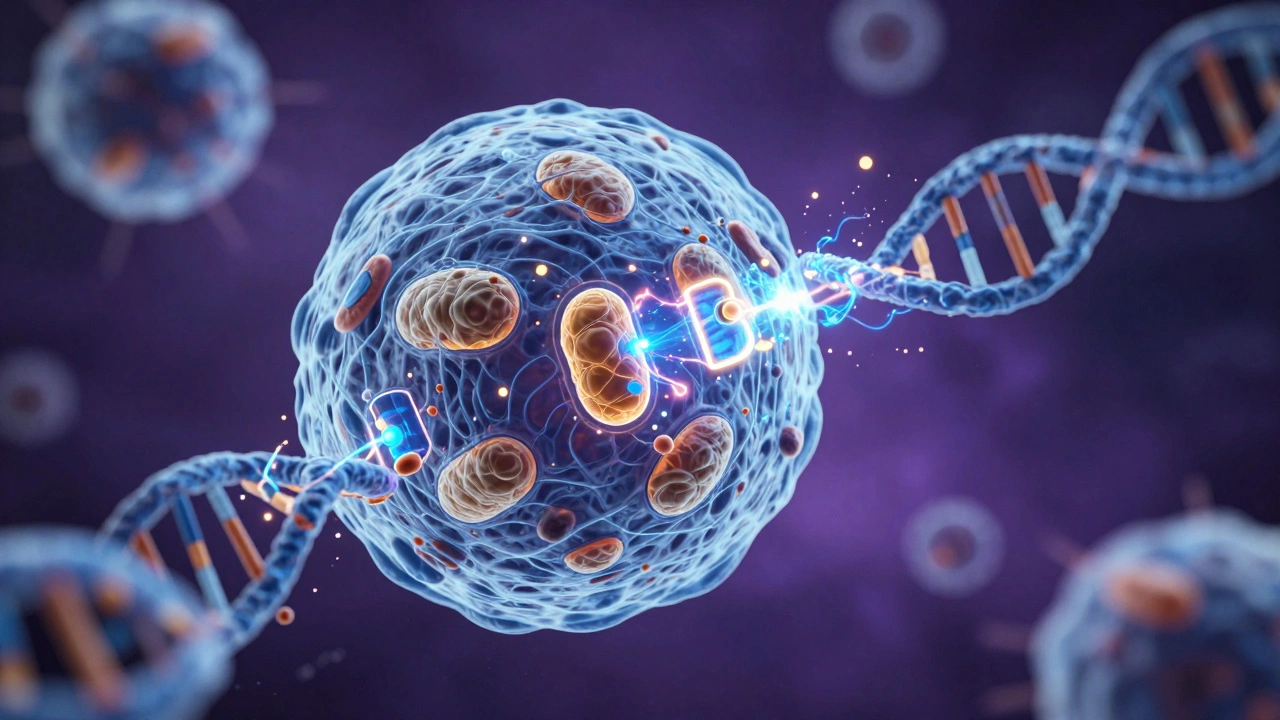
While creams fix the surface, the real biological battle happens inside your mitochondria. This is where NAD+ (Nicotinamide Adenine Dinucleotide) comes in. NAD+ is a coenzyme found in all living cells and is crucial for energy metabolism and DNA repair. As we age, our levels of NAD+ plummet. By the time you hit 50, you might have half the levels you had in your 20s. When this molecule disappears, your cells can't repair their own DNA, and your metabolism slows to a crawl.
Since you can't just eat NAD+ (your body breaks it down before it hits your bloodstream), scientists have focused on NMN (Nicotinamide Mononucleotide) and NR (Nicotinamide Riboside). These are precursors that your body converts into NAD+. Imagine NAD+ as a battery that powers your cellular repair crews; NMN and NR are the chargers. When you supplement with these, you aren't just hiding a wrinkle; you're potentially improving how your organs function and how your brain resists cognitive decline.
Structural Support: Collagen and Hyaluronic Acid
You've likely seen these two in every serum and powder on the market. While they aren't as "powerful" in terms of reversing age as Tretinoin or NMN, they are the building blocks of your skin's architecture. Collagen is the primary structural protein in the skin, providing strength and elasticity. As we age, our body produces less of it, and the collagen we do have starts to break down due to UV exposure and sugar intake (a process called glycation).
Then there is Hyaluronic Acid, which isn't a protein but a sugar molecule that can hold 1,000 times its weight in water. It acts like a sponge, plumping the skin from the inside. If you feel like your skin is "deflating," this is the substance you need. However, applying it topically only hydrates the very top layer. For real results, look for "multi-molecular weight" formulas that can actually penetrate deeper into the skin.
| Substance | Target Area | Primary Benefit | Potency Level | Risk/Downside |
|---|---|---|---|---|
| Tretinoin | Epidermis/Dermis | Wrinkle reversal | Very High | Skin irritation |
| NMN/NR | Cellular/DNA | Energy & Repair | High | Expensive |
| Collagen | Structural | Firmness | Moderate | Slow results |
| Hyaluronic Acid | Surface | Hydration/Plump | Low-Moderate | Temporary |
The Role of Antioxidants: Vitamin C and Resveratrol
If Tretinoin is the "repairman" and NMN is the "power source," then antioxidants are the "security guards." They stop the damage before it starts. Vitamin C (L-Ascorbic Acid) is the gold standard here. It neutralizes free radicals caused by the sun and pollution, which would otherwise eat away at your collagen. Without it, your expensive anti-aging creams are fighting a losing battle because the environment is destroying your skin faster than you can fix it.
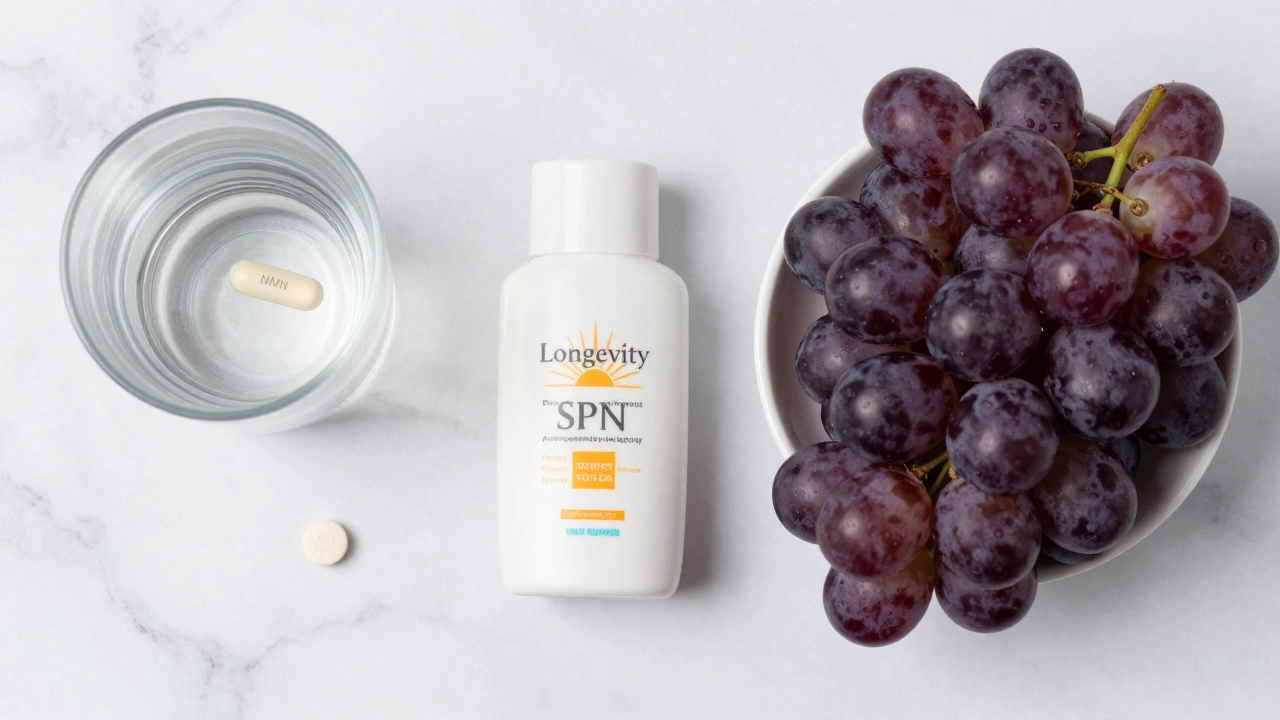
On the internal side, we have Resveratrol. This compound, found in grape skins, activates a group of proteins called sirtuins. Sirtuins are basically the "longevity genes" that tell your cells to go into survival mode and protect themselves from stress. When you pair Resveratrol with NMN, you get a synergistic effect: one provides the fuel (NAD+), and the other turns on the engine (Sirtuins). This combination is currently one of the most studied protocols in longevity science.
Avoiding the Anti-Aging Traps
Not every "powerful" substance is safe or effective. A common mistake is jumping straight into high-percentage acids or strong retinoids without prepping the skin. If you destroy your moisture barrier, you'll actually age faster because your skin becomes more susceptible to inflammation and UV damage. This is called "inflammaging," where chronic low-grade inflammation accelerates the breakdown of tissues.
Another pitfall is relying solely on supplements. You can take all the NMN in the world, but if you're eating high-sugar foods and not sleeping, you're essentially pouring water into a leaky bucket. High blood sugar leads to Advanced Glycation End-products (AGEs), which literally "cross-link" your collagen fibers, making them stiff and brittle. No amount of Hyaluronic Acid can fix skin that has been chemically stiffened by too much sugar.
Building Your Longevity Stack
So, which one is truly the most powerful? The answer depends on your priority. If you want to look younger in the mirror tomorrow, go for a prescription retinoid. If you want your cells to function like they are 20 years younger, focus on NAD+ precursors and a clean diet. The most effective strategy is a "stack" that covers all bases: protection (Vitamin C), repair (Tretinoin), and cellular energy (NMN).
Start by stabilizing your foundation. Get a daily SPF-because UV rays are the single most powerful "pro-aging" substance in existence. Once you've blocked the damage, introduce one active ingredient at a time. Start with a low-dose retinol, let your skin adjust for a month, and then add in your cellular supplements. This phased approach prevents the shock to your system and allows you to see what is actually working for your specific biology.
Can I use Tretinoin and Vitamin C together?
Yes, but not at the same time. Vitamin C is best used in the morning to protect against sun damage, while Tretinoin should only be used at night because it makes your skin extremely sensitive to sunlight and can degrade in UV light. Using them in separate windows gives you the best of both worlds.
Are NMN supplements safe for everyone?
For most healthy adults, NMN is well-tolerated. However, because it influences cellular energy and metabolism, people with certain medical conditions, such as cancer, should be cautious. Since some tumors also use NAD+ to grow, it is critical to consult a doctor before starting any metabolic booster.
Does drinking collagen actually work?
It's more effective than a cream, but less effective than people think. When you drink collagen, your body breaks it down into amino acids. It doesn't just "float" to your face and plug holes. However, providing those specific amino acids (like glycine and proline) gives your body the raw materials it needs to build its own collagen more efficiently.
How long does it take to see results from these substances?
Patience is key. Hyaluronic acid works instantly for plumping. Tretinoin takes about 3 to 6 months of consistent use to show significant changes in skin texture and wrinkles. Cellular boosters like NMN are more about how you feel-energy levels and cognitive clarity often improve within weeks, but longevity benefits are measured over years.
What is the cheapest but most effective anti-aging habit?
Broad-spectrum sunscreen. UV radiation causes up to 80% of visible skin aging. Spending $15 on a decent sunscreen every few months is more powerful than spending $500 on a luxury cream after the damage is already done. Prevention is always more effective than reversal.