
What Is the 7 Skin Care Routine? A Simple Step-by-Step Guide
 Jan, 5 2026
Ever seen someone with glowing skin and wondered how they do it? Chances are, they’re following the 7 skin care routine - a method that started in South Korea and spread worldwide because it actually works. It’s not about using seven expensive products. It’s about building a rhythm that lets your skin absorb what it needs, one gentle layer at a time.
Why the 7 Skin Care Routine Works
The 7 skin care routine isn’t magic. It’s based on a simple idea: skin absorbs better when you apply products in thin layers, and each layer prepares the next. Think of it like watering a plant. Pouring a whole jug at once drowns the roots. Spraying a little at a time lets the soil soak it in. Your skin works the same way.
In Korea, where this routine became popular, humidity and skin health are deeply connected. People there don’t just wash and moisturize. They hydrate, layer, and seal. This method helps lock in moisture, calm irritation, and prevent premature aging - especially in dry or polluted environments.
It’s not for everyone. If you have oily skin or acne-prone skin, you might skip a step or two. But if your skin feels tight, dull, or flaky by midday, this routine can reset it.
The 7 Steps Explained
Here’s how the routine breaks down - and what each step actually does for your skin.
- Cleanser - Start with a gentle, non-foaming cleanser. Avoid anything that leaves your skin feeling squeaky clean. That’s a sign it stripped away natural oils. Use lukewarm water. Pat dry, don’t rub.
- Toner - This isn’t the alcohol-heavy astringents from the 90s. Modern toners are hydrating. They balance pH and prep your skin to absorb the next steps. Apply with your hands or a cotton pad - either way, don’t let it dry on your skin.
- Essence - This is the heart of the routine. Essences are lightweight, watery formulas packed with ingredients like hyaluronic acid, niacinamide, or fermented extracts. They don’t just hydrate; they signal your skin cells to repair and renew. A few drops are enough.
- Sequential Layering (Serum, Ampoule, or Treatment) - This is where you target specific concerns: dark spots, fine lines, redness. Use one product at a time. Don’t pile on three serums. Pick one based on your biggest skin issue that day.
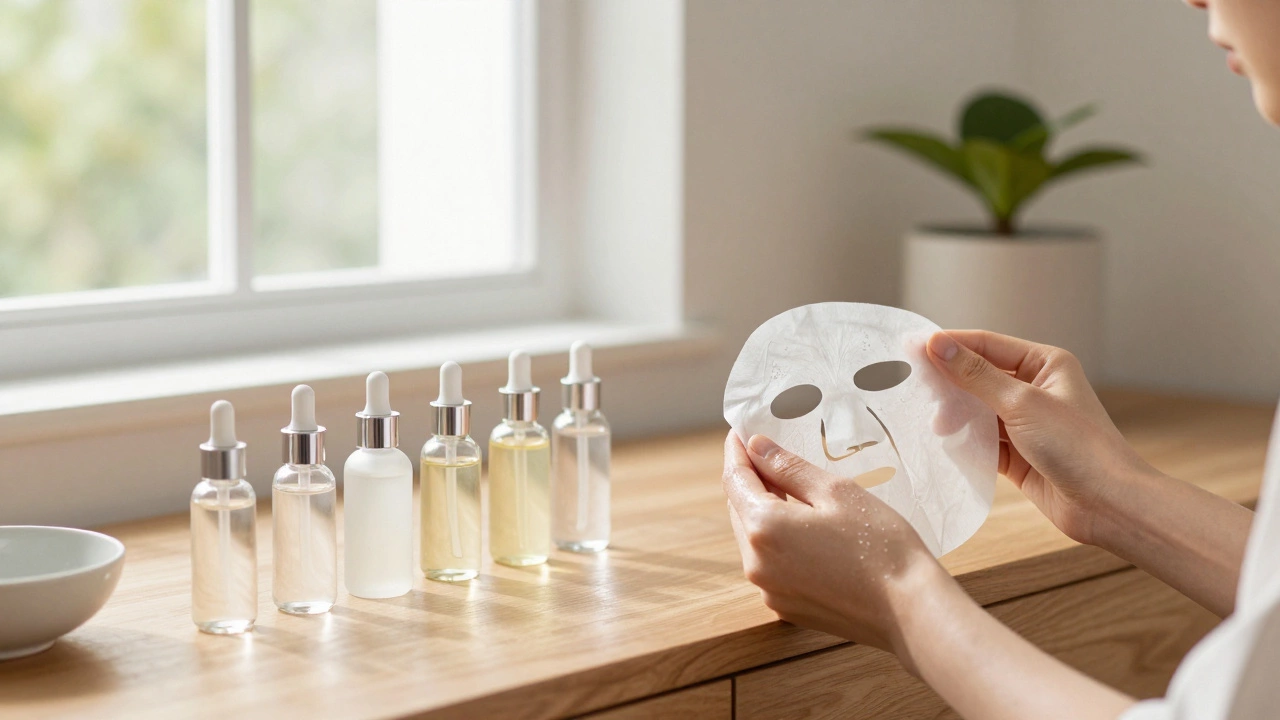
- Sheet Mask (2-3 times a week) - Not daily. Sheet masks deliver a high dose of hydration and actives in 10-15 minutes. Use them after your essence or serum, not instead of. Remove the mask before moving to the next step.
- Eye Cream - The skin around your eyes is thin and delicate. Use a pea-sized amount. Gently tap it in with your ring finger. No pulling. No tugging.
- Moisturizer - This seals everything in. Use a cream or gel that matches your skin type. Oily skin? Go for a water-based gel. Dry skin? A thicker cream with ceramides works best.
That’s it. Seven steps. Takes 5-7 minutes in the morning. Maybe 10 at night if you’re using a mask.
What to Skip - And When
You don’t need all seven steps every day. Here’s how to adjust:
- If you have oily skin, skip the sheet mask on days you use a clay cleanser.
- If you’re using retinol at night, drop the essence or serum. Retinol is strong. Layering too much can irritate.
- Don’t use a toner with alcohol. It defeats the whole purpose.
- Never skip sunscreen in the morning. It’s not part of the 7 steps, but it’s non-negotiable. Sun damage undoes everything else.
Some people add a facial oil after moisturizer. That’s fine - but it’s step 8. The 7-step routine is designed to be simple. Add extras only if your skin asks for them.

Real Results - What to Expect
People who stick with this for 4-6 weeks report:
- Less dryness and flaking, even in winter
- Makeup applies smoother
- Reduced redness and irritation
- Skin looks more even and lit from within
It doesn’t erase wrinkles overnight. It doesn’t cure acne in a week. But it builds resilience. Over time, your skin becomes less reactive. It holds moisture better. It looks healthier because it’s actually healthier.
A 2023 study from Seoul National University followed 120 women using a 7-step routine for 8 weeks. 87% reported improved skin hydration. 76% saw a visible reduction in fine lines around the eyes. Those aren’t marketing claims. Those are lab results.
Product Choices - What Actually Works
You don’t need luxury brands. You need the right ingredients.
Look for:
- Hyaluronic acid - Holds 1000x its weight in water. Found in toners and essences.
- Niacinamide - Calms redness, brightens tone, strengthens barrier. Works in serums.
- Ceramides - Repair your skin’s natural barrier. Found in moisturizers.
- Snail mucin - A Korean favorite. Helps heal and hydrate. Not gross - it’s filtered and purified.
Avoid:
- Alcohol denat. as the first ingredient
- Fragrance listed as “parfum” or “essential oils” - they irritate sensitive skin
- Products with more than 5 ingredients you can’t pronounce
Start with drugstore brands like Cosrx, CeraVe, or The Ordinary. They have clean formulas and real science behind them. You don’t need to spend $100 on a bottle of essence.

How to Build Your Own 7-Step Routine
Here’s a sample routine you can adapt:
Morning:
- Water-based cleanser
- Hydrating toner
- Light essence with niacinamide
- Hydrating serum (hyaluronic acid)
- Eye cream
- Light gel moisturizer
- Sunscreen (SPF 30+)
Night:
- Oil cleanser (if wearing makeup or sunscreen)
- Water-based cleanser
- Hydrating toner
- Essence with fermented ingredients
- Targeted serum (retinol or vitamin C)
- Eye cream
- Rich moisturizer or sleeping mask
Use the sheet mask 2-3 nights a week - replace the serum on those nights.
Common Mistakes to Avoid
Most people fail at the 7-step routine because they do it wrong.
- Applying too much product - A dime-sized amount of moisturizer is enough. Too much = clogged pores.
- Waiting too long between steps - Let each product absorb for 30-60 seconds. Don’t let it dry completely. That’s when it pulls moisture out of your skin.
- Using too many actives - Don’t combine retinol, vitamin C, and exfoliating acids in the same routine. Pick one.
- Skipping sunscreen - No amount of layering fixes sun damage. Every morning, sunscreen is step 8.
And don’t rush. This isn’t a race. It’s a ritual. Take your time. Breathe. Let your skin feel the difference.
Is This Routine Right for You?
If your skin feels:
- Dehydrated, even after moisturizing
- Dull or uneven
- More sensitive than it used to be
- Like it’s always trying to catch up
Then yes - this routine is for you.
If you have severe acne, rosacea, or eczema, talk to a dermatologist first. But even then, the 7-step method can be adapted - just simplify. Two steps of hydration, one treatment, and a barrier repair moisturizer can be enough.
This isn’t about perfection. It’s about consistency. Do three steps right every day, and your skin will thank you more than doing seven steps once a week.
Can I do the 7 skin care routine if I have acne?
Yes, but simplify. Skip the essence and sheet mask if your skin is inflamed. Use a gentle cleanser, a niacinamide serum, a light moisturizer, and sunscreen. Avoid heavy oils and alcohol-based toners. Focus on calming and protecting, not layering.
Do I need to use Korean products?
No. The routine is about the order and technique, not the brand. You can use CeraVe, The Ordinary, or La Roche-Posay. Look for water-based, non-comedogenic formulas with proven ingredients like hyaluronic acid, ceramides, and niacinamide.
How long does it take to see results?
Most people notice better hydration in 1-2 weeks. Skin texture and glow usually improve in 3-4 weeks. For deeper changes like reduced redness or fine lines, give it 6-8 weeks. Consistency beats speed.
Can I skip the toner?
Only if your cleanser is pH-balanced and your skin doesn’t feel tight afterward. But toners help prep your skin to absorb the next layers. If you skip it, you’re making the rest of your routine less effective.
Should I use the same products every day?
Not necessarily. Your skin changes with seasons, stress, and hormones. Use a lighter moisturizer in summer. Add a hydrating serum in winter. Swap your treatment serum based on what your skin needs that week. Flexibility keeps it working.
If you’ve tried every cream, serum, and mask without lasting results, the problem might not be the products - it’s the way you’re using them. The 7 skin care routine isn’t about buying more. It’s about doing less, but doing it right.