
What is Professional Skincare? A Complete Guide to Treatments and Benefits
 Aug, 23 2026
Professional Skincare Investment Planner
1. Select Your Primary Goal
2. Your Estimated Plan
Provider Tip:
Consistency is key. Most results require multiple sessions spaced 4-6 weeks apart.
Your face wash at home cleans the surface. It removes dirt, oil, and maybe some makeup. But it rarely touches the deeper layers where your skin actually changes. That’s where professional skincare comes in. Professional skincare refers to treatments performed by licensed estheticians or dermatologists using advanced tools, higher-concentration ingredients, and clinical protocols that go beyond what over-the-counter products can achieve. Think of it as the difference between watering a plant and giving it a nutrient-rich soil amendment. Both help, but one works on the root system. If you’re wondering if it’s worth the price tag, the answer depends on your goals. For most people, it’s not about looking "perfect" for a day; it’s about optimizing long-term skin health. ### Key Takeaways
- Professional skincare uses medical-grade ingredients like retinoids and chemical peels that are too strong for daily home use.
- Treatments range from non-invasive facials to invasive procedures like microneedling and laser therapy.
- The main goal is to address specific concerns: aging, acne, hyperpigmentation, or texture.
- Consistency matters more than frequency; monthly maintenance beats sporadic deep cleanses.
- It complements, rather than replaces, a solid daily routine with sunscreen and moisturizer.
How Professional Skincare Differs From Home Routines
Most people assume a professional facial is just a fancy version of washing their face. In reality, the gap is significant. At home, you’re limited by ingredient concentrations. You can buy a 10% glycolic acid serum, but a clinic might use a 35-70% peel under controlled conditions. This isn’t about being harsher; it’s about precision.
When an esthetician performs a treatment, they assess your skin barrier function first. They check for sensitivity, dehydration, or active breakouts. Based on this, they customize the protocol. For example, if you have sensitive skin, they might skip the exfoliation step and focus on hydration with hyaluronic acid infusions. If you have clogged pores, they might use extractions combined with blue light therapy to kill bacteria without irritation.
Home routines lack this diagnostic layer. You might be using a product that’s too acidic for your current skin state, unknowingly damaging your barrier. Professional care provides feedback loops. After a session, your provider tells you exactly what happened to your skin and how to adjust your home care to support the results.
Common Professional Treatments Explained
Not all professional services are created equal. Some are maintenance, others are corrective. Here’s what you’ll typically find in a reputable clinic:
- Chemical Peels: These use acids (AHA, BHA, TCA) to dissolve dead skin cells. Superficial peels improve glow and texture. Deep peels treat severe scarring or pigmentation but require downtime.
- Microneedling: Also known as collagen induction therapy, this uses tiny needles to create micro-injuries. Your body responds by producing new collagen and elastin. It’s highly effective for acne scars and fine lines.
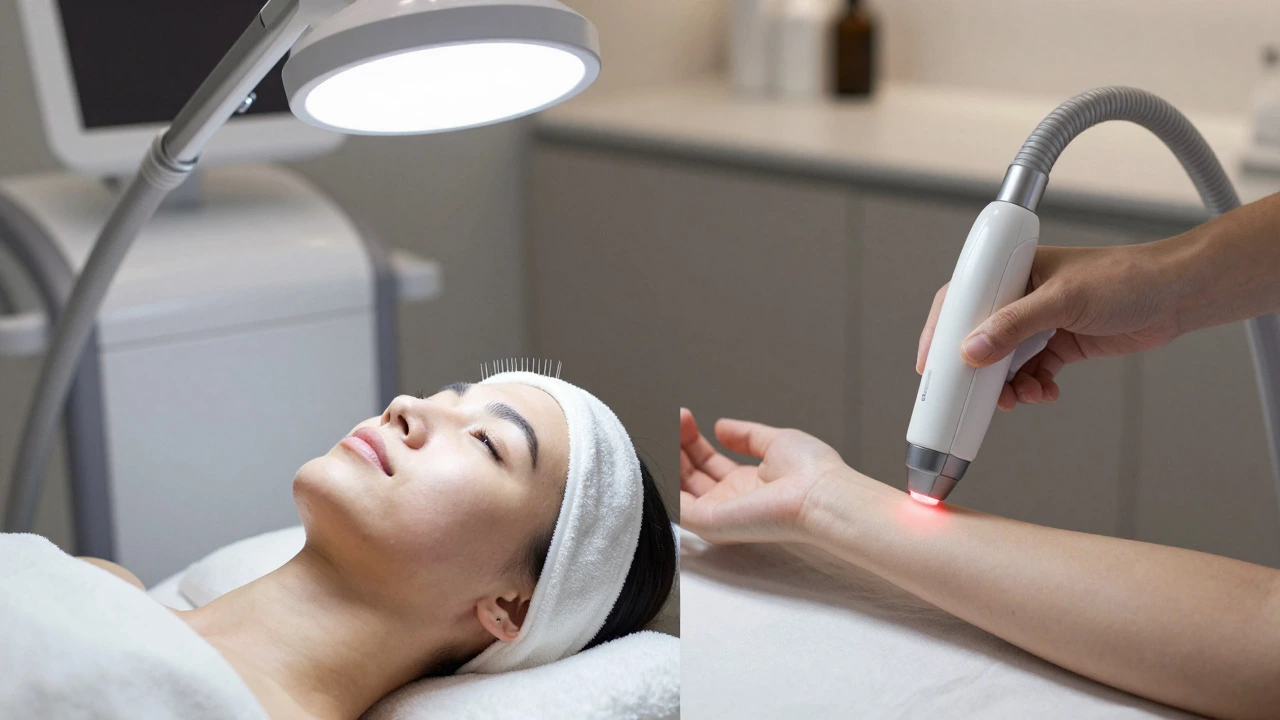
- Laser Therapy: Lasers target specific issues. IPL (Intense Pulsed Light) reduces redness and sun spots. Fractional lasers resurface the skin by creating controlled thermal damage.
- Hydrafacials: A multi-step process that cleanses, extracts, and hydrates simultaneously. It’s gentle enough for sensitive skin and great for pre-event prep.
- Dermabrasion: An older technique that sands off the top layer of skin. It’s less common now due to better alternatives but still used for deep scarring.
Each of these targets a different biological mechanism. Microneedling stimulates structural repair. Chemical peels accelerate cell turnover. Laser therapy destroys pigment or stimulates collagen via heat. Understanding which mechanism fits your problem saves money and time.
Who Should Consider Professional Care?
You don’t need to be middle-aged or have severe acne to benefit. However, certain groups see faster, more dramatic results:
- People with Stubborn Skin Concerns: If home retinol hasn’t cleared your acne after six months, a professional prescription-strength retinoid or extraction session might break the cycle.
- Those Seeking Anti-Aging Results: While home antioxidants help, professional treatments like radiofrequency or ultrasound (e.g., Ultherapy) reach deeper tissue layers to tighten skin.
- Individuals with Hyperpigmentation: Sun damage and melasma often resist topical serums. Combination therapies (peel + laser + brightening agents) yield better clearance rates.
- Event-Ready Needs: If you have a wedding or major photo shoot in three weeks, a series of hydrafacials or light peels can optimize skin texture and clarity quickly.
Conversely, if your skin is healthy, oily, or dry but not troubled, professional care is optional. A good home routine with consistent sunscreen is often sufficient. Don’t let marketing pressure you into unnecessary procedures.
Cost, Frequency, and Realistic Expectations
Let’s talk numbers. Prices vary wildly by location and provider expertise. In major cities, a basic facial might cost $80-$150. Advanced treatments like microneedling or laser sessions can range from $300 to $1,000 per visit.
| Treatment Type | Average Cost (USD) | Downtime | Primary Benefit | Recommended Frequency |
|---|---|---|---|---|
| Basic Facial | $80 - $150 | None | Cleansing & Hydration | Monthly |
| Chemical Peel (Superficial) | $150 - $300 | 1-3 days redness | Brightening & Texture | Every 4-6 weeks |
| Microneedling | $300 - $600 | 2-4 days redness | Collagen Boost & Scars | Every 4-6 weeks (3-5 sessions) |
| IPL Laser | $400 - $800 | 1-2 days sensitivity | Pigment & Redness Reduction | 3-5 sessions spaced 4 weeks apart |
Frequency is key. One session won’t change your life. Skin cycles take 28-40 days. Most treatments require a series of 3-6 sessions for visible, lasting results. Think of it like going to the gym. One workout doesn’t build muscle; consistency does.
Expectations should be realistic. Professional skincare improves skin quality, not necessarily its genetics. You won’t look like a filter-applied photo. You will look rested, even-toned, and healthier. The goal is optimization, not transformation.
Choosing the Right Provider
Not all clinics are equal. Credentials matter. Look for providers who are Licensed Estheticians (LCE), Board-Certified Dermatologists, or Nurse Practitioners specializing in aesthetics. Check their training history. Do they offer free consultations? A good provider will examine your skin, ask about your history, and set clear expectations before charging you a dime.
Avoid places that push sales aggressively during your consultation. If you’re pressured to buy a package of ten sessions immediately, walk away. Trust is built through transparency. Ask questions. What brand of equipment do they use? How many years have they performed this specific procedure? Can they show before-and-after photos of patients with similar skin types to yours?
Post-Treatment Care: The Unsung Hero
Many people think the treatment ends when you leave the clinic. Wrong. Post-care determines 50% of your results. After a peel or laser session, your skin is vulnerable. Sun exposure can reverse gains and cause rebound pigmentation.
- Sun Protection: Wear SPF 30+ every single day, even indoors near windows. Reapply every two hours if outdoors.
- Gentle Cleansing: Use lukewarm water and a mild, fragrance-free cleanser for 3-5 days post-treatment.
- Hydration: Apply soothing moisturizers with ceramides or hyaluronic acid to support barrier repair.
- Avoid Actives: Pause retinoids, exfoliating acids, and vitamin C for the duration recommended by your provider (usually 3-7 days).
If you skip this step, you risk irritation, prolonged redness, or even infection. Follow your provider’s instructions religiously. It’s the cheapest insurance policy for your investment.
Frequently Asked Questions
Is professional skincare necessary if I have a good home routine?
Not necessarily. If your skin is healthy and your concerns are minor, a strong home routine with sunscreen may suffice. However, professional care accelerates results for specific issues like deep wrinkles, stubborn acne, or significant pigmentation that home products struggle to resolve.
How often should I get professional facials?
For maintenance, once a month is standard. For corrective treatments like microneedling or laser, follow your provider’s schedule, usually every 4-6 weeks for a series of 3-6 sessions. Over-treating can damage your skin barrier, so listen to your skin and your provider.
Does professional skincare hurt?
It depends on the treatment. Basic facials are relaxing. Chemical peels may sting briefly. Microneedling feels like a scratchy sensation. Laser treatments can feel like rubber band snaps. Most discomfort is manageable, and numbing creams are available for deeper procedures.
Can I do professional skincare if I have sensitive skin?
Yes, but choose the right treatments. Avoid aggressive exfoliation. Opt for gentle options like hydrafacials, enzyme peels, or LED light therapy. Always patch-test new products and communicate your sensitivities clearly to your esthetician.
What is the difference between an esthetician and a dermatologist?
Estheticians focus on cosmetic improvements and surface-level skin health. They cannot prescribe medication. Dermatologists are medical doctors who diagnose and treat skin diseases, prescribe drugs, and perform medical-grade procedures. For complex medical issues, see a dermatologist. For aesthetic enhancement, an esthetician is often sufficient.