
What Is a Good Skin Care Routine for Beginners?
 Feb, 26 2026
Beginner Skincare Product Finder
Find Your Perfect Beginner Skincare Products
Just answer 2 questions to get personalized recommendations based on the article's proven beginner routine.
Your Skin Type
Tends to look shiny, especially in T-zone; prone to breakouts
Feels tight, flaky, or rough; may have visible lines
Oily T-zone with dry cheeks; needs different products for different areas
Prone to redness, irritation, or reactions; needs gentle products
Your Beginner Skincare Routine
Cleanser
Gentle, fragrance-free formula to remove dirt without stripping your skin's natural barrier
Moisturizer
Lightweight, non-comedogenic formula to hydrate without clogging pores
Sunscreen
Broad-spectrum SPF 30+ to protect against UV damage
Important Note
Start with just these 3 products. Wait at least 2 weeks before adding any new items to your routine. Introduce products one at a time to identify what works for your skin.
Starting a skin care routine doesn’t need to be complicated. If you’re new to this, you’re not alone. Most people overcomplicate it-buying ten products, following five-step routines from influencers, or switching brands every month. The truth? Your skin doesn’t need all that. A good beginner routine is simple, consistent, and built around just three core steps: cleanse, moisturize, and protect.
Step 1: Cleanse Gently
Your skin produces oil, collects dirt, and traps pollution by the end of the day. Cleansing removes that buildup. But not all cleansers are made the same. Avoid harsh soaps or scrubby foams that strip your skin. These leave your face tight, dry, and more prone to breakouts.
Look for a gentle, fragrance-free cleanser. Ingredients like glycerin, ceramides, or niacinamide are your friends. They clean without disturbing your skin’s natural barrier. If you wear makeup or sunscreen, use a double cleanse: first with an oil-based cleanser or micellar water to dissolve makeup, then follow with a water-based cleanser.
Wash your face twice a day-morning and night. Don’t scrub. Use lukewarm water and your fingertips. Pat dry with a clean towel. No need to wash more than twice. Over-cleansing triggers your skin to make even more oil, which can lead to clogged pores.
Step 2: Moisturize Every Day
Even if your skin feels oily, you still need moisture. Skipping moisturizer tricks your skin into producing more oil. That’s why some people with oily skin get breakouts-they’re actually dehydrated.
Choose a lightweight, non-comedogenic moisturizer. That means it won’t clog pores. Look for ingredients like hyaluronic acid, squalane, or dimethicone. These hydrate without feeling greasy. If you have dry skin, a thicker cream with ceramides works better. For combination skin, apply a little more on dry patches and less on oily zones.
Apply moisturizer right after cleansing, while your skin is still slightly damp. This locks in hydration. You don’t need to spend a lot. A basic drugstore moisturizer like CeraVe Daily Moisturizing Lotion or Vanicream Gentle Skin Cleanser does the job just as well as expensive brands.
Step 3: Protect With Sunscreen
This is the most important step-and the one most beginners skip. Sun damage causes 80% of visible aging, including wrinkles, dark spots, and loss of firmness. It also increases skin cancer risk. And yes, you need it even on cloudy days or when you’re inside near a window.
Use a broad-spectrum sunscreen with SPF 30 or higher. Mineral sunscreens with zinc oxide or titanium dioxide are less likely to irritate sensitive skin. Chemical sunscreens absorb UV rays and often feel lighter, but can cause stinging for some. Pick what works for your skin, not what looks fancy.
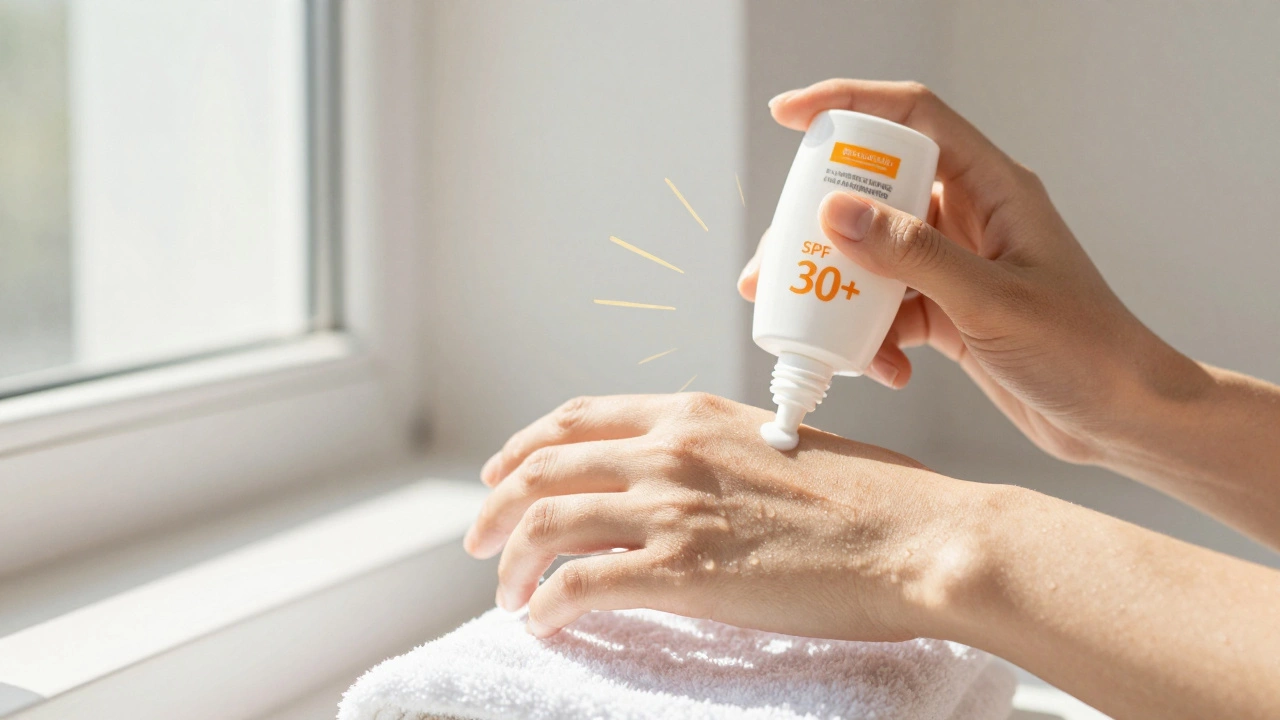
Apply sunscreen as the last step in your morning routine. Use about half a teaspoon for your face and neck. Reapply every two hours if you’re outside. If you hate the sticky feeling, try tinted sunscreens or moisturizers with SPF built in. Just make sure they’re SPF 30+.
What to Skip at First
When you’re starting out, avoid these:
- Retinoids (retinol, tretinoin)-too strong for beginners
- Chemical peels or exfoliating acids (AHA/BHA)-can irritate if used too soon
- Multiple actives at once-like vitamin C, niacinamide, and retinol stacked together
- Expensive serums with 10 ingredients-you don’t need them yet
Stick to the basics. Give your skin time to adjust. Introduce one new product at a time, waiting at least two weeks before adding another. This helps you spot what’s working-and what’s causing redness or breakouts.

Sample Beginner Routine
Here’s what a real daily routine looks like:
Morning:
- Cleanse with a gentle foaming or cream cleanser
- Apply moisturizer
- Put on sunscreen
Night:
- Cleanse (double cleanse if wearing makeup or sunscreen)
- Apply moisturizer
That’s it. No toners, no essences, no overnight masks. Just three steps, twice a day. You’ll be surprised how much this changes your skin in 4-6 weeks.
What to Expect in the First Month
Don’t expect miracles overnight. Skin cells take about 28 days to renew. In the first week, you might feel dryness or slight breakouts as your skin adjusts. This is normal. In weeks 2-3, oiliness should even out. By week 4, your skin will feel smoother, look brighter, and react less to stress or weather changes.
If you still have persistent redness, itching, or worsening breakouts after a month, stop everything and see a dermatologist. You might have rosacea, eczema, or an allergy you didn’t know about.
Common Mistakes Beginners Make
- Using hot water-dries out skin
- Skipping sunscreen because it’s cloudy-UV rays still penetrate
- Buying products based on Instagram ads-marketing isn’t science
- Changing products too often-your skin needs time to adapt
- Using too much product-a pea-sized amount is enough for face and neck
The best skincare routine is the one you’ll stick to. Consistency beats complexity every time.
When to Add More Products
After 6-8 weeks of sticking to the three-step routine, you might notice areas you want to improve. Maybe your dark spots are fading slower than you’d like. Or your skin still feels tight after washing. That’s when you can think about adding one more product.
Here are safe next steps:
- Hydrating serum: Add a hyaluronic acid serum before moisturizer if skin feels dry.
- Exfoliation: Try a gentle AHA (like lactic acid) 1-2 times a week if you have dull skin or clogged pores.
- Antioxidants: A vitamin C serum in the morning can help brighten and protect against pollution.
Always patch test new products behind your ear or on your jawline for 3-5 days before using them on your whole face.
Products That Actually Work for Beginners
You don’t need luxury brands. Here are affordable, dermatologist-recommended options:
- Cleanser: CeraVe Hydrating Cleanser, Vanicream Gentle Facial Cleanser
- Moisturizer: CeraVe Daily Moisturizing Lotion, Eucerin Advanced Repair Cream
- Sunscreen: EltaMD UV Clear Broad-Spectrum SPF 46, Neutrogena Sheer Zinc Dry-Touch SPF 50
These are sold at pharmacies, supermarkets, or online. No need to hunt for "holy grail" products. Stick with what’s simple and proven.
Final Thought: Skin Care Is Self-Care
A good routine isn’t about looking perfect. It’s about feeling comfortable in your own skin. It’s about giving yourself a quiet moment in the morning and before bed. Washing your face shouldn’t feel like a chore-it should feel like a small act of kindness to yourself.
Start slow. Stay consistent. Listen to your skin. You don’t need to follow trends. You just need to show up every day.
Do I need to use toner as a beginner?
No, toner isn’t necessary for beginners. Most toners are either alcohol-based (drying) or just water with added ingredients that don’t provide real benefits. If your skin feels clean after washing and moisturized afterward, you don’t need toner. Skip it until you’ve mastered the basics.
Can I use the same products in the morning and at night?
You can, but sunscreen should only be used in the morning. At night, skip sunscreen and focus on repairing your skin with moisturizer. If your cleanser and moisturizer are gentle and non-irritating, using them twice a day is fine. Avoid retinoids or strong acids at night unless you’ve been using them for weeks without irritation.
How long should I wait before trying new products?
Wait at least four weeks after starting a new product. Skin takes time to adjust. If you add something new every week, you won’t know what’s causing irritation or improvement. Introduce one product at a time, and watch for changes in redness, breakouts, or dryness.
Is expensive skincare better than drugstore brands?
Not usually. The most effective ingredients-like ceramides, hyaluronic acid, niacinamide, and zinc oxide-are found in both affordable and high-end products. You’re paying for packaging, fragrance, or brand name, not better results. Stick to products with simple ingredient lists and proven formulas.
What should I do if my skin gets worse after starting a routine?
Stop all new products and go back to just water and a gentle moisturizer for a few days. If your skin doesn’t improve within a week, see a dermatologist. You might have an allergy, sensitivity, or underlying condition like rosacea or perioral dermatitis. Don’t push through irritation-it can make things worse.