
What Is a Female Hairstylist Called? Simple Answers for Salon Visitors
 Dec, 11 2025
Stylist Finder Tool
Select your hair type and service to see the professional title for your needs.
Ever walked into a salon and wondered, "What do I call the person cutting my hair?" If you’re used to hearing "hairdresser" or "stylist," you’re not alone. Many people assume there’s a special term for a female hairstylist-but there isn’t. Not really. And here’s why that matters.
There’s no separate word for a female hairstylist
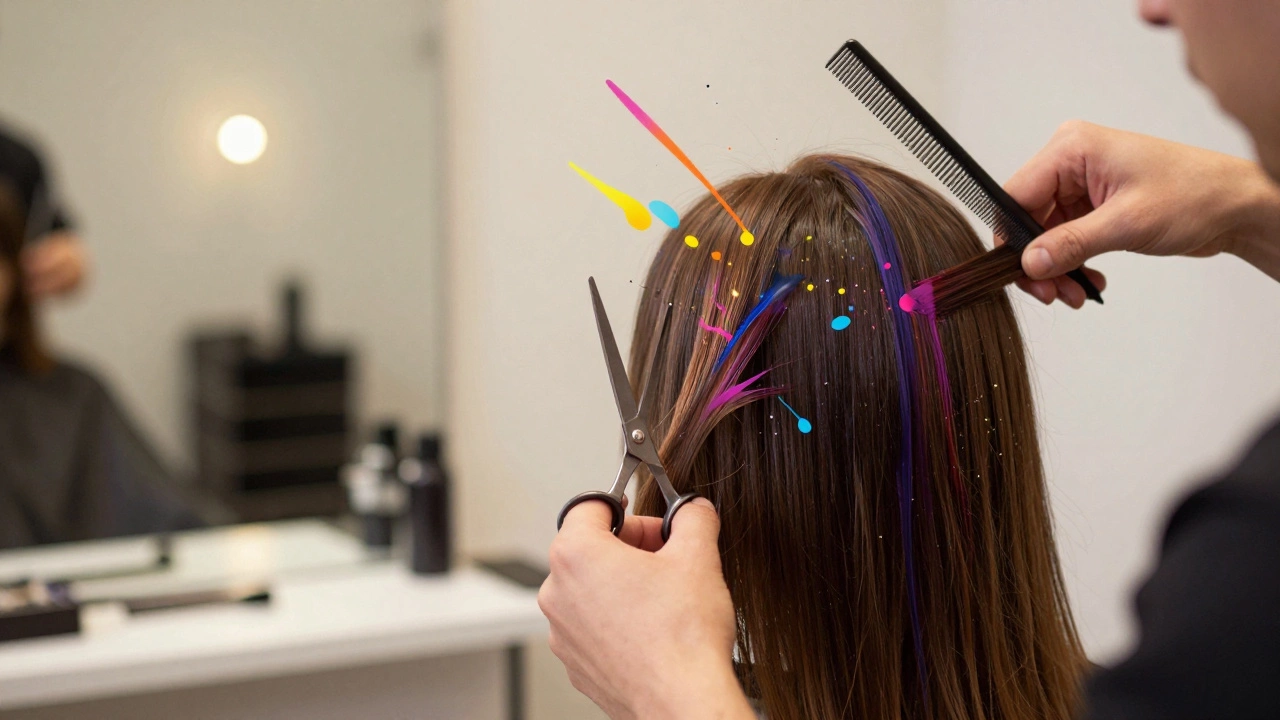
In English, the word "hairstylist" works for anyone, no matter their gender. So does "hairdresser." You don’t say "female hairstylist" to be correct-you say it because you’re thinking about gender, not the job. But the profession doesn’t need a gendered label. A person who cuts, colors, and styles hair is a hairstylist. Period.
Back in the 1900s, "hairdresser" was more commonly used, and yes, it was often assumed to be a woman’s job. But that’s changing. Today, over 60% of professional hairstylists in New Zealand are women, but nearly 40% are men. The job doesn’t change based on who’s holding the scissors. What matters is skill, experience, and how well they listen to your needs.
Why do people still ask this question?
It comes from habit. For decades, ads showed women styling hair, while men were shown as barbers. That created a mental shortcut: women = hairdressers, men = barbers. But that’s outdated. Barbers specialize in short cuts, fades, and beard work. Hairstylists handle longer hair, color, perms, and full styling. Gender has nothing to do with it.
Even in places like Wellington, where salons are diverse and inclusive, clients still ask, "Is the stylist a woman?" Maybe they’re looking for someone who understands their hair texture, or they feel more comfortable with a female professional. That’s fine. But the title doesn’t change. The person is still a hairstylist.
What terms are actually used in salons?
Here’s what you’ll hear in real salons:
- Hairstylist - the most common, professional term. Used by everyone, everywhere.
- Hairdresser - still used, especially by older generations. Sounds a bit old-fashioned to younger clients.
- Stylist - short and casual. Often used on social media or in salon menus.
- Barber - only if they specialize in men’s cuts, short styles, and grooming.
You won’t hear "female hairstylist" on a salon’s website. You’ll see "Hairstylist: Emma" or "Stylist: Jamie." Names, not gender labels.
What about titles like "master stylist" or "color specialist"?
Those are skill-based titles, not gender-based. A "master stylist" has years of training, often certified by brands like L’Oréal or Redken. A "color specialist" focuses only on dyeing and lightening hair. These titles tell you about their expertise-not their gender.
Some salons even list stylists by their specialties: "Balayage Expert," "Curly Hair Specialist," or "Keratin Treatment Pro." That’s what you want to look for. Not whether they’re male or female.
Does gender affect the service you get?
Not directly. But experience and training do.
One study from the Australian Hairdressing Council found that clients who chose stylists based on skill level-rather than gender-were 37% more satisfied with their results. Why? Because haircuts depend on technique, not biology. A stylist who’s trained in fine, curly, or chemically treated hair will give you better results than one who hasn’t.
That’s why reading reviews matters more than guessing someone’s gender. Look for comments like: "They understood my frizz," or "They didn’t cut too much," or "They took time to explain the color process." Those are signs of a good stylist. Gender isn’t listed in those reviews.
How to find the right stylist for you
Here’s how to pick the right person, no matter their gender:
- Check their portfolio. Look at photos of clients with hair like yours.
- Read reviews. Focus on results, not personal comments.
- Ask about their training. Did they go to a recognized school? Do they keep up with new techniques?
- Book a consultation. Good stylists will ask you questions before cutting anything.
- Trust your gut. If you feel heard, you’ve found the right person.
Don’t waste time searching for "female hairstylist near me." Search for "best hair colorist near me" or "curly hair specialist in Wellington." You’ll get better results-and a better haircut.
What about other languages?
In some languages, like Spanish or French, gendered terms are common. "Peluquera" means female hairdresser; "peluquero" is male. But English doesn’t work that way for this profession. We use neutral terms because the job is about skill, not identity.
Even in countries where gendered terms exist, many salons now use "hairstylist" to avoid confusion and stay modern. It’s the global standard.
Bottom line: It’s not about gender. It’s about skill.
There’s no special name for a female hairstylist because there doesn’t need to be. The right person for your hair is the one who listens, knows their craft, and makes you feel confident. That’s true whether they’re a man, a woman, or non-binary.
Next time you book a salon appointment, skip the gender filter. Look at the results. Read the reviews. Ask about their training. And let the person’s work speak for itself.