
What Do You Start Makeup With? The Correct Order for Flawless Skin
 Jul, 27 2026
Makeup Routine Order Calculator
Your Recommended Order
Ever put on a full face of makeup only to have it slide off by noon or look cakey after an hour? It’s frustrating. You bought the expensive foundation is a cosmetic product used to create an even skin tone and texture, you used the right brush, but somehow your face looks like a mask. The problem usually isn’t the product itself. It’s what happened before you touched that foundation to your skin.
Starting your makeup routine correctly is less about following rigid rules and more about understanding how layers interact. If you skip the prep work, your makeup has nothing to grip onto. If you layer products in the wrong order, they pill, separate, or oxidize into orange tones. Knowing exactly what to start with can turn a mediocre look into one that lasts all day without touching up.
The Non-Negotiable First Step: Skincare Prep
Before any color cosmetics touch your face, your skin needs to be prepped. This is where most people make mistakes. They rush through washing their face and jump straight to foundation. But makeup sits on top of your skin, so if your skin is dry, oily, or uneven, your makeup will show every flaw.
Your first step should always be cleansing. Even if you just woke up, sweat and oils from sleeping need to go. Use a gentle cleanser suited to your skin type. After cleansing, while your skin is still slightly damp, apply your moisturizer. Hydration is key. Dry patches catch light differently than hydrated skin, causing foundation to cling to them and look flaky.
- Oily skin: Use a lightweight, oil-free moisturizer. Look for ingredients like hyaluronic acid which hydrates without adding grease.
- Dry skin: Go for a richer cream with ceramides or shea butter to lock in moisture.
- Combination skin: Apply a lighter lotion overall and maybe a thicker balm on dry cheeks.
Wait at least five minutes for your moisturizer to absorb. If you apply makeup over wet moisturizer, it will slip around. Patting your face gently helps check if it’s ready; if it feels tacky, wait longer. This simple pause prevents pilling later on.
Should You Wear Sunscreen Under Makeup?
Yes, absolutely. In fact, dermatologists agree that daily sunscreen use is the single most important anti-aging step you can take. Since you are likely wearing makeup during the day when UV rays are strongest, skipping SPF is risky.
However, not all sunscreens play nice with makeup. Thick, white-casting mineral sunscreens can leave a chalky finish under foundation. Chemical sunscreens tend to blend better but might sting sensitive eyes. The trick is to choose a sunscreen that doubles as a primer or has a matte finish if you have oily skin.
Apply sunscreen as the last step of your skincare routine, right before makeup. Use about a nickel-sized amount for your face and neck. Let it set for 10-15 minutes. This waiting period allows the film-forming agents in the sunscreen to bond with your skin, reducing the chance of it mixing with your foundation and creating streaks.
| Sunscreen Type | Best For | Makeup Compatibility |
|---|---|---|
| Chemical SPF | Normal to Oily Skin | High - Blends easily, no white cast |
| Mineral SPF (Zinc/Titanium) | Sensitive/Acne-Prone Skin | Medium - Can pill if not blended well |
| Tinted SPF | Fair Skin Tones | High - Acts as a light base, reduces foundation needed |
The Role of Primer in Your Routine
This is the big question: do you really need primer? If your skin is prepped well with moisturizer and sunscreen, you might not. However, primer solves specific problems that moisturizers don’t. Think of primer as a gripping agent or a filter.
If you have large pores, a pore-filling primer creates a smooth canvas. If your makeup doesn’t last, a gripping primer extends wear time. If you want a glowy finish, a luminous primer adds radiance before foundation. Applying primer after sunscreen ensures your makeup stays put and doesn’t break down the protective SPF barrier too quickly.
Don’t slather it on. A pea-sized amount is enough. Focus on areas where makeup tends to fade, like the nose and chin, or where pores are visible. Let the primer set for a minute until it becomes tacky. This tackiness is what grabs your foundation.
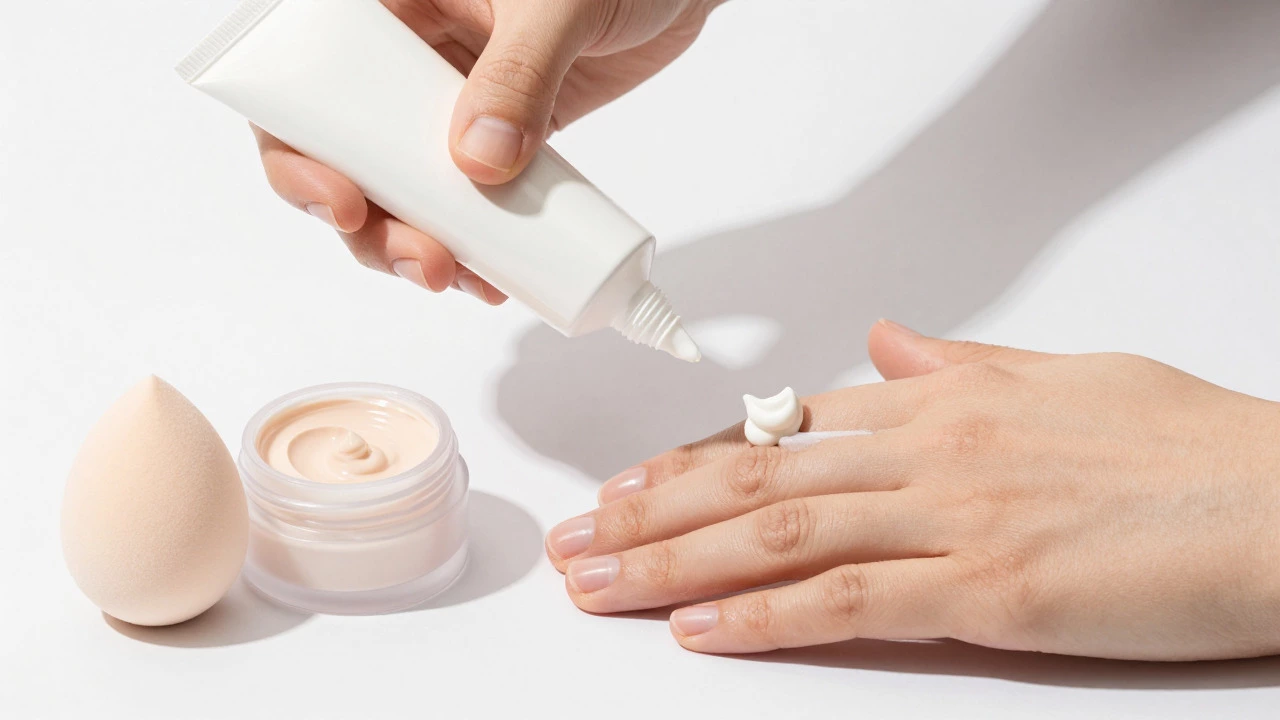
Color Correction Before Foundation
If you struggle with dark circles, redness, or hyperpigmentation, this is the step to tackle them before applying foundation. Color correction uses the color wheel principle to neutralize unwanted tones.
- Purple/Lavender: Neutralizes yellow sallow tones. Great for brightening dull skin.
- Green: Cancels out redness from acne, rosacea, or irritation.
- Peach/Salmon: Counteracts blue-purple dark circles on fair to medium skin.
- Orange/Red: Neutralizes deep purple/blue dark circles on deeper skin tones.
Apply these correctors sparingly. You don’t want thick stripes of color showing through your foundation. Blend them out well with your fingers or a small sponge. Once corrected, your foundation goes on much thinner because it doesn’t have to work as hard to hide discoloration.
Foundation and Concealer Order
Now we get to the base. Apply foundation first. Why? Because you’ll likely spread some foundation over areas where you applied concealer. If you do concealer first, you might wipe it away while blending foundation, wasting product and effort.
Choose a foundation that matches your undertone, not just your depth. Test it on your jawline in natural light. Apply it to the center of your face and blend outward. Less is more. Build coverage where needed rather than applying a thick layer everywhere.
After foundation, assess if you still need concealer. Often, good foundation hides minor imperfections. If you still see dark circles or blemishes, apply concealer now. Use a shade slightly lighter than your foundation for under-eyes to brighten, and match your foundation exactly for spot-concealing blemishes. Set these areas lightly with powder to prevent creasing.
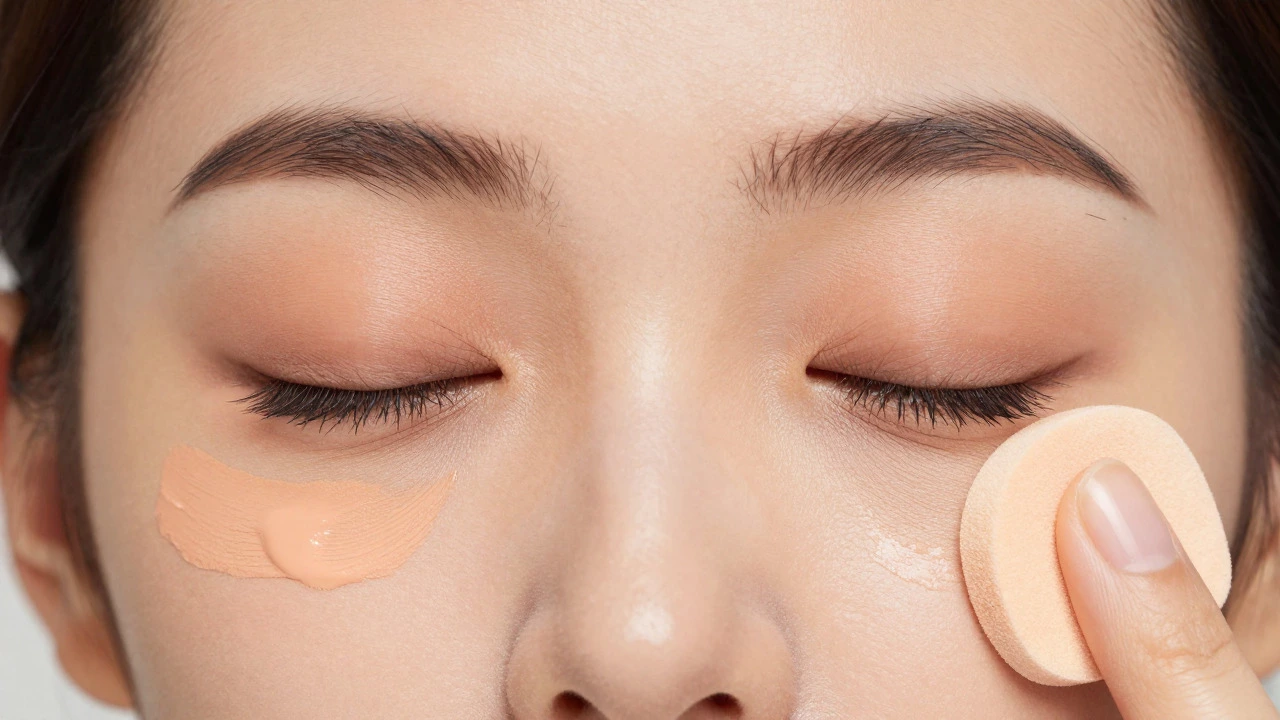
Setting Your Base
To make your makeup last, you need to set it. This means using powder or setting spray. Powder absorbs excess oil and locks liquid products in place. Setting spray melts powders together and gives a fresh, non-powdery finish.
If you have oily skin, use a translucent setting powder on your T-zone (forehead, nose, chin). Press it into the skin with a puff, don’t sweep it. Sweeping moves the foundation underneath. For dry skin, skip heavy powdering and rely on a hydrating setting spray instead. This keeps the look dewy and prevents a cakey appearance.
Common Mistakes to Avoid
Even with the right products, technique matters. One common error is using too many steps. If your skin is naturally balanced, you might only need moisturizer, sunscreen, and foundation. Adding serum, eye cream, lip balm, toner, essence, and three types of primers can lead to product overload and pilling.
Another mistake is neglecting the neck and chest. If there’s a harsh line between your face and neck, it looks obvious. Blend your foundation down slightly and ensure your sunscreen covers these areas too.
Finally, don’t forget to remove your makeup properly at night. Starting your next day’s routine with clean skin is just as important as the morning prep. Double cleansing-using an oil-based cleanser followed by a water-based one-ensures all waterproof mascara and long-wear foundation is removed.
Can I skip moisturizer if I have oily skin?
No, you shouldn't skip moisturizer. Dehydrated oily skin often produces more oil to compensate for lack of hydration. Use an oil-free, gel-based moisturizer to keep your skin balanced without adding shine.
Do I need primer if I'm using a foundation with SPF?
Not necessarily. If your foundation has high SPF and you apply enough of it, you might get sufficient protection. However, most people don't apply enough foundation to get the labeled SPF level. So, wearing a dedicated sunscreen underneath is safer. Primer is optional depending on your skin's texture and longevity needs.
Why does my makeup pill or ball up?
Pilling happens when incompatible ingredients mix or when you apply too many layers before the previous one sets. It can also occur if you rub your skin vigorously instead of patting. Ensure each layer (moisturizer, sunscreen, primer) is fully absorbed before moving to the next step.
Should I apply eye cream before or after foundation?
Eye cream should be part of your initial skincare prep, applied before foundation. Wait for it to absorb completely. If you apply it after foundation, you risk smudging your base makeup. Using a dedicated eye primer after eye cream can help eyeshadow last longer.
Is it okay to use tinted sunscreen as my base?
Yes, for a natural, minimal look, tinted sunscreen can replace foundation. It offers protection and evens out skin tone slightly. If you need more coverage, you can layer a light foundation or concealer over it, but ensure the formulas are compatible to avoid pilling.