
What Category Is Cosmetic? Understanding the Legal and Scientific Classifications
 Jul, 16 2026
Cosmetic vs. Drug Classification Checker
Enter a product name and describe what it does or claims to do (e.g., "Treats acne," "Moisturizes skin," "Blocks UV rays").
- Cosmetic: Cleanses, beautifies, promotes attractiveness, alters appearance.
- Drug: Treats/prevents disease, affects structure/function of body.
- Dual: Does both (e.g., Anti-dandruff shampoo).
Have you ever looked at a bottle of shampoo or a jar of moisturizer and wondered if it’s just a beauty product or something more? You aren’t alone. The line between what counts as a cosmetic and what counts as a drug is often blurry to consumers, but legally and scientifically, the distinction is rigid. If you are trying to understand how these products are classified, why some claim to "treat" conditions while others only "enhance" appearance, or how regulators like the FDA view your bathroom cabinet, this guide breaks it down simply.
The short answer is that a cosmetic is defined by its intended use: to cleanse, beautify, promote attractiveness, or alter appearance without affecting the body’s structure or functions. However, many products sit in a gray area known as "over-the-counter drugs" (OTCs) because they do both. Let’s unpack exactly where your favorite products fit into this regulatory puzzle.
The Legal Definition of a Cosmetic
To understand what category a cosmetic falls into, we have to look at the law. In the United States, the Federal Food, Drug, and Cosmetic Act (FD&C Act) provides the primary definition. According to this act, a cosmetic is any substance intended to be rubbed, poured, sprinkled, or sprayed on the human body for cleansing, beautifying, promoting attractiveness, or altering the appearance.
This definition covers a massive range of items. Think about your daily routine:
- Makeup: Lipstick, eyeshadow, nail polish, and foundation.
- Perfumes: Fragrances intended to make you smell appealing.
- Skincare basics: Moisturizers, lotions, and creams that hydrate or soften skin.
- Hair care: Shampoos, conditioners, hair dyes, and styling gels.
- Personal hygiene: Soaps, deodorants, and bath oils.
The key phrase here is "altering appearance." If a product makes your skin look smoother by sitting on top of it or adding moisture, it is likely a cosmetic. It does not change how your skin cells function; it just changes how they look or feel temporarily.
Cosmetic vs. Drug: The Intended Use Test
Here is where things get tricky. A product is not categorized by what it *is*, but by what it *claims* to do. This is called the "intended use" test. If a product claims to treat, prevent, or cure a disease, or affect the structure or function of the body, it is a drug-even if it looks exactly like a cosmetic.
Consider sunscreen. If a bottle says it "protects against UV rays," it is making a medical claim about preventing damage (skin cancer or sunburn). Therefore, it is an Over-The-Counter (OTC) drug. If a lotion simply says it "moisturizes dry skin," it is a cosmetic. But if that same lotion says it "heals eczema" or "reduces inflammation," it crosses the line into being a drug.
This distinction matters because drugs undergo rigorous testing for safety and efficacy before they can be sold. Cosmetics generally do not require pre-market approval from the FDA, though they must be safe for use under labeled conditions. This is why you see so much debate around "drug-cosmetic combinations."
The Gray Area: Dual-Classified Products
Many popular products fall into both categories simultaneously. These are often referred to as dual-classified products. They perform a cosmetic function (like cleaning or beautifying) and a drug function (like treating acne or killing bacteria).
| Product Type | Cosmetic Function | Drug Function |
|---|---|---|
| Anti-Dandruff Shampoo | Cleanses and conditions hair | Treats scalp fungus or reduces flaking |
| Acne Wash | Cleanses facial skin | Kills bacteria or exfoliates to prevent breakouts |
| Antiperspirant | Masks odor with fragrance | Reduces sweating by blocking sweat glands |
| Sunscreen Lotion | Moisturizes skin | Prevents UV radiation damage |
Notice the difference between antiperspirants and deodorants. Deodorants mask odor and are purely cosmetics. Antiperspirants reduce the amount of sweat produced, which affects the body’s function, making them drugs. This subtle difference dictates how they are regulated, tested, and labeled.
Global Perspectives: How Other Countries Categorize Cosmetics
While the US relies heavily on the FD&C Act, other regions have different frameworks. For example, the European Union has the EU Cosmetics Regulation (EC) No 1223/2009. This regulation is stricter than US law regarding ingredient bans and safety assessments. In the EU, the definition of a cosmetic is similar-substances intended to be placed in contact with the external parts of the human body for exclusively or mainly cleaning, perfuming, changing appearance, or correcting body odors.
However, the EU explicitly excludes products that claim therapeutic effects. If a product claims to treat a condition, it cannot be marketed as a cosmetic in Europe; it must go through the medicinal product pathway. This means a serum claiming to "reduce wrinkles" might be sold as a cosmetic in the US if it doesn't claim to change skin structure, but could face scrutiny in the EU if it implies anti-aging benefits that border on medical treatment.
In Asia, countries like Japan and South Korea have their own stringent systems. Japan’s Pharmaceuticals and Medical Devices Agency (PMDA) categorizes products into quasi-drugs and cosmetics. Quasi-drugs include items like whitening agents and anti-dandruff shampoos, requiring more oversight than pure cosmetics.
Why Classification Matters for Consumers
You might ask, "So what? Does it really matter if my cream is a cosmetic or a drug?" Absolutely. Here is why:
- Efficacy Claims: Drugs must prove they work. If a product is classified as a drug, the manufacturer has submitted data showing it delivers on its promise. Cosmetics do not have this burden. A cosmetic can claim to "brighten" skin without proving it actually increases light reflection significantly.
- Ingredient Safety: While all cosmetics must be safe, drug ingredients are subject to monographs that specify exact concentrations and purity levels. For example, benzoyl peroxide in acne washes must meet specific standards to be considered an effective drug ingredient.
- Labeling Requirements: Drug labels must include active ingredients, purpose, warnings, and directions for use. Cosmetic labels list ingredients but do not need to disclose inactive ones in the same detailed manner, nor do they need warning statements unless required by specific state laws (like California’s Prop 65).
Understanding this helps you decode marketing language. When a brand uses words like "treat," "cure," "prevent," or "diagnose," they are signaling a drug classification. When they use "enhance," "beautify," "cleanse," or "refresh," they are staying within the cosmetic lane.
The Rise of "Cosmeceuticals": A Marketing Myth?
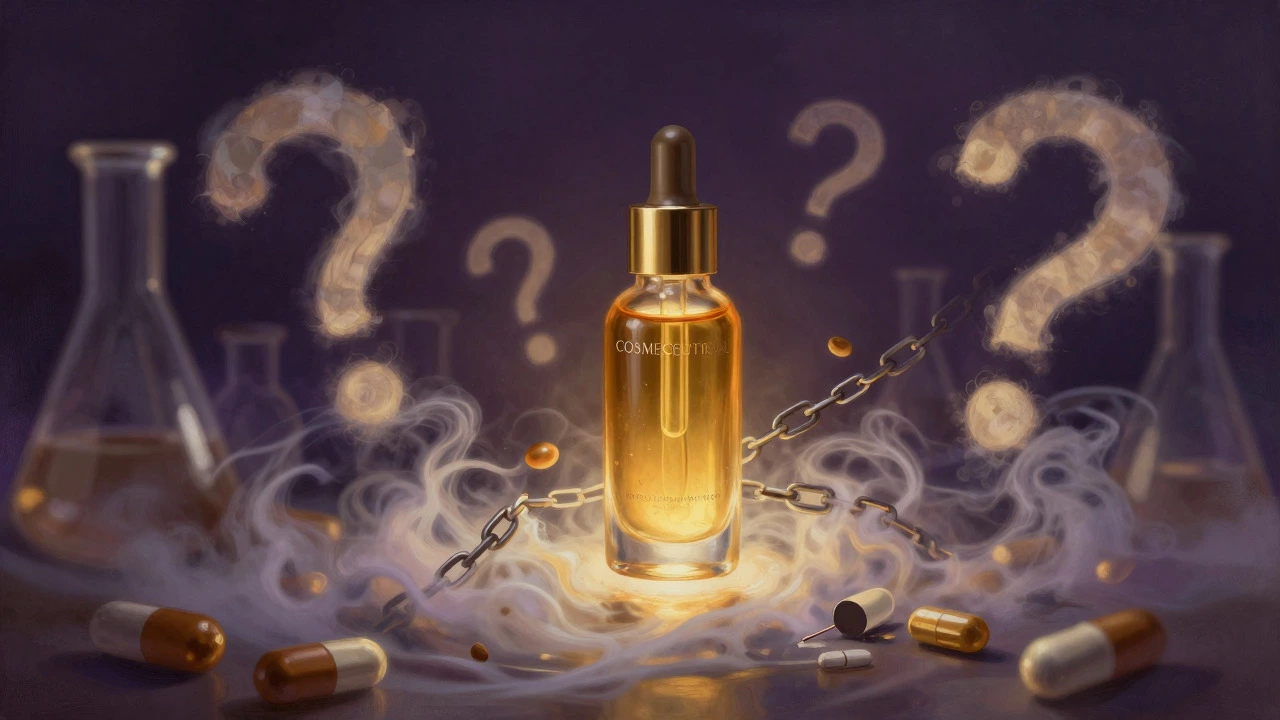
You may have heard the term "cosmeceutical." It sounds scientific, right? Like a combination of cosmetic and pharmaceutical. But here is the catch: "Cosmeceutical" is not a legal term recognized by the FDA or most global regulatory bodies. It is a marketing buzzword created to suggest that a cosmetic product has the potency of a drug.
Products labeled as cosmeceuticals often contain high concentrations of active ingredients like retinol, vitamin C, or hyaluronic acid. While these ingredients can be beneficial, if the product does not make a drug claim, it is legally just a cosmetic. The term allows brands to market potent ingredients without undergoing the expensive and time-consuming clinical trials required for drug approval.
As a consumer, you should look past the label "cosmeceutical" and focus on the ingredient list and the specific claims. Does the product say it "smooths fine lines" (cosmetic) or "reverses photoaging" (drug-like claim)? The latter would require drug status.
How to Check Your Product’s Category
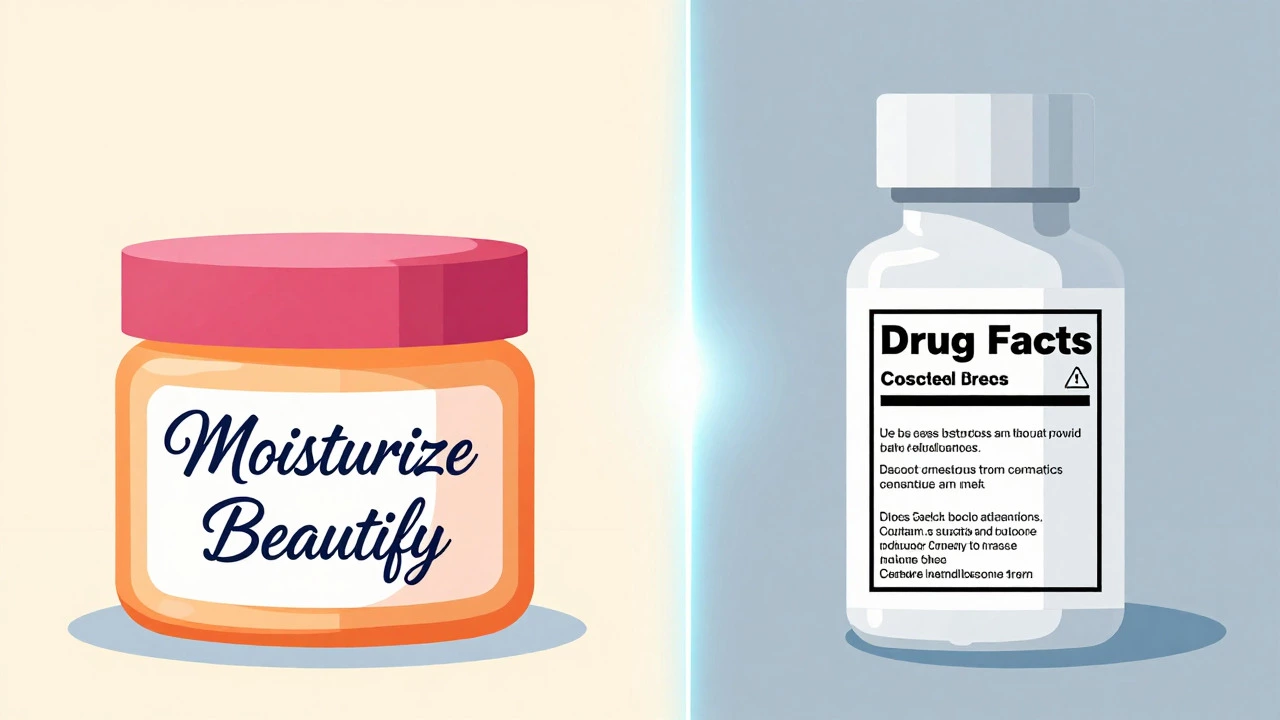
If you want to know for sure how a product is classified, you can check the labeling and online databases. In the US, the FDA maintains the Voluntary Cosmetic Registration Program (VCRP), though participation is voluntary. More reliably, look for the Drug Facts panel. If you see a box listing "Active Ingredients" and "Purpose," you are holding an OTC drug. If you only see an ingredient list starting with "Ingredients:" and no Drug Facts panel, it is a cosmetic.
For international products, check the INCI (International Nomenclature of Cosmetic Ingredients) list. All cosmetics globally must use INCI names for ingredients. If a product follows INCI standards but lacks drug-specific warnings, it is likely categorized as a cosmetic in its home market.
Future Trends in Cosmetic Regulation
The landscape is shifting. With the passage of the Modernization of Cosmetics Regulation Act (MoCRA) in the US in 2022, the FDA now has enhanced authority over cosmetics. This includes mandatory facility registration, product listing, and adverse event reporting. While MoCRA does not change the fundamental definition of a cosmetic versus a drug, it closes loopholes that allowed unsafe cosmetics to remain on the market unchecked.
We are also seeing a rise in "personalized skincare," where AI analyzes your skin type and recommends products. These recommendations blur the line further. If an app diagnoses your skin condition and prescribes a regimen, is that medical advice? Regulatory bodies are still catching up to these digital innovations, but the core principle remains: if it treats, it’s a drug. If it beautifies, it’s a cosmetic.
Is makeup considered a cosmetic?
Yes, makeup is the quintessential cosmetic. Products like lipstick, mascara, and foundation are designed solely to enhance appearance or alter color, without affecting the body's structure or function.
Are natural products always classified as cosmetics?
No. Whether a product is natural or synthetic does not determine its category. A natural tea tree oil treatment that claims to kill acne-causing bacteria is a drug, even though it is plant-based. A synthetic moisturizer that only hydrates is a cosmetic.
Does the FDA approve cosmetics before they are sold?
Generally, no. Unlike drugs, cosmetics do not require pre-market approval from the FDA. Manufacturers are responsible for ensuring their products are safe and properly labeled. However, color additives used in cosmetics must be approved by the FDA.
What is the difference between a cosmetic and a quasi-drug?
Quasi-drugs are a category primarily used in Japan and some other Asian countries. They are products that have mild pharmacological effects, such as whitening agents or anti-dandruff shampoos. They require more regulation than pure cosmetics but less than full pharmaceutical drugs.
Can a product be both a cosmetic and a drug?
Yes. Many products, such as medicated shampoos or sunscreen lotions, serve both functions. They must comply with the regulations for both categories, meaning they need drug-level testing for their active ingredients and cosmetic-level labeling for their base formula.