
What Are the Different Makeup Products? A Simple Guide to Every Type You Need
 Mar, 12 2026
Makeup Product Knowledge Quiz
Your Results
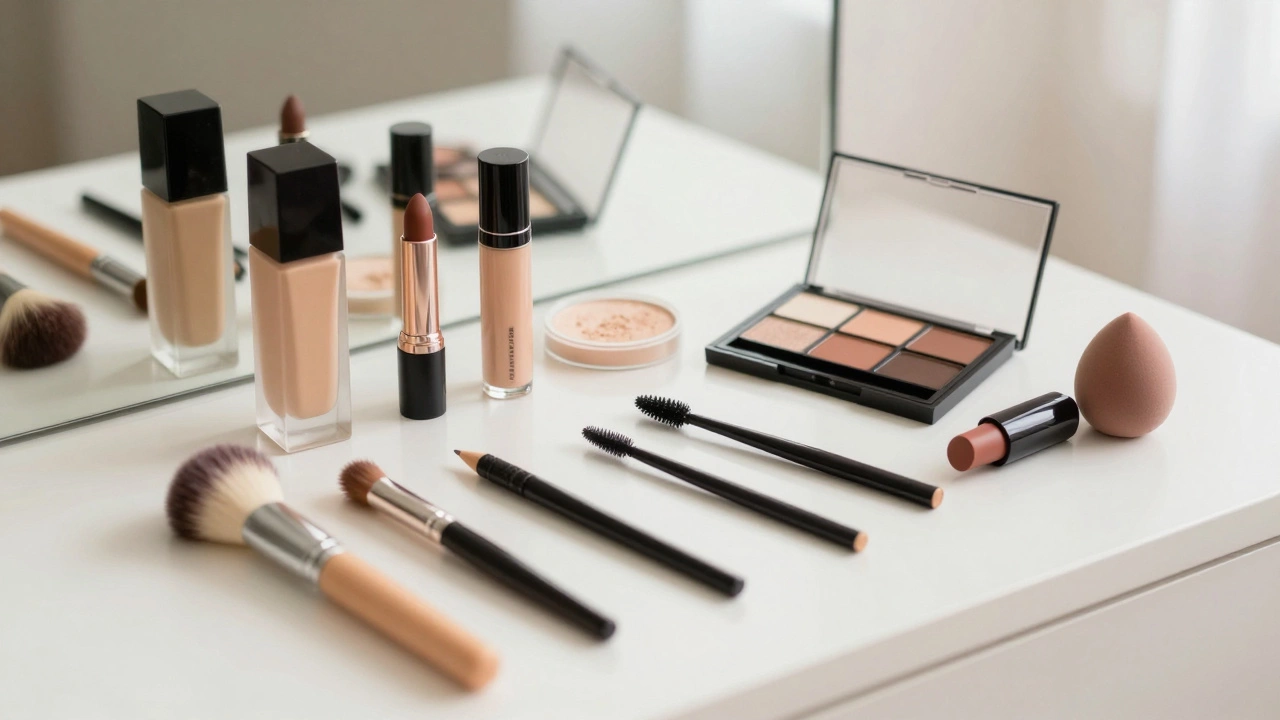
When you open your makeup bag, what do you actually see? A mess of tubes, pots, and brushes? It’s easy to feel overwhelmed. But makeup products aren’t random clutter-they each have a job. Knowing what each one does, and when to use it, makes getting ready faster, easier, and way more fun. Let’s cut through the noise and break down every common makeup product you’ll actually use.
Foundation: Your Base Layer
Foundation is the backbone of most makeup routines. It’s designed to even out skin tone and create a smooth canvas. Not all foundations are the same. There’s liquid, cream, powder, stick, and even cushion formulas. Liquid foundation works best for medium to full coverage and blends easily. Cream foundations are thicker, great for dry skin or older skin that needs extra hydration. Powder foundation is lightweight and matte-perfect for oily skin or touch-ups during the day. Stick foundations are portable and buildable, often used for spot coverage or on-the-go applications. Cushion compacts are sponge-pressed formulas that give a dewy finish and are popular in Asia but now everywhere.
Choosing the right shade matters. Too light? You’ll look ghostly. Too dark? You’ll end up with a visible line at your jaw. Test foundation on your jawline in natural light. The best match disappears into your skin. Brands like Fenty Beauty, NARS, and Maybelline offer wide shade ranges so you’re not stuck guessing.
Concealer: The Spot Fixer
Concealer does what foundation can’t: hide dark circles, redness, blemishes, and hyperpigmentation. It’s usually thicker and more pigmented than foundation. You can use it under your eyes, on spots, or even as a color corrector. For dark circles, go one shade lighter than your skin tone to brighten. For blemishes, match your skin tone exactly. Cream concealers last longer and don’t crease as much as liquid ones. Stick concealers are handy for travel.
Pro tip: Apply concealer after foundation if you’re doing full coverage. But if you’re going for a natural look, apply it first-then blend foundation over it. That way, you use less product overall.
Setting Powder: Lock It In
Setting powder keeps your makeup from sliding off. It’s especially useful if you have oily skin or live in a humid climate-like Wellington in summer. Translucent powders are the most common. They don’t add color, just blur pores and absorb shine. Colored powders can help neutralize redness or warm up cool tones, but they’re not for beginners.
Use a fluffy brush to lightly dust powder over your T-zone: forehead, nose, and chin. Don’t go heavy. Too much powder looks cakey. Pressing it in with a sponge gives a more natural finish. Many people skip this step, but if your foundation moves by 11 a.m., you’re missing this.
Blush: The Natural Flush
Blush adds color to your cheeks, making you look healthy and alive. It’s not just for pink tones anymore. You can find peach, coral, rose, mauve, even bronze shades. Cream blushes blend easily and give a dewy glow. Powder blushes last longer and are easier to control. Stick blushes are great for on-the-go application.
Where you apply it matters. Smile and apply blush to the apples of your cheeks. Then blend it back toward your temples. Avoid putting it too low-it can make you look tired. If you’re unsure, start with a sheer layer. You can always add more.
Bronzer and Contour: Shape and Dimension
Bronzer warms up your skin. It’s for giving a sun-kissed glow, not for looking like you’ve been in a tanning bed. Choose a shade one to two tones darker than your skin, with warm undertones. Contour is different-it’s cooler-toned and used to create shadows that sculpt your face. Think cheekbones, jawline, and nose.
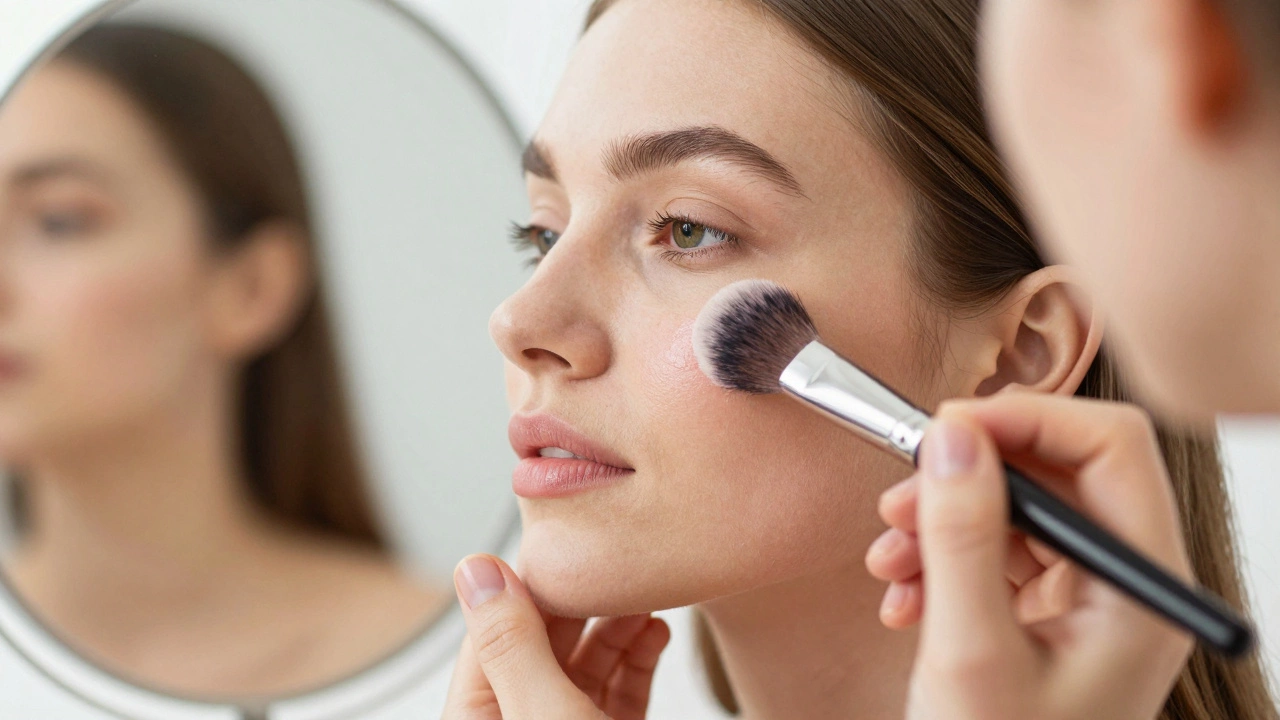
Use a small, angled brush for contour. Sweep it under your cheekbones, along your hairline, and the sides of your nose. Blend well. If it looks like you’ve got dirt on your face, you used too much. Bronzer goes on where the sun hits: forehead, cheekbones, chin, and bridge of the nose. Many people mix bronzer and contour together. That’s fine, but know the difference.
Eyeshadow: Color and Depth
Eyeshadow comes in palettes with matte, shimmer, and metallic finishes. You don’t need 20 shades. Start with three: a light base, a mid-tone for the lid, and a dark shade for the crease. Cream shadows are easier to blend and great for dry eyelids. Powder shadows last longer and are more precise.
Apply the lightest shade all over the lid. The medium shade goes on the movable part of the eyelid. The darkest shade blends into the crease-never stop at the edge. Blend upward and outward. If you’re new to this, use a clean brush to soften harsh lines. You can even use your finger to pat on shimmer for a quick glow.
Eyeliner: Define Your Eyes
Eyeliner comes in pencil, liquid, gel, and pen forms. Pencil is the easiest to use-soft, smudgy, forgiving. Liquid gives sharp lines. Gel is in a pot and applied with a brush-great for precise wings. Pen liners are like markers and are popular for beginners.
Start thin. You can always go thicker later. Draw from the inner corner to the outer corner. If you’re shaky, do it in short strokes. Don’t try to draw one long line. For a natural look, line only the outer third of your eye. For drama, line the whole lid and smudge it slightly. Waterline liner makes eyes pop, but it can smudge. Use a waterproof formula if you’re prone to tearing up.
Mascara: Lift and Length
Mascara is the quickest way to make your eyes look bigger. There are formulas for lengthening, volumizing, curling, and waterproofing. Curl your lashes first with a lash curler, then apply mascara. Start at the base and wiggle the wand upward. One coat is enough for day. Two coats for night. Avoid pumping the wand-it introduces air and dries out the formula.
Clumps? Use a clean spoolie brush to comb through. Waterproof mascara stays put if you cry, sweat, or get caught in rain. But it’s harder to remove. Always use an oil-based makeup remover. And replace your mascara every three months. Old mascara can harbor bacteria.
Lipstick and Lip Gloss
Lip products come in matte, satin, cream, liquid, and gloss finishes. Matte lipsticks last longest and have bold color. They can feel drying, so prep lips with balm first. Satin and cream formulas are hydrating and give a soft shine. Liquid lipsticks are trendy-they dry down to a matte finish and last for hours. Gloss adds shine and volume but doesn’t last long.
Choose shades that suit your skin tone. Cool tones (pink, berry) work for fair to medium skin with blue or pink undertones. Warm tones (coral, nude, brick) suit deeper or yellow-toned skin. Neutral nudes are safe if you’re unsure. Apply with a brush for precision, or just use the bullet.
Lip Liner: Precision and Longevity
Lip liner isn’t just for outlining. It prevents lipstick from bleeding, especially with bold colors. It also helps lipstick last longer. Match your liner to your lipstick, or go one shade deeper. If you don’t have a matching liner, use a neutral brown or nude.
Line just outside your natural lip line if you want fuller lips. Don’t overdo it. A tiny bit outside the edge is enough. Fill in your whole lip with liner before applying lipstick-it acts as a base and makes color pop.
Setting Spray: The Final Seal
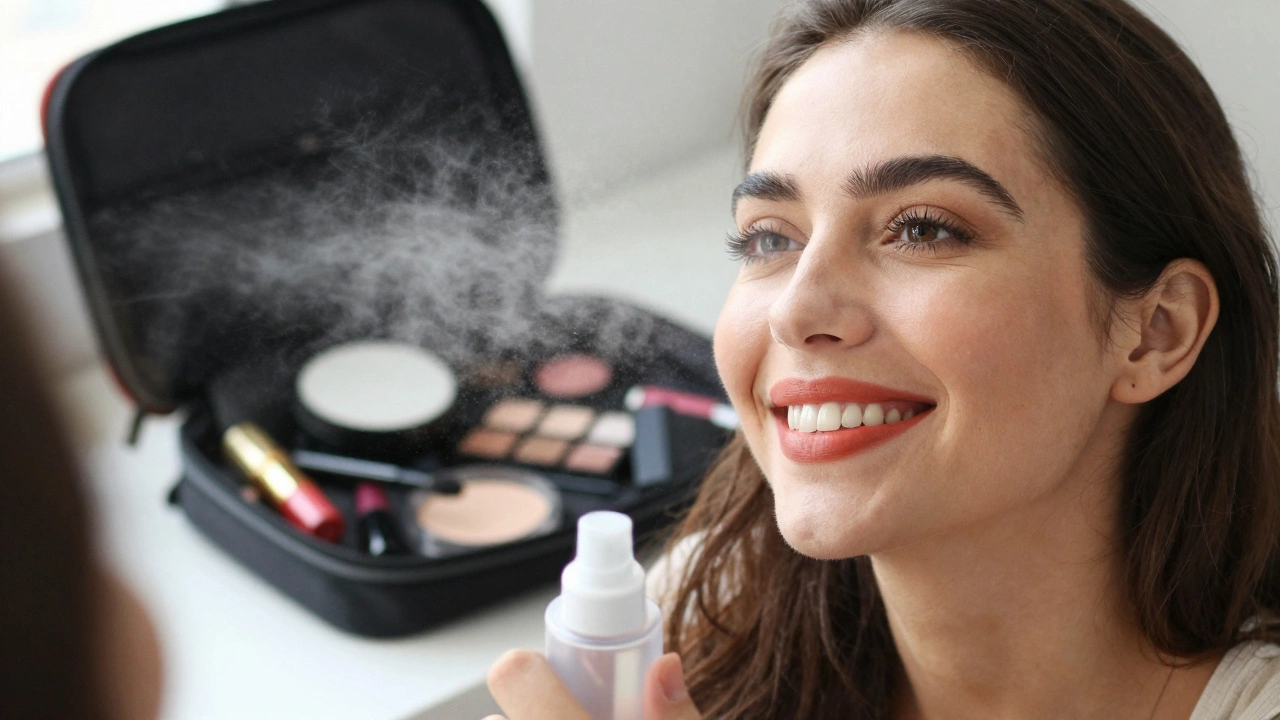
Setting spray is the final step. It holds everything in place, reduces shine, and gives a soft-focus finish. Some sprays are mattifying. Others give a dewy glow. Choose based on your skin type. Hold the bottle 8-10 inches from your face and mist in an X and T motion. Let it dry naturally. Don’t rub it in.
It’s not magic. But if you’ve ever had your makeup melt by lunchtime, setting spray will change your life. Look for ones with hyaluronic acid or aloe for extra hydration. Skip alcohol-heavy formulas-they dry out skin.
What You Don’t Need
You don’t need 15 lipsticks. Or five different concealers. Or a palette with 48 shades. Start with the basics: foundation, concealer, setting powder, blush, mascara, lipstick, and lip liner. Add eyeshadow and eyeliner when you feel comfortable. Build slowly. The goal isn’t to use everything-it’s to use what makes you feel good.
Final Thought
Makeup is personal. There’s no right or wrong way to wear it. Some people wear full face every day. Others use tinted moisturizer and lip balm. Both are valid. The best makeup products are the ones you enjoy using. Try new things. Mix brands. Experiment with colors. If you hate glitter, skip it. If you love bold lips, own it. Makeup isn’t about hiding-you’re just enhancing what’s already there.