
Organic Ingredients in Beauty: What Really Matters
When you see organic ingredients, plant-based components grown without synthetic pesticides or GMOs, often certified by recognized bodies like USDA or COSMOS. Also known as natural skincare components, they’re marketed as safer, gentler, and more eco-friendly—but not all that glitters is organic. The truth? The word "organic" on a label doesn’t always mean what you think. Some brands slap it on products with just 1% certified organic content and call it a day. Real organic skincare means the majority of ingredients come from farms that avoid synthetic fertilizers, herbicides, and chemical processing. It’s not just a buzzword—it’s a farming and manufacturing standard.
That’s why organic certification, a third-party verification that confirms ingredients meet strict agricultural and processing rules matters. Without it, "organic" is just marketing. Look for labels from USDA Organic, ECOCERT, or COSMOS—they require at least 95% of ingredients to be organic (in the case of USDA) and ban harmful additives like parabens and phthalates. Compare that to natural cosmetics, products made with ingredients derived from nature but not necessarily grown or processed under regulated conditions. Natural doesn’t mean safe or effective. A plant extract can still irritate skin or cause allergies. And many "natural" products contain synthetic preservatives to stop mold, which defeats the purpose.
Organic ingredients aren’t magic. They don’t reverse wrinkles overnight. But when paired with proven actives like hyaluronic acid or niacinamide, they can support skin health without harsh chemicals. For example, organic aloe vera soothes redness, organic jojoba oil mimics your skin’s natural sebum, and organic chamomile reduces inflammation. These aren’t just trendy—they’re backed by dermatology. The real difference shows in long-term use: less irritation, better barrier function, and fewer reactions over time.
But here’s the catch: organic doesn’t equal vegan. Some organic products still use beeswax, honey, or lanolin. And organic doesn’t mean cruelty-free either—certification doesn’t cover animal testing. That’s why you need to check two labels: one for organic, one for cruelty-free. Brands like L’Oréal and Aveeno might use organic ingredients but still test on animals in certain markets. Meanwhile, some small brands skip certification entirely because the cost is too high, even if their ingredients are truly organic.
So what should you look for? Start by reading the ingredient list. If you see "Organic Aloe Barbadensis Leaf Juice" instead of just "aloe vera," that’s a good sign. Check for the certification logo. And don’t trust claims like "made with organic ingredients" unless they list the percentage. The FTC and UK Advertising Standards Authority have cracked down on false claims—so if a brand is hiding details, that’s a red flag.
Behind every bottle of organic skincare is a story: farmers growing lavender without pesticides, distillers using solar-powered equipment, labs testing for heavy metals. It’s not just about what’s in the jar—it’s about how it got there. That’s why the best organic products come from transparent brands that share their supply chain. You’re not just buying skincare—you’re voting with your wallet for cleaner farming, less pollution, and safer ingredients.
Below, you’ll find real breakdowns of what’s in your products, who’s lying about "organic," and which certifications actually mean something. No fluff. Just facts you can use to choose smarter.
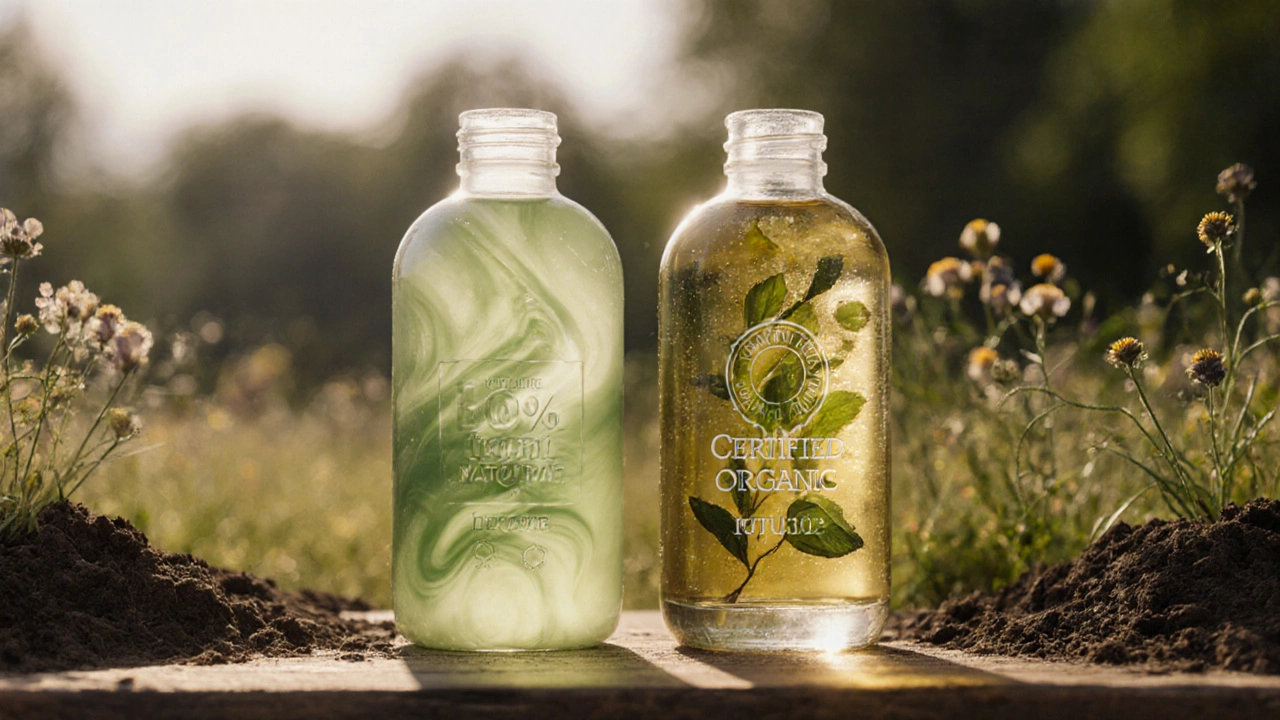
Is 100% Natural the Same as Organic in Skincare?
Natural doesn't mean organic in skincare. Learn the real difference between the two labels, what certifications actually require, and how to spot truly clean products that protect your skin and the planet.