
Medical Grade Skincare vs Over-the-Counter: Is the Price Tag Justified?
 Apr, 27 2026
Skincare Path Finder: OTC vs. Medical Grade
Select the primary skin concern you are currently trying to address to see the recommended approach.
The Real Meaning Behind the Label
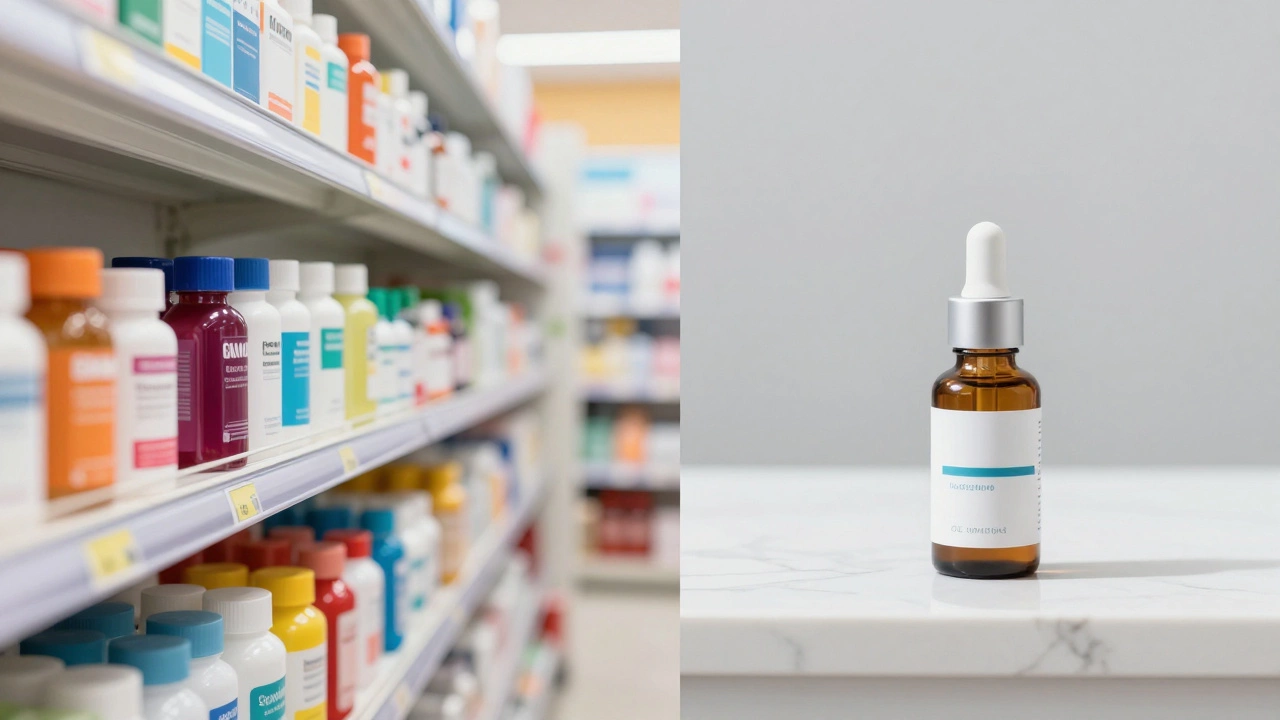
First, let's clear up a common myth. In the US and many other regions, the FDA doesn't actually have a legal category called 'medical grade skincare.' Instead, we are talking about medical grade skincare is a category of professional-strength products, often called cosmeceuticals, that contain higher concentrations of active ingredients and are sold through licensed healthcare providers. Unlike the stuff you find at a pharmacy, these products are designed to bypass the skin's natural barrier more efficiently.
When you buy a standard over-the-counter (OTC) cream, the manufacturer has to make it safe for everyone-including people with incredibly sensitive skin. This means they often dilute the active ingredients. A professional-strength product, however, is dispensed by a professional who can assess your skin type first. This allows the formula to be more aggressive because a pro is monitoring your reaction. If you've ever used a 0.1% retinol from a drugstore and felt nothing, and then tried a prescription-strength 0.5% tretinoin and woke up with peeling skin, you've experienced the difference in potency firsthand.
How Active Ingredients Actually Work
The magic (or science) happens in the concentration and stability of the molecules. Let's take Vitamin C is a powerful antioxidant, specifically L-ascorbic acid, used to brighten skin and boost collagen production. In a cheap store-bought serum, Vitamin C is notoriously unstable; it oxidizes quickly when exposed to air and light, often turning orange and becoming useless. Professional lines often use proprietary stabilization technology or airtight, vacuum-sealed packaging that keeps the ingredient active until the moment it hits your skin.
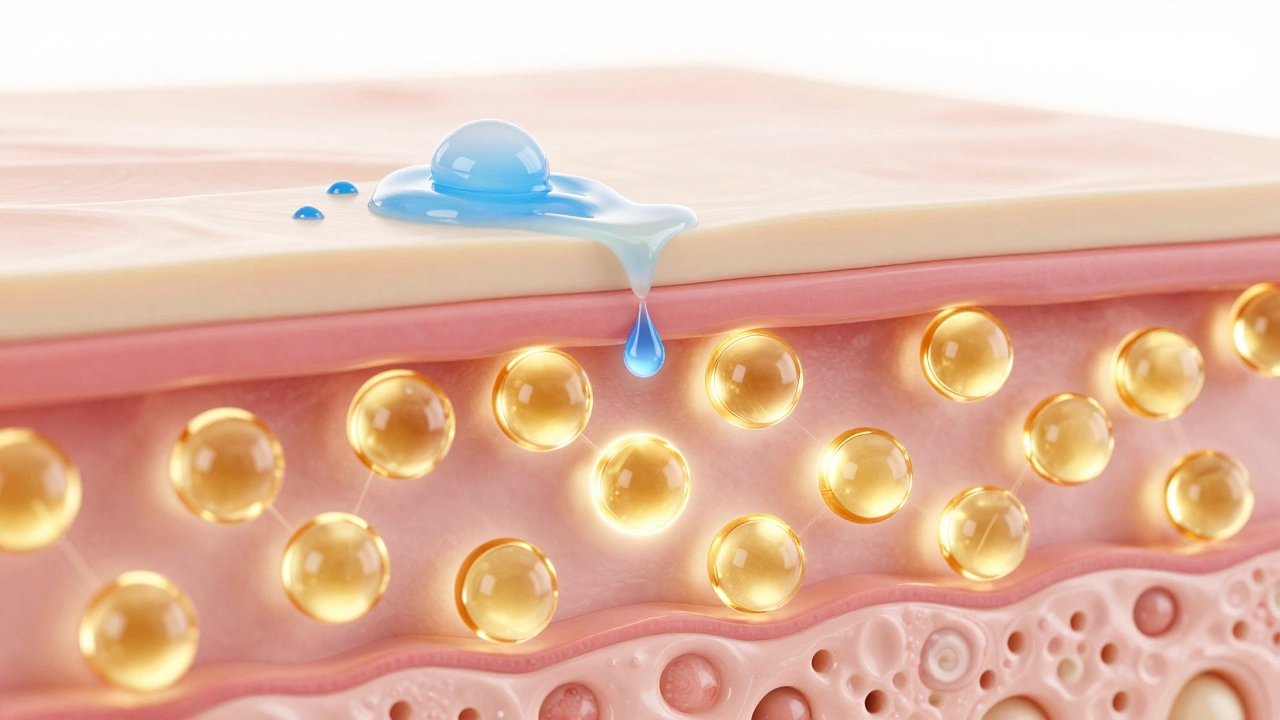
Then there's the delivery system. Your skin is designed to keep things out. Professional products often use Liposomes is spherical vesicles that encapsulate active ingredients to allow them to penetrate deeper into the dermis. While a basic lotion just sits on the surface (the stratum corneum), a medical-grade formula is engineered to push those actives deeper, where they can actually trigger cellular change rather than just hydrating the surface.
| Feature | OTC (Drugstore/Retail) | Medical Grade (Professional) |
|---|---|---|
| Ingredient Concentration | Lower, designed for general safety | Higher, targeted for specific results |
| Accessibility | Available to anyone, anywhere | Requires a provider's consultation |
| Penetration Depth | Mostly surface-level (Epidermis) | Deeper delivery (into the Dermis) |
| Price Point | Affordable to Moderate | Premium / High |
| Risk of Irritation | Low (due to dilution) | Higher (requires professional guidance) |
The Role of the Provider
One of the biggest value-adds of professional skincare isn't actually the liquid in the bottle-it's the person handing it to you. When you work with a Dermatologist is a medical doctor specializing in the diagnosis and treatment of skin disorders, you get a customized plan. They can perform a skin analysis to see if your 'dry skin' is actually dehydrated skin or a compromised skin barrier. Using a high-strength acid on a compromised barrier can lead to chemical burns, which is why the 'gatekeeper' model of professional skincare is so important.
Think of it like gym equipment. A set of 2kg dumbbells (OTC) is great for maintaining basic tone and is safe for almost anyone. A 50kg barbell (Medical Grade) can build significantly more muscle, but if you use it with bad form, you'll injure yourself. The dermatologist is your personal trainer, ensuring you use the high-potency ingredients in the right order and at the right frequency to avoid damaging your skin.
Breaking Down the Cost: Is It Worth the Investment?
Whether these products are 'worth it' depends entirely on your goals. If you have a few breakouts a month and just want to keep your skin glowing, a solid Skincare Routine is a consistent sequence of cleansing, treating, and moisturizing the skin using high-quality OTC products is plenty. You don't need a $200 serum for basic maintenance.
However, if you're dealing with stubborn Hyperpigmentation is dark patches or spots on the skin caused by excess melanin production, deep cystic acne, or significant loss of elasticity (deep wrinkles), OTC products often fail. This is because these issues exist deep in the dermis. To move the needle on these conditions, you need the higher concentrations and specialized delivery systems found in professional lines. In these cases, spending more upfront on a product that actually works is cheaper than buying ten different 'miracle' drugstore creams that do nothing.
Common Pitfalls and What to Avoid
The biggest mistake people make is 'mixing and matching' without a plan. I've seen people buy a professional-grade Retinoid is a derivative of Vitamin A that increases cell turnover and clears acne and then use it alongside a strong OTC exfoliating acid. The result? A destroyed skin barrier, redness, and peeling. Professional ingredients are powerful; they aren't meant to be layered randomly.
Another pitfall is the 'luxury' trap. Be careful not to confuse 'medical grade' with 'luxury skincare.' Luxury brands focus on the experience-the smell of the cream, the heavy glass jar, and the celebrity endorsement. Medical grade focuses on the clinical outcome. If a product claims to be 'medical grade' but is sold in a high-end department store without a consultation, it's likely just luxury marketing using medical buzzwords to justify a high price.

The Transition: How to Start
If you decide to make the jump to professional skincare, don't swap everything at once. Your skin needs time to acclimate to higher concentrations. Start by introducing one active ingredient-like a professional Vitamin C or a mild retinoid-and use it every other day for two weeks. This allows your skin to build tolerance. If you experience excessive peeling or itching, scale back. This is exactly why the provider's guidance is crucial; they can tell you when 'purging' is normal and when it's an allergic reaction.
Keep your basic steps simple. You can still use a gentle, drugstore cleanser and a basic moisturizer while using professional-grade treatment serums. You don't need every single step of your routine to be the most expensive version available-only the 'active' steps that are doing the heavy lifting.
Can I buy medical grade skincare online?
While many professional brands have online stores, the 'medical' value comes from the prescription or the professional consultation. Buying these high-potency products without a skin analysis increases the risk of irritation or using the wrong ingredient for your specific skin type.
Are medical grade products safer than OTC?
Not necessarily 'safer' in terms of irritation-actually, they are often more irritating because they are stronger. However, they are 'safer' in the sense that they are formulated with higher purity standards and are overseen by a healthcare provider who can manage side effects.
How long does it take to see results with professional skincare?
Depending on the ingredient, you'll see changes at different times. Vitamin C can brighten skin in a few weeks, while retinoids often take 3 to 6 months of consistent use to significantly change skin texture and reduce wrinkles due to the way skin cells turn over.
Will professional skincare cure my acne?
It is significantly more effective than OTC options for moderate to severe acne because it can target the sebaceous glands more effectively. However, skincare is only one part of the puzzle; diet, hormones, and lifestyle also play huge roles.
Is 'Cosmeceutical' just a marketing term?
Technically, yes, as there is no legal 'cosmeceutical' category in the FDA. But in practice, it describes a hybrid between a cosmetic and a pharmaceutical, focusing on biologically active ingredients that have a proven effect on the skin's structure.
Next Steps and Troubleshooting
If you're feeling overwhelmed, start with a simple audit. List the specific problems you want to solve-is it acne scars, fine lines, or dullness? If your current OTC routine hasn't shown a visible difference in three months, it's time to visit a professional. Be prepared to bring your current products with you so the provider can tell you what to keep and what to toss.
If you start a professional routine and experience extreme redness, stop all actives immediately and use only a bland moisturizer and sunscreen for a week. Once the barrier is repaired, reintroduce the professional product slowly. Remember, the goal isn't to peel your face off; it's to encourage your skin to behave like a younger, healthier version of itself.