
Is Sunscreen a Cosmetic? The Real Answer Behind the Label
 Dec, 1 2025
Sunscreen Classification Checker
Check Sunscreen Classification
Enter your sunscreen product details to see how it would be classified in different regions.
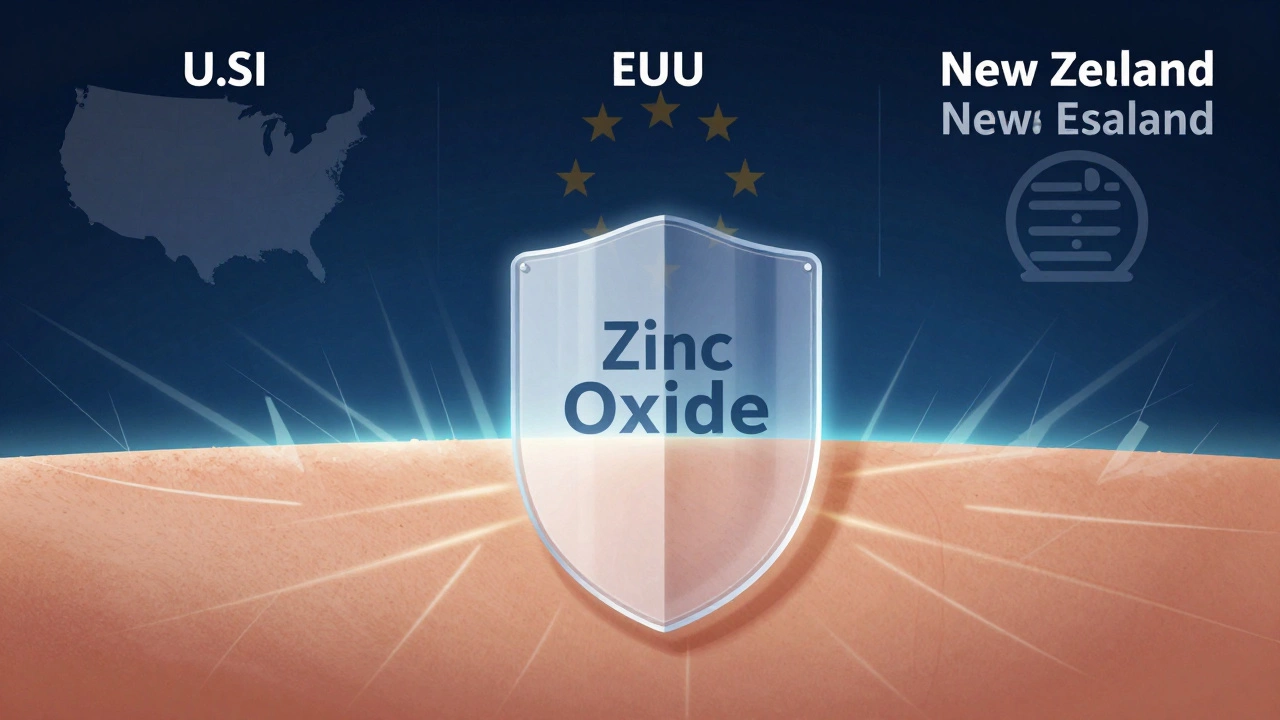
Ever looked at your sunscreen bottle and wondered if it’s really a cosmetic? You’re not alone. On the shelf next to your moisturizer and foundation, sunscreen sits like it belongs - but is it actually the same thing? The answer isn’t as simple as it seems. It depends on where you live, who’s regulating it, and what claims the product makes. In the U.S., sunscreen is regulated as a drug. In Europe, it’s often treated as a cosmetic. And in New Zealand, where I live, it’s a mix of both. This isn’t just semantics - it affects what ingredients can go in it, how it’s tested, and even how it’s labeled.
What Makes Something a Cosmetic?
A cosmetic, by definition, is a product meant to clean, beautify, promote attractiveness, or alter appearance without affecting the body’s structure or function. Think lipstick, mascara, body wash, or hand cream. These sit on the surface. They don’t change how your skin works. They just make it look better.
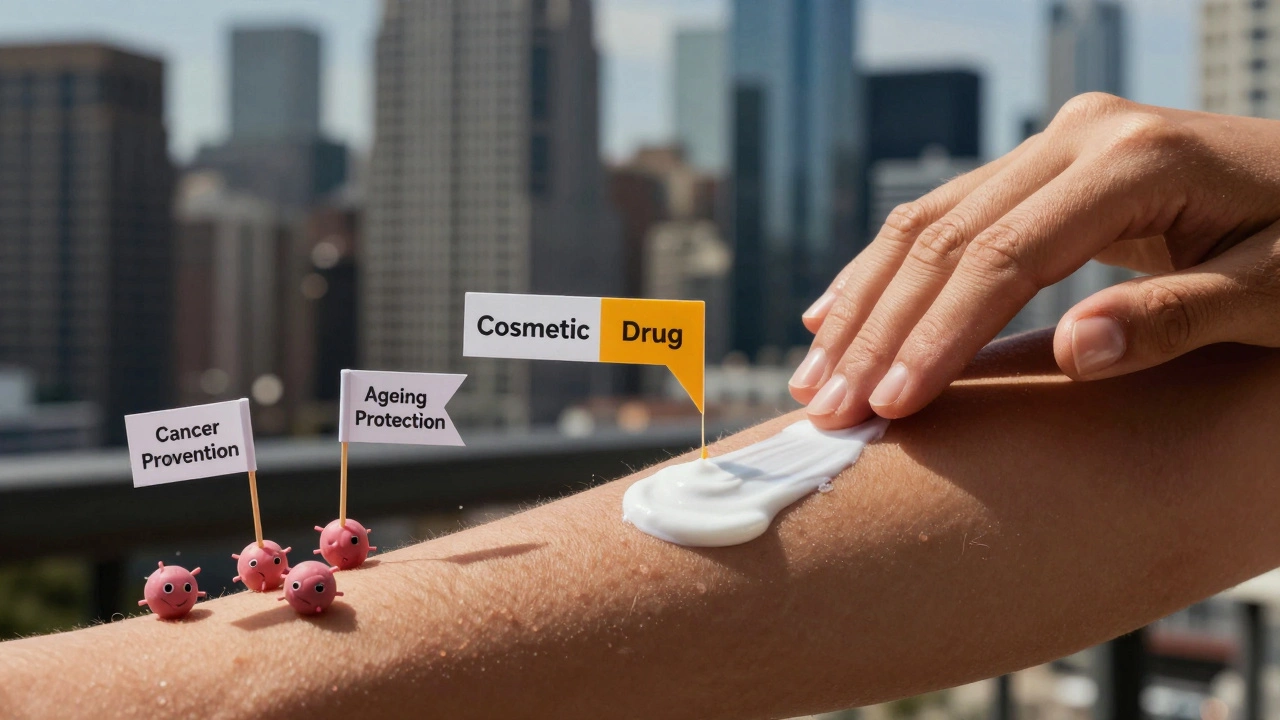
Sunscreen doesn’t fit that neatly. Yes, it’s applied to the skin. Yes, it’s used daily like a moisturizer. But here’s the catch: sunscreen actively changes how your skin behaves. It blocks or absorbs UV radiation - a physical or chemical process that prevents DNA damage. That’s not just beautifying. That’s protecting your skin from cancer and premature aging. That’s a medical function.
The FDA Says Sunscreen Is a Drug
In the United States, the Food and Drug Administration (FDA) classifies sunscreen as an over-the-counter (OTC) drug. Why? Because it’s intended to prevent disease - specifically, skin cancer and sunburn. The FDA requires sunscreen manufacturers to prove their product works. They must test for SPF (Sun Protection Factor), water resistance, and broad-spectrum coverage. Ingredients like zinc oxide and avobenzone are approved as active drug ingredients, not just cosmetic additives.
That means sunscreen labels in the U.S. have to follow strict rules: they must list active ingredients first, state SPF clearly, and avoid misleading claims like "sunblock" or "all-day protection." If a product claims to prevent skin cancer or sunburn, it’s a drug. No exceptions.
Europe and New Zealand: More Flexible Rules
In the European Union, sunscreen is regulated under the Cosmetics Regulation (EC) No 1223/2009. But here’s the twist: even though it’s labeled a cosmetic, the EU still requires sunscreen to meet specific performance standards. The product must pass standardized testing for SPF and UVA protection (the UVA logo in a circle is mandatory). So while the legal category is cosmetic, the requirements are nearly as strict as for drugs.
New Zealand follows a similar model. The Ministry of Health classifies sunscreen as a cosmetic under the Cosmetic Products Group Standard, but only if it makes no medical claims. If a product says it "reduces risk of skin cancer" or "prevents sunburn," it becomes a therapeutic product and needs approval from Medsafe. Most commercial sunscreens here are labeled as cosmetics because they avoid those phrases - but they still have to meet SPF testing standards.
Why the Confusion? It’s About Marketing
Many brands want you to think of sunscreen as part of your skincare routine - and they’re right. People use it every morning, after cleansing, before moisturizer. It’s become as routine as brushing your teeth. Brands package it in sleek tubes, add antioxidants, hyaluronic acid, or vitamin E, and call it "daily defense." That’s smart marketing. It makes sunscreen feel less like medicine and more like self-care.
But here’s the problem: when sunscreen is marketed like a cosmetic, people start thinking it’s optional. They skip it on cloudy days. They don’t reapply. They use too little. If you think of it as just another cream, you’re not treating it like the critical shield it is. The science doesn’t care how it’s labeled. UV rays don’t distinguish between cosmetics and drugs. They damage skin regardless.
What About Tinted Sunscreens and BB Creams?
These products blur the line even more. A tinted sunscreen might have SPF 30 and color pigments to even out skin tone. Is it a cosmetic? Is it a drug? In the U.S., if it has an SPF claim, it’s a drug - even if it’s also a foundation. In the EU, it’s a cosmetic with a drug-like function. The label must still list the active UV filters as the first ingredients, no matter how pretty the packaging is.
Some brands try to get around this by calling their product a "daily moisturizer with SPF." But if the SPF is 15 or higher and it’s marketed for sun protection, regulators will still treat it as a drug in the U.S. and a regulated cosmetic in Europe. You can’t hide behind wording.
Does the Label Really Matter?
For you, the user - it shouldn’t. What matters is whether the product works. Look for these three things, no matter the label:
- SPF 30 or higher - anything lower doesn’t offer enough protection.
- Broad spectrum - protects against both UVA (aging) and UVB (burning) rays.
- Water resistance - if you sweat or swim, you need it.
Don’t get hung up on whether it’s called a cosmetic or a drug. What matters is that it’s tested, proven, and applied correctly. Use a shot glass full for your whole body. Reapply every two hours. Don’t rely on makeup with SPF alone - you’re not applying enough.
Bottom Line: It’s a Protective Tool, Not Just a Beauty Product
Sunscreen might sit next to your foundation, but it’s not there to make you look better. It’s there to keep you alive. Skin cancer is the most common cancer in New Zealand and Australia. One in five people here will develop skin cancer by age 70. That’s not a statistic - that’s someone you know.
Whether it’s called a cosmetic, a drug, or a daily essential, sunscreen is your most important skincare step. It’s not optional. It’s not decorative. It’s a medical-grade shield you put on every single day - rain or shine, summer or winter. And if you’re choosing it based on whether it’s labeled a cosmetic? You’re missing the point.
Don’t pick sunscreen because it feels luxurious. Pick it because it saves lives. And if you’re still unsure? Check the active ingredients. If it contains zinc oxide, titanium dioxide, avobenzone, octinoxate, or oxybenzone - it’s doing more than beautifying. It’s protecting.
Is sunscreen considered a cosmetic in the U.S.?
No, in the U.S., sunscreen is regulated by the FDA as an over-the-counter drug because it prevents sunburn and reduces the risk of skin cancer. Even if it’s in a moisturizer or tinted formula, if it makes a sun protection claim, it’s classified as a drug.
Can a product be both a cosmetic and a drug?
Yes. Many products, like anti-dandruff shampoos, toothpaste with fluoride, and tinted sunscreens, are classified as both. The key is the claim: if it treats or prevents disease, it’s a drug - even if it also improves appearance. Regulators look at the intended use, not just the packaging.
Why does sunscreen have different rules in different countries?
Different countries have different regulatory agencies and legal frameworks. The U.S. FDA treats sun protection as a medical function, while the EU and New Zealand classify it under cosmetic regulations - but still require strict testing for SPF and UVA protection. The science is the same, but the legal approach varies.
Does SPF in makeup count as sunscreen?
Technically, yes - if it’s labeled with SPF and meets testing standards. But in practice, no. Most people apply far less makeup than the amount needed to reach the labeled SPF. You’d need to apply nearly a full teaspoon to your face to get SPF 30 protection from foundation - which most don’t. Always use a dedicated sunscreen underneath.
Should I care if my sunscreen is called a cosmetic?
No - not if you’re focused on protection. What matters is whether it has SPF 30+, broad-spectrum coverage, and is water-resistant. Check the active ingredients, not the marketing. Whether it’s called a cosmetic, a drug, or a daily defense, it’s still your best defense against skin damage and cancer.