
Is Soap a Cosmetic Product? Regulatory and Practical Guide
 Sep, 3 2026
Soap Classification Checker
Is your bar of soap actually a cosmetic? Use this tool to analyze product characteristics based on regulatory definitions (US/EU standards).
Select options and click "Analyze Classification" to see the regulatory status.
You pick up a bar of soap from the shelf. It smells like lavender, it lathers nicely, and it cleans your skin. But is it technically a cosmetic product? The answer isn't just "yes" or "no." It depends entirely on what you claim it does and where you live. For most consumers, the distinction feels academic. But for manufacturers, retailers, and anyone trying to understand ingredient labels, this classification dictates everything from safety testing to marketing rights.
The confusion stems from how laws define "soap" versus "cosmetics." In many jurisdictions, traditional soap has a specific legal exemption. If it meets strict criteria, it escapes the heavy regulatory burden placed on other beauty items. However, if you add moisturizers, fragrances, or make health claims, that exemption vanishes. Suddenly, your simple bar of soap becomes a regulated cosmetic product. This article breaks down exactly when soap crosses that line, why it matters for your skin routine, and how to spot the difference on the label.
The Legal Definition: When Soap Escapes Regulation
To understand if soap is a cosmetic, we first have to look at how regulators define it. In the United States, the Food and Drug Administration (FDA) draws a sharp line. Traditional soap is defined as an alkali salt of fatty acids. That’s fancy chemistry talk for fats mixed with lye. To be exempt from being classified as a cosmetic, the product must meet three specific conditions:
- The primary cleaning action comes from those alkali salts.
- The product is labeled, sold, and represented primarily as soap.
- The only intended use is to cleanse the body by removing dirt and oil.
If a manufacturer steps out of any of these boxes, the product falls under cosmetic regulations. For example, if you market a bar as "moisturizing," you are implying it leaves something behind on the skin. That changes its function from pure cleansing to conditioning. Consequently, it requires different safety substantiation. The European Union takes a similar but slightly broader approach. Under EU Regulation 1223/2009, soap is generally considered a cosmetic unless it is purely for washing and contains no additional functional ingredients. The key takeaway here is intent. How the seller describes the product determines its legal identity.
Syndet Bars vs. True Soap: Know Your Chemistry
Walk into any supermarket and look at the "beauty bars" section. You will notice many do not say "soap" on the front. They might say "cleansing bar," "beauty bar," or "syndet." This is intentional. These products are synthetic detergents, not true soaps. They are made from surfactants like sodium cocoyl isethionate rather than saponified fats.
| Feature | Traditional Soap | Syndet Bar |
|---|---|---|
| Primary Ingredient | Alkali salts of fatty acids | Synthetic surfactants |
| pH Level | High (9-10) | Low (5.5-7) |
| Regulatory Status | Often exempt if strictly cleansing | Always a cosmetic |
| Skin Impact | Can strip natural oils | Gentler on acid mantle |
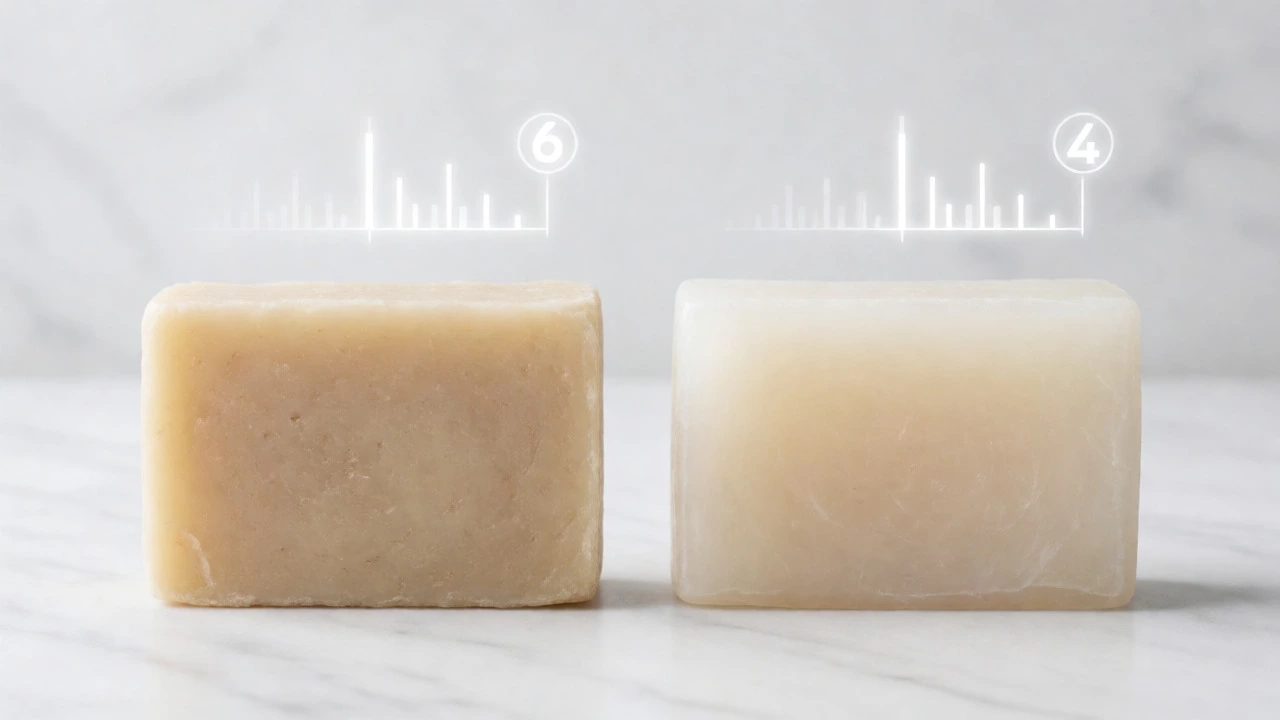
Because syndet bars are never true soap, they are always regulated as cosmetics. They don’t get the exemption. Manufacturers must ensure their safety data supports every claim, including "gentle" or "hypoallergenic." This distinction matters for your skin barrier. Traditional soap has a high pH, which can disrupt the skin's natural acidic environment. Syndet bars are formulated to match skin pH, reducing irritation. So, while both clean, their chemical behavior and regulatory oversight differ significantly.
Marketing Claims Change Everything
Here is where things get tricky for brands. A product might start life as simple soap. But the moment the packaging says "anti-aging," "exfoliating," or "heals eczema," it triggers regulatory scrutiny. In the US, drugs treat disease. Cosmetics improve appearance. If a soap claims to heal a rash, it might accidentally slip into the drug category, requiring even stricter approval.
Consider a bar labeled "Lavender Relaxing Soap." Is "relaxing" a cosmetic claim? Regulators often view sensory claims like scent as acceptable for soap. But if it says "reduces stress," that borders on therapeutic. Conversely, a bar labeled "Glycerin Moisturizing Soap" is clearly a cosmetic because glycerin is added for conditioning, not just cleaning. The addition of non-soap ingredients usually voids the soap exemption. Therefore, most modern commercial soaps with added benefits are legally cosmetics, regardless of whether they contain some soap base.
Why Classification Matters for Safety and Testing
You might wonder, "Who cares about the label? I just wash my hands." The classification affects safety testing requirements. Traditional soap exemptions mean manufacturers aren't always required to submit pre-market safety data to agencies like the FDA in the same way they do for lotions or shampoos. However, this doesn't mean unregulated chaos. Companies still bear responsibility for ensuring their products are safe.
For cosmetics, there are rigorous standards for microbial limits, heavy metal contamination, and ingredient stability. If your soap is classified as a cosmetic, it must undergo challenge tests to ensure preservatives work against bacteria and mold. This is crucial for wet environments like bathrooms. Non-exempt soaps also face stricter labeling rules regarding allergens. In the EU, for instance, certain fragrance allergens must be listed if they exceed concentration thresholds. This transparency helps consumers with sensitivities avoid reactions. If you buy a "soap" that lacks these details, it might be relying on the traditional exemption, meaning fewer mandatory disclosures.
Global Variations: Not All Countries Agree
Regulations vary wildly across borders. While the US and EU share similarities, other regions differ. In Australia, the Therapeutic Goods Administration (TGA) distinguishes between therapeutic claims and general wellness. A soap claiming to kill germs specifically (antibacterial) may face different hurdles than one simply cleaning. New Zealand follows similar principles to Australia, emphasizing clear labeling to prevent consumer deception.
In Japan, the Pharmaceutical and Medical Device Act regulates quasi-drugs, which include certain functional soaps. A soap with whitening or acne-fighting properties might fall into this middle ground, requiring more evidence than standard cosmetics. Understanding these nuances is vital if you import goods or travel frequently. What counts as a simple toiletry in Wellington might be a regulated quasi-drug in Tokyo. Always check local guidelines if you are formulating or selling internationally.

How to Identify Cosmetic Soaps on the Shelf
So, how do you tell what you’re buying? Ignore the front-of-pack marketing fluff. Turn the box over and read the ingredient list (INCI names). Look for terms like Sodium Tallowate, Sodium Cocoate, or Potassium Olivate. These indicate true soap bases. Now, look for additives. If you see Sodium Lauroyl Sarcosinate, Cocamidopropyl Betaine, or Glycerin high up in the list, you are likely looking at a syndet or a hybrid cosmetic bar.
Check the claims again. Does it promise hydration, smoothing, or protection? Those are cosmetic functions. Pure soap cleans; it doesn't condition. If the brand wants to sell you on softness, they are selling a cosmetic product. Also, note the pH if available. Many premium brands now publish pH levels. A pH near 5.5 suggests a syndet cosmetic bar designed for sensitive skin. A pH above 9 suggests traditional soap, which may be harsher for facial use.
Practical Implications for Your Skincare Routine
Does the legal label change how you should use the product? Yes. If you have dry or sensitive skin, choosing a syndet bar (a cosmetic) is often safer than traditional soap. The lower pH respects your skin barrier. Traditional soap, being alkaline, can leave a film called "soap scum" in hard water and strip lipids. This isn't illegal or unsafe, but it can cause tightness and itching.
Conversely, for oily skin or handwashing, traditional soap works excellently and is often cheaper. It cuts through grease effectively. Just remember, because it lacks the stringent preservative testing sometimes required for complex cosmetics, keep it dry. Wet soap left in a dish can harbor bacteria faster than a sealed tube of cream. If you use a moisturizing soap bar, follow up with lotion. Even though it claims to moisturize, the cleansing action removes oils. Treating it as a cosmetic step in your routine-cleanse, then hydrate-yields better results than expecting the soap alone to maintain moisture.
Frequently Asked Questions
Is all soap considered a cosmetic product?
Not necessarily. In many countries, traditional soap used solely for cleansing is exempt from cosmetic regulations. However, if the soap contains added moisturizers, fragrances beyond basic scent, or makes conditioning claims, it is typically classified and regulated as a cosmetic product.
What is the difference between soap and a syndet bar?
Soap is made from saponified fats and lye, resulting in a high pH. A syndet (synthetic detergent) bar is made from synthetic surfactants and is formulated to have a pH closer to human skin. Syndet bars are always regulated as cosmetics, whereas pure soap may be exempt depending on local laws.
Why do some soaps say 'beauty bar' instead of soap?
Manufacturers use terms like 'beauty bar' to signal that the product is a cosmetic formulation, often containing conditioning agents. This allows them to make moisturizing claims without violating regulations that restrict such claims for pure soap. It also indicates the product likely uses synthetic detergents rather than traditional soap bases.
Do I need to worry about safety if my soap is exempt from cosmetic rules?
No, safety is still paramount. Exemption from specific cosmetic filing requirements does not mean a product is unsafe. Manufacturers are still legally responsible for ensuring their soap is free from contaminants and safe for consumer use. However, exempt soaps may have less transparent labeling regarding allergens compared to fully regulated cosmetics.
Can antibacterial soap be classified as a drug?
Yes. In the US, soaps making specific germ-killing claims (like killing bacteria on contact) are often regulated as Over-The-Counter (OTC) drugs rather than cosmetics. This requires active ingredients like benzalkonium chloride or chloroxylenol to be proven effective and safe for that specific purpose.