
Is Eminence Organic Skincare Really Organic? The Truth Behind the Labels
 Jan, 4 2026
When you see the word organic on a skincare bottle, you expect purity-no synthetic chemicals, no pesticides, no hidden toxins. Eminence Organic Skin Care has built its brand on that promise. But is it really organic? Or is it just marketing with a green tint?
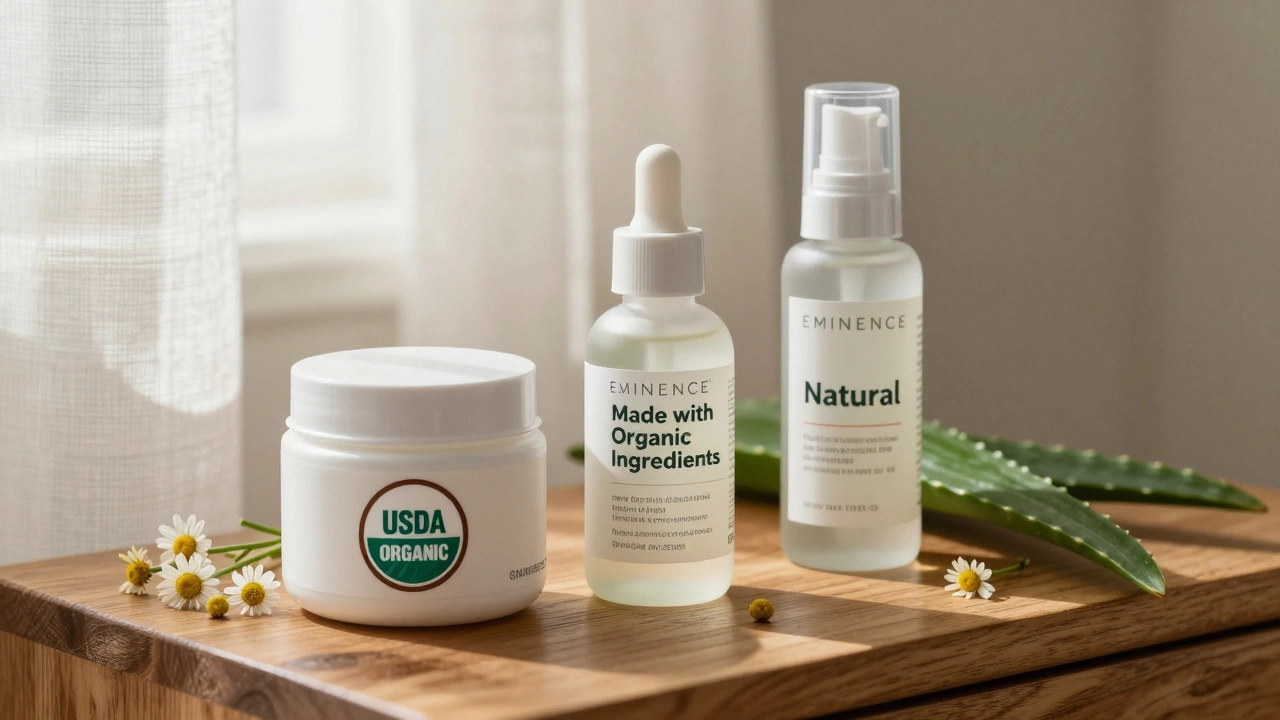
Let’s cut through the noise. Eminence claims to use organic, biodynamic, and natural ingredients. Their packaging says "Certified Organic" and "Made with Organic Ingredients." But certifications aren’t just labels-they’re rules. And not all "organic" means the same thing.
What Does "Certified Organic" Actually Mean?
In the U.S., the USDA has strict standards for organic food and cosmetics. For a product to be labeled "100% Organic," every ingredient must be organically produced, except water and salt. For "Organic," at least 95% of ingredients (by weight, excluding water and salt) must be certified organic. The rest can be non-organic but must be on the USDA’s approved list-no synthetic fragrances, parabens, or phthalates.
Eminence is certified by the USDA Organic program for select products. But here’s the catch: not all of their products carry that certification. Their website shows a mix-some items are USDA-certified, others are labeled "Made with Organic Ingredients" (meaning at least 70% organic), and some just say "natural" without any certification at all.
If you’re buying a jar of Eminence’s Organic Facial Cleanser, you’re getting a USDA-certified product. But if you grab their Strawberry Rhubarb Hydrating Serum, you’re getting a product that’s 70% organic. That’s still good-but it’s not the same as "100% Organic."
What’s in the Bottle? Ingredient Breakdown
Let’s look at a few popular Eminence products and what’s really inside.
- Organic Facial Cleanser: Contains organic chamomile, calendula, and aloe vera. USDA-certified. No sulfates, parabens, or synthetic dyes.
- Stone Crop Oxygenating Fizz Mask: Uses organic stone crop, cucumber, and green tea. Labeled "Made with Organic Ingredients." Also contains sodium lauryl sulfate (SLS), a synthetic detergent. Not USDA-certified.
- Clear Skin Probiotic Moisturizer: Features organic aloe, chamomile, and probiotics. No synthetic fragrances. Not USDA-certified but avoids over 1,000 banned ingredients.
That’s the pattern. Eminence avoids parabens, phthalates, mineral oil, and artificial colors. But they still use some synthetics-like SLS, which is a foaming agent. They defend it by saying it’s plant-derived and low-concentration. But if you’re looking for a completely clean, no-synthetics routine, this isn’t it.
Compare that to brands like True Botanicals or Tata Harper. They don’t use any sulfates, silicones, or synthetic preservatives. Their products are USDA-certified across the board. Eminence walks a middle path: mostly organic, but not always pure.
Organic vs. Natural vs. Clean
These terms get tossed around like they mean the same thing. They don’t.
- Organic = legally regulated. Grown without synthetic pesticides, GMOs, or fertilizers. Certified by third parties like USDA or Ecocert.
- Natural = no legal definition. Can mean anything from 1% plant extract to 99% botanicals. Often used to trick consumers.
- Clean = marketing term. Means "free from" a list of chemicals-but every brand defines "clean" differently.
Eminence leans into "natural" and "clean," but only selectively uses "organic" certification. Their marketing emphasizes "organic" because it sounds better. But if you’re paying a premium for organic, you need to know which products actually qualify.

Where Does Eminence Source Its Ingredients?
Eminence says they source from organic farms in Hungary, Croatia, and the U.S. They claim partnerships with biodynamic growers-farms that follow even stricter standards than organic, focusing on soil health and ecosystem balance.
They also highlight their own organic herb garden in Hungary, where they grow over 20 herbs used in their formulas. That’s impressive. Most brands outsource everything. Eminence controls more of the supply chain than most.
But here’s the thing: owning a farm doesn’t make every ingredient organic. Their products still include water, glycerin, and preservatives. Water isn’t organic. Glycerin can be plant-based but isn’t always certified. Preservatives like potassium sorbate are allowed in organic cosmetics-but they’re synthetic. The rules allow them, but they’re not "natural."
Are They Cruelty-Free and Sustainable?
Yes. Eminence is Leaping Bunny certified, meaning no animal testing. Their packaging is recyclable, and they use recycled glass and paper. They’ve eliminated plastic microbeads and use biodegradable packaging where possible.
But they still ship globally. That means carbon emissions. They don’t claim carbon neutrality. If sustainability is your top priority, you might want to look at brands that offset shipping or use local production.
Who Is Eminence For?
Eminence isn’t the purest organic brand on the market. But it’s not a greenwashed drugstore brand either.
If you want:
- Mostly organic ingredients with some synthetics you can live with? → Yes.
- Products that feel luxurious and work well on sensitive skin? → Yes.
- Full USDA-certified organic across your entire routine? → No. Look at True Botanicals or Dr. Hauschka.
- Zero synthetic preservatives or detergents? → No. Try Herbivore Botanicals.
Eminence is a bridge. It’s for people who want to reduce toxins but aren’t ready to sacrifice texture, scent, or performance. Their products feel rich, smell natural, and deliver visible results-without the chalky texture or weird aftertaste some 100% organic brands have.
Bottom Line: Is Eminence Really Organic?
Some of it is. Not all of it. The brand is transparent about what’s certified and what’s not. If you read labels carefully, you’ll see which products carry the USDA seal and which don’t.
It’s not a perfect organic brand. But it’s one of the most honest ones in the mid-tier market. They don’t claim more than they deliver. And for many people, that’s enough.
If you’re looking for true organic purity, go for brands with full USDA certification across their line. If you want effective, mostly organic skincare with a touch of science-backed performance, Eminence delivers. Just know what you’re buying.
Is Eminence Organic Skin Care certified by the USDA?
Yes, some Eminence products are USDA-certified organic, but not all. Only specific items like the Organic Facial Cleanser and Organic Facial Cream carry the official USDA Organic seal. Others are labeled "Made with Organic Ingredients" (70%+ organic) or just "natural." Always check the packaging for the USDA logo.
Does Eminence use parabens or sulfates?
Eminence avoids parabens, phthalates, and artificial colors. However, some products contain sodium lauryl sulfate (SLS), a synthetic foaming agent. They use a plant-derived version at low concentrations, but it’s still a synthetic. If you’re avoiding all sulfates, skip the fizz masks and choose their cream-based cleansers instead.
Are Eminence products vegan?
Most Eminence products are vegan, but not all. Some contain honey, beeswax, or yogurt. Check individual product labels-if it says "vegan" on the box, it’s plant-based. Their website has a vegan filter for easy browsing.
How does Eminence compare to Tata Harper or True Botanicals?
Tata Harper and True Botanicals are 100% USDA-certified organic and avoid all synthetic ingredients-including preservatives like potassium sorbate and emulsifiers like polysorbate. Eminence allows a few synthetics for performance and texture. If you want zero compromises, go with Tata or True Botanicals. If you want rich, effective formulas with mostly organic ingredients, Eminence is a strong middle ground.
Is Eminence worth the price?
Eminence products cost $30-$100, which is premium but not luxury-tier. You’re paying for organic ingredients, European sourcing, and handcrafted batches. They’re more affordable than Tata Harper but more expensive than drugstore brands. If you care about reducing toxins and want noticeable results, yes-it’s worth it. If you’re on a tight budget or need 100% organic purity, look elsewhere.