
Is Burt's Bees cruelty-free? The truth about their animal testing policy
 Dec, 4 2025
When you see "Burt's Bees" on a lip balm or face wash, you probably assume it’s gentle-not just for your skin, but for animals too. After all, the brand uses natural ingredients, has a rustic bee logo, and markets itself as wholesome. But does that mean it’s truly cruelty-free? The answer isn’t as simple as it looks.
What does "cruelty-free" actually mean?
"Cruelty-free" sounds straightforward: no animals were harmed in testing the product. But the term isn’t legally defined in the U.S. or most countries. That means any company can slap it on their packaging-even if they test on animals in other markets, or hire third parties to do it for them.
True cruelty-free status means the brand doesn’t test on animals at any stage-not during product development, not in raw material sourcing, and not even when required by law in other countries. Some brands claim cruelty-free while still selling in China, where animal testing is mandatory for certain cosmetics. That’s a red flag.
Burt's Bees and animal testing: the facts
Burt's Bees says on its website that it "does not test on animals" and carries the Leaping Bunny seal from Cruelty Free International. That’s a good sign. The Leaping Bunny program requires brands to undergo strict audits and prove they have no animal testing anywhere in their supply chain.
But here’s the catch: Burt's Bees is owned by Clorox, a multinational corporation that does test on animals for some of its other products. That doesn’t automatically make Burt's Bees non-cruelty-free-but it does raise questions. Does Clorox’s policy affect Burt's Bees? Can the brand truly stay independent in its ethics?
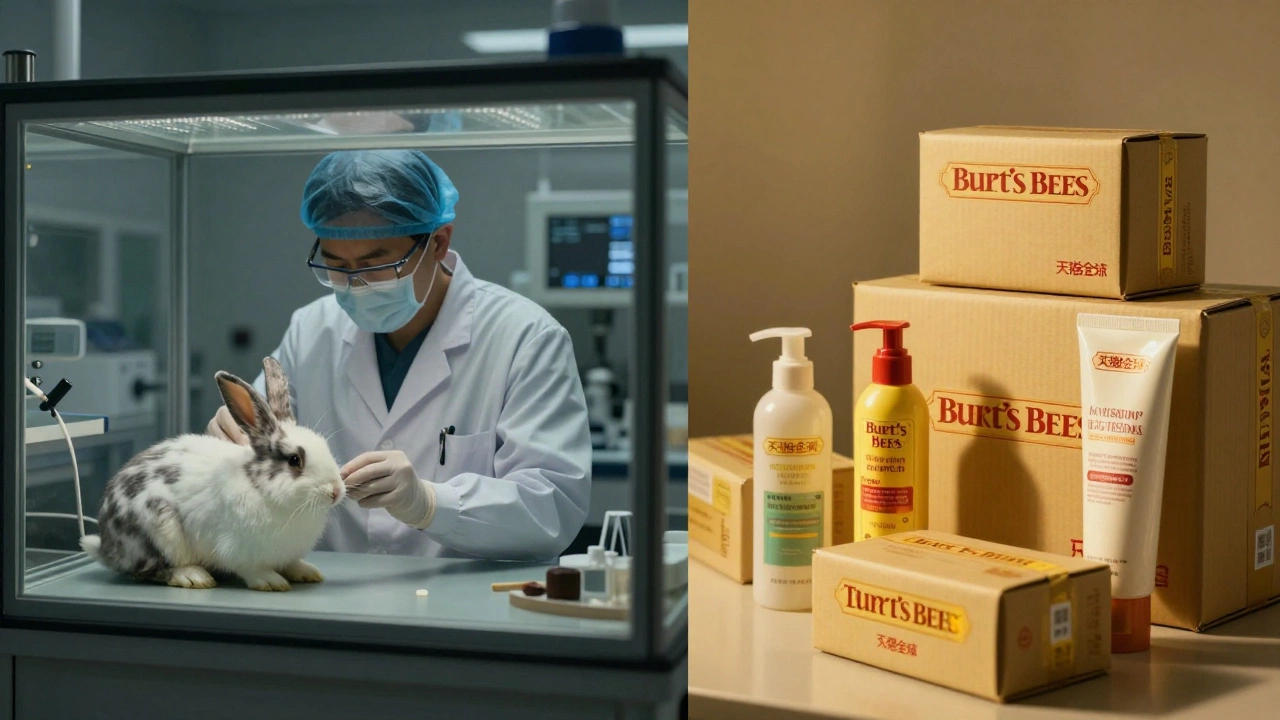
As of 2025, Burt's Bees does not conduct animal testing itself. It also doesn’t allow third parties to test on its behalf. However, it sells products in China, where imported cosmetics are subject to mandatory animal testing by government authorities. Burt's Bees doesn’t sell in physical stores there, but it does sell through cross-border e-commerce platforms like Tmall Global. That means Chinese regulators can still test its products on animals after they arrive.
So while Burt's Bees avoids direct animal testing, it doesn’t block its products from being tested on animals by others. That’s why some cruelty-free advocates don’t consider it fully ethical.
Leaping Bunny certification: what it really means
The Leaping Bunny logo is one of the most trusted symbols in cruelty-free beauty. To earn it, a company must prove:
- No animal testing on finished products or ingredients
- No animal testing by suppliers
- No animal testing even if required by law
- Independent audits every 18 months
Burt's Bees has held this certification since 2008. That’s impressive. But certification doesn’t cover what happens after the product leaves the company’s control. If a government forces testing on imported goods, the brand isn’t responsible-but it’s still complicit by choosing to sell in that market.
Compare that to brands like Dr. Hauschka or Herbivore Botanicals, which refuse to sell in China entirely. They sacrifice market access to stay 100% cruelty-free. Burt's Bees chose a different path.
Is Burt's Bees vegan?
"Cruelty-free" doesn’t mean "vegan." Many cruelty-free products still contain animal-derived ingredients like beeswax, honey, or lanolin.
Burt's Bees uses beeswax in nearly all its products. That means it’s not vegan. If you’re looking for a product made without any animal ingredients, Burt's Bees won’t fit that bill. But if your main concern is animal testing, then beeswax isn’t the issue-it’s the testing.
Some people are okay with beeswax because bees aren’t killed in the process. Others avoid it entirely because they don’t want to support animal exploitation in any form. It’s a personal choice.
What do other trusted brands do?
If you want a brand that’s both cruelty-free and vegan-and refuses to sell in markets that require animal testing-here are a few alternatives:
- Herbivore Botanicals: 100% vegan, Leaping Bunny certified, no sales in China
- Dr. Hauschka: Certified by NATRUE and Leaping Bunny, avoids animal testing entirely
- ACURE: Vegan, Leaping Bunny certified, sells globally without entering China
- Pacifica: Vegan, cruelty-free, and made in the U.S. with no animal testing
These brands don’t compromise. They won’t sell where animal testing is forced. That’s why they’re trusted by strict cruelty-free shoppers.
Should you buy Burt's Bees?
There’s no single right answer. It depends on your values.
If you believe a brand should avoid any situation where its products might be tested on animals-even if it’s not their fault-then Burt's Bees isn’t for you. You might prefer a brand that refuses to enter markets with mandatory testing.
If you believe a brand’s own actions matter more than what governments do after the product leaves their hands, then Burt's Bees still deserves your support. It’s one of the few mainstream brands with a long-standing Leaping Bunny certification, and it hasn’t changed its policy even under Clorox ownership.
Many people choose Burt's Bees because it’s accessible, affordable, and genuinely uses plant-based ingredients. It’s not perfect-but it’s better than most big-name brands that test on animals.
How to check if a brand is truly cruelty-free
Don’t trust marketing claims alone. Here’s how to verify:
- Look for the Leaping Bunny or Cruelty-Free International logo
- Check leapingbunny.org for certified brands (note: no links in final output, so remove URL)
- Use the Cruelty-Free Kitty app or website-it updates in real time
- Ask the brand directly: "Do you test on animals when required by law?" If they say yes, they’re not fully cruelty-free
- Check if they sell in China via physical retail stores. If yes, avoid.
Brands that say "we don’t test on animals" without explaining what happens overseas are usually avoiding the truth.
Final verdict: Is Burt's Bees cruelty-free?
Burt's Bees is certified cruelty-free by Leaping Bunny and doesn’t test on animals itself. But because it sells in China through e-commerce, its products may be tested on animals by government authorities after they arrive. That puts it in a gray area.
It’s not the worst offender-many big brands test directly on animals. But it’s not the purest choice either. If you want zero compromise, look elsewhere. If you want a natural, affordable brand that avoids direct animal testing and supports ethical standards as much as it can, Burt's Bees still has value.
Ultimately, being cruelty-free isn’t just a label. It’s a stance. And you get to decide where you stand.