
Is Bar Soap Considered a Cosmetic? The Legal and Practical Answer
 Mar, 22 2026
Soap Classification Checker
Understand the Difference
Is a bar soap actually a cosmetic? The answer depends on its claims. According to FDA and EU regulations, products that make claims beyond basic cleansing are classified as cosmetics. Enter the claims on your soap product to see if it's considered a cosmetic.
Ever picked up a bar of soap at the store and wondered if it counts as a cosmetic? You’re not alone. Many people assume that if a soap claims to moisturize, cleanse, or improve skin appearance, it must be a cosmetic. But the truth is more complicated - and it depends on who’s doing the defining.
What the law says
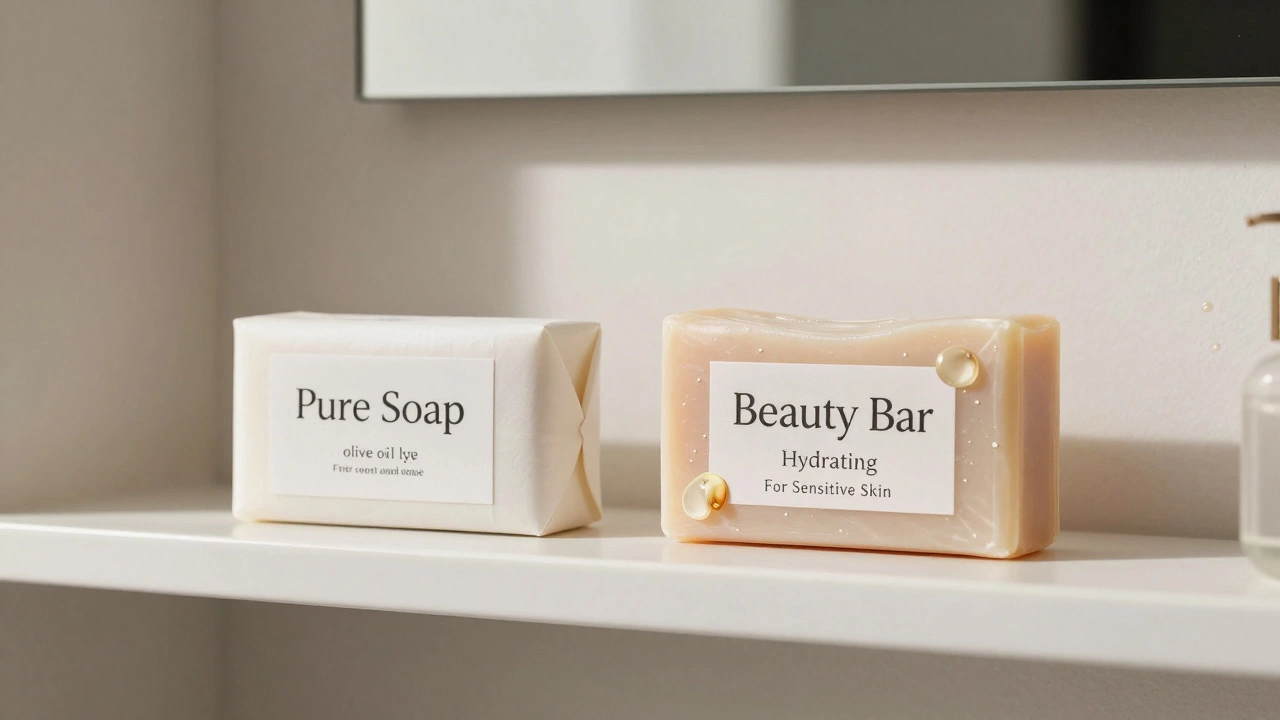
In the United States, the Food and Drug Administration (FDA) draws a clear line between soap and cosmetic. According to their official definition, a product is considered soap only if it meets three specific criteria: it’s made primarily of alkali salts of fatty acids (that’s the chemical name for traditional soap), it’s intended only for cleansing, and it’s marketed solely as a cleansing product. If it passes all three, it’s soap - not a cosmetic.But here’s where things get messy. If that same bar includes ingredients like glycerin, shea butter, or aloe vera - and the packaging says it’s "hydrating," "nourishing," or "for sensitive skin" - then it’s no longer just soap. It’s a cosmetic. The moment you add a claim beyond cleaning, the FDA reclassifies it. That’s why some bars are labeled "cleansing bar" instead of "soap." It’s not marketing fluff - it’s a legal requirement.
In the European Union, the rules are similar but worded differently. The EU Cosmetic Regulation (EC) No 1223/2009 defines cosmetics as substances intended to come into contact with the skin to clean, perfume, change appearance, protect, or keep it in good condition. If a bar soap makes any of those claims - even "softens skin" - it falls under cosmetic regulation. That means it must undergo safety assessments, list all ingredients, and comply with banned substance lists.
Why the distinction matters
The difference isn’t just academic. It affects how the product is made, tested, and sold. True soap - the kind made by traditional saponification of oils and lye - doesn’t need to be registered as a cosmetic. It doesn’t need clinical testing, safety dossiers, or ingredient declarations beyond basic labeling. That’s why small artisan soap makers can sell bars without FDA approval.But if your soap claims to reduce wrinkles, brighten dull skin, or treat acne? Then it’s a cosmetic. And that means it’s subject to the same rules as serums, creams, and lotions. You need to prove it’s safe. You need to list every ingredient. You can’t make medical claims like "cures eczema" - that would make it a drug, which is an even stricter category.
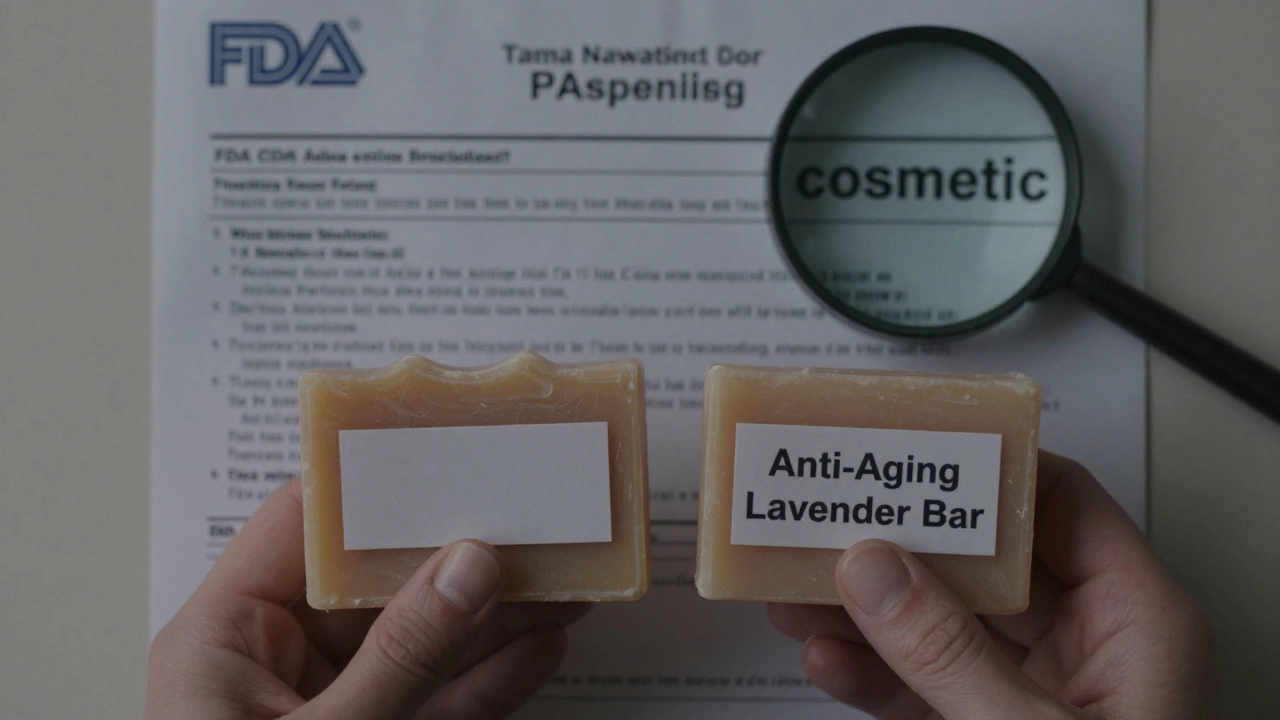
Many brands walk this line carefully. You’ll see bars that say "gentle for daily use" - that’s safe. But "reduces fine lines"? That’s a red flag. The FDA has sent warning letters to companies that blur this line. One 2023 case involved a popular artisan brand that marketed a lavender bar as "anti-aging". They were forced to remove the claim, repackage the product, and submit a cosmetic notification.
What about ingredients?
Let’s say you’re looking at a bar with coconut oil, shea butter, and vitamin E. Sounds like skincare, right? But if the manufacturer says it’s "for cleansing only," and avoids any beautifying language, it can still be classified as soap. The ingredients alone don’t determine the category - the claims do.On the flip side, a bar with hyaluronic acid, niacinamide, or retinol? Even if it’s shaped like a classic soap bar, those ingredients are cosmetic actives. They’re not naturally found in traditional soap. Their presence alone suggests the product is designed for more than just washing. In practice, regulators will treat it as a cosmetic regardless of what the label says.
Real-world examples
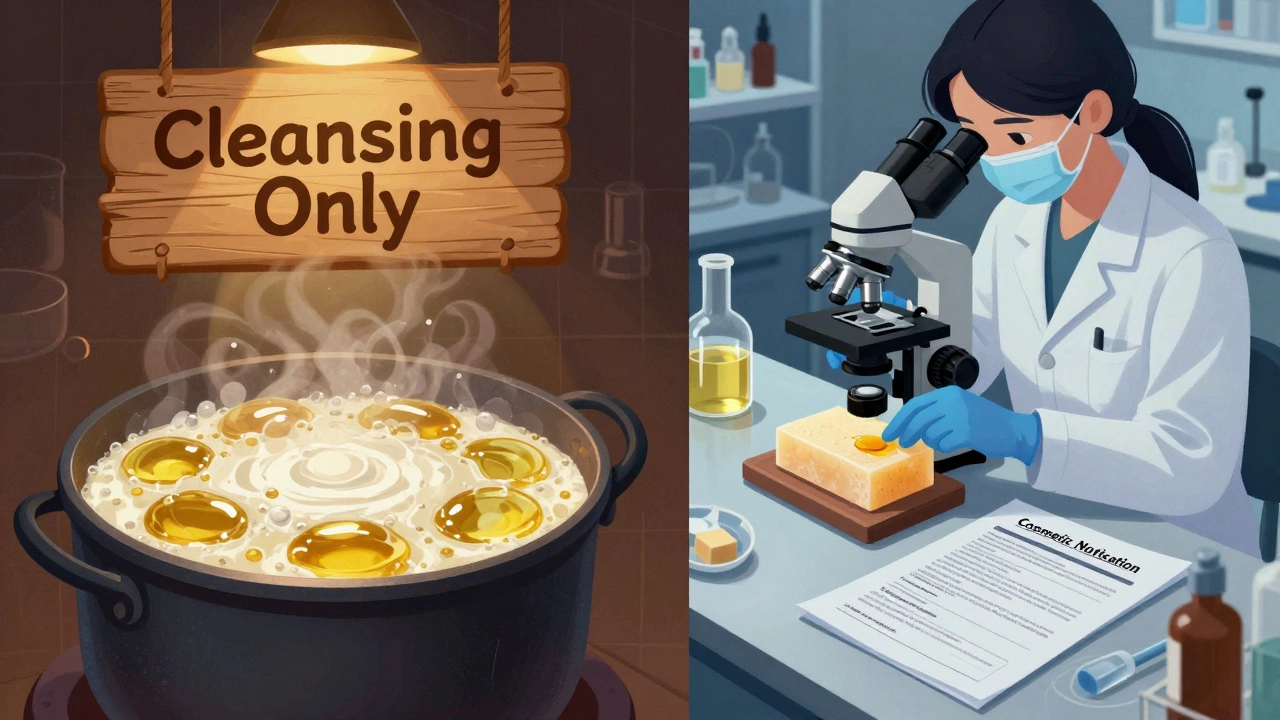
Think of Dove’s "Beauty Bar." It’s not called soap. It’s called a "beauty bar." Why? Because it contains moisturizing agents and makes skin feel softer. The company knows if they called it soap, they’d avoid cosmetic regulations - but they also wouldn’t be able to market its skin benefits. So they chose cosmetic status on purpose.Compare that to a handmade bar from a small shop in New Zealand that only lists ingredients like olive oil, water, and sodium hydroxide. No claims beyond "cleanses skin." No fancy additives. That’s soap. Legally, it doesn’t need to be registered as a cosmetic - even if it leaves your skin feeling smooth.
Then there’s the gray zone: bars labeled "for dry skin" or "with added moisturizers." Are those claims cosmetic? Yes - because they imply improvement beyond basic cleaning. The FDA doesn’t care if the moisturizer is just a few drops of glycerin. If it’s there to improve skin condition, it’s cosmetic.
What does this mean for you?
If you’re buying bar soap just to clean your body? You don’t need to worry. Most traditional bars are fine. But if you’re buying one because it promises to "brighten," "repair," or "reduce redness," you’re buying a cosmetic. That means it’s regulated like a serum or cream.For makers: if you want to avoid the cost and complexity of cosmetic registration, stick to plain soap. No added actives. No claims beyond cleansing. If you want to make skin better, go full cosmetic - and follow the rules. Trying to sneak through the back door doesn’t work.
For consumers: read the label. If it says "soap," it’s likely just soap. If it says "cleansing bar," "beauty bar," or "moisturizing bar," it’s probably a cosmetic. And if it lists ingredients like retinol, peptides, or ceramides? That’s a cosmetic - no matter what shape it’s in.
Global differences
In Canada, Health Canada follows the same logic as the FDA. In Australia, the Therapeutic Goods Administration treats any soap with skin-improving claims as a cosmetic. In Japan, even the fragrance level matters - if it’s too strong, it’s classified as a cosmetic. So while the exact wording varies, the principle is consistent worldwide: claims define the category, not the form.Why this confusion exists
The confusion comes from history. For decades, soap was just soap - made at home, used for hygiene, and never marketed as skincare. But as beauty brands realized people loved the feel of moisturizing bars, they started adding ingredients and making claims. The regulatory systems hadn’t caught up. Now, we’re stuck with a patchwork of definitions.Some consumers assume "natural" soap is safer or purer. But natural doesn’t mean non-cosmetic. A bar with essential oils, botanical extracts, and vitamin C is still a cosmetic if it says it improves skin. And cosmetics - natural or not - must meet safety standards.
Final takeaway
Bar soap isn’t automatically a cosmetic. But most modern bars you find in stores are. The line isn’t in the ingredients. It’s in the words. If the packaging promises anything beyond cleaning - hydration, softness, glow, repair - it’s a cosmetic. And that means it’s held to the same standards as your favorite face cream.So next time you pick up a bar, ask: is this just cleaning? Or is it trying to make my skin better? The answer tells you more than you think.
Is all bar soap considered a cosmetic?
No. Only bar soap that makes claims beyond cleansing - like moisturizing, brightening, or anti-aging - is classified as a cosmetic. Traditional soap made with just oils, water, and lye, with no added benefits, is not a cosmetic under FDA and EU rules.
Can a soap bar be both soap and a cosmetic?
No. Regulatory agencies classify products based on their intended use and claims. If a bar makes even one cosmetic claim - like "hydrates skin" - it becomes a cosmetic and loses its soap exemption. You can’t have it both ways.
Why do some bars say "cleansing bar" instead of "soap"?
Brands use "cleansing bar" to signal that the product contains ingredients meant to improve skin condition, not just clean it. This helps them avoid legal issues with the soap definition while still marketing its skincare benefits. It’s a deliberate regulatory choice.
Do natural ingredients make soap a cosmetic?
Not by themselves. A bar with organic olive oil or shea butter is still soap if it only claims to cleanse. But if the packaging says "nourishes" or "softens," then even natural ingredients trigger cosmetic classification. Claims matter more than ingredients.
Are handmade artisan soaps regulated differently?
No. Small makers must follow the same rules as big brands. If their soap makes cosmetic claims, they must register it as a cosmetic. Many small producers avoid this by sticking to plain soap labels and avoiding any skin-improvement language.