
Is a $5 Tip Good for a $20 Haircut? A Guide to Salon Etiquette
 Nov, 9 2026
Haircut Tip Calculator
Service Details
Recommended Tip
Enter details to see recommendation
You just sat in the chair, watched your stylist work their magic on those split ends, and now you're staring at the receipt. The total is $20. Your hand hovers over your wallet or phone, wondering: is a $5 tip good for a $20 haircut? It’s a surprisingly common dilemma. Tipping culture can feel like a minefield of unspoken rules, especially when the service price is low. You don’t want to underpay someone who spent an hour on your head, but you also don’t want to accidentally signal that you think the service was mediocre. Let’s break down exactly what constitutes a fair tip, how it changes based on location, and why that five-dollar bill might be doing more (or less) than you think.
The Math Behind the Tip
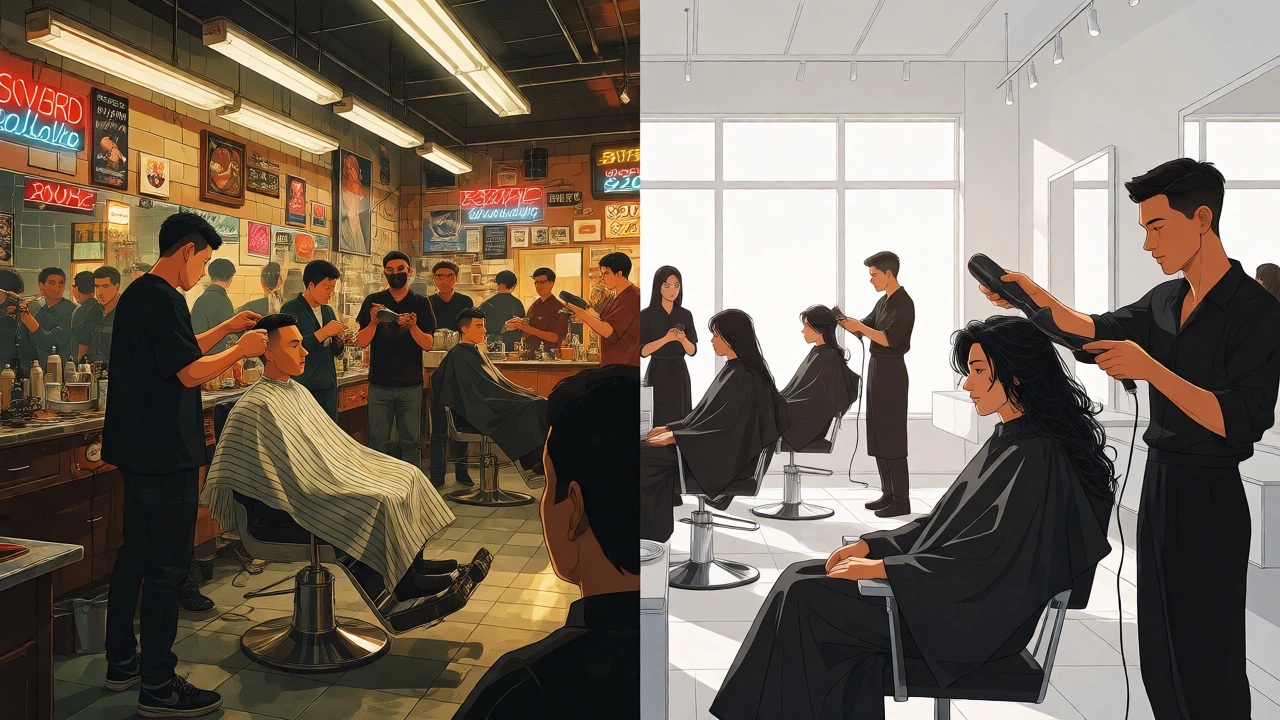
Before we talk about feelings, let’s look at the numbers. In the United States and Canada, the standard baseline for personal care services-including haircuts-is typically between 15% and 20%. If your $20 haircut costs twenty bucks, a 15% tip equals $3, and a 20% tip equals $4. So, technically, leaving $5 puts you at a 25% tip rate. That is above average. However, context matters heavily here. If this was a quick men's cut from a high-volume chain barbershop where the appointment took ten minutes, $5 might feel generous to the stylist but unnecessary to your budget. If it was a detailed women's cut with washing, blow-drying, and styling that took forty-five minutes, $5 is barely adequate given the labor involved.
Why does this confusion exist? Because fixed-amount tips don't scale well with low-cost services. A $5 tip on a $100 color correction is 5%-which is insulting. A $5 tip on a $20 trim is 25%-which is great. The percentage model exists precisely to keep the ratio of reward to effort consistent. When you tip by percentage, you’re acknowledging the skill and time required, not just the final price tag.
Factors That Change the Equation
Not all $20 haircuts are created equal. Several variables shift the needle on what makes a "good" tip. First, consider the complexity. Did the stylist just buzz the sides and scissor the top? Or did they navigate thick, curly hair, create layers, and style it perfectly? Complexity drives up the value of the service. Second, consider the venue. A strip-mall barber shop operates on volume; they see thirty clients a day. They rely on small, frequent tips to make rent. A boutique salon might see fewer clients but charge more per hour. Their staff often earn higher base wages, so while tips are still appreciated, the pressure isn't always as acute.
Your relationship with the stylist also plays a role. Are you a regular? If you go to the same person every six weeks, building a rapport means you can sometimes get away with rounding up slightly rather than calculating exact percentages. But if this is a first-time visit and the stylist went above and beyond-perhaps staying late to fit you in or offering specific product advice-a higher tip solidifies that connection. Conversely, if the service was rushed or the result wasn't quite right, dropping below the 15% threshold sends a clear message without needing a confrontation.
Regional Differences: US vs. New Zealand Contexts
Tipping norms vary wildly across borders. Since I’m writing this from Wellington, New Zealand, it’s worth noting that the Kiwi approach is fundamentally different from North America. In New Zealand, service charges are usually included in the listed price. Staff receive a living wage, so tipping is optional and reserved for exceptional service. A $5 tip on a $20 NZD haircut would be seen as very generous, perhaps even surprising. In contrast, in the US, not tipping at all is often viewed as a breach of social contract because many stylists rely on tips to supplement a lower base hourly rate.
| Region | Standard Tip % | Tip Amount on $20 | Cultural Expectation |
|---|---|---|---|
| United States | 15-20% | $3 - $4 | Mandatory social norm; supplements low base pay. |
| Canada | 15-20% | $3 - $4 | Similar to US; cash preferred in smaller shops. |
| New Zealand | 0-10% | $0 - $2 | Optional; only for outstanding service. |
| Australia | 0-10% | $0 - $2 | Optional; similar to NZ due to higher minimum wages. |
If you are traveling or recently moved, check local customs. Assuming US standards apply globally will drain your wallet. Assuming NZ standards apply in New York will annoy your barber. Always observe what others do or ask discreetly if you’re unsure. Most stylists won’t judge you for asking, "What’s customary here?"
Cash vs. Digital Tipping
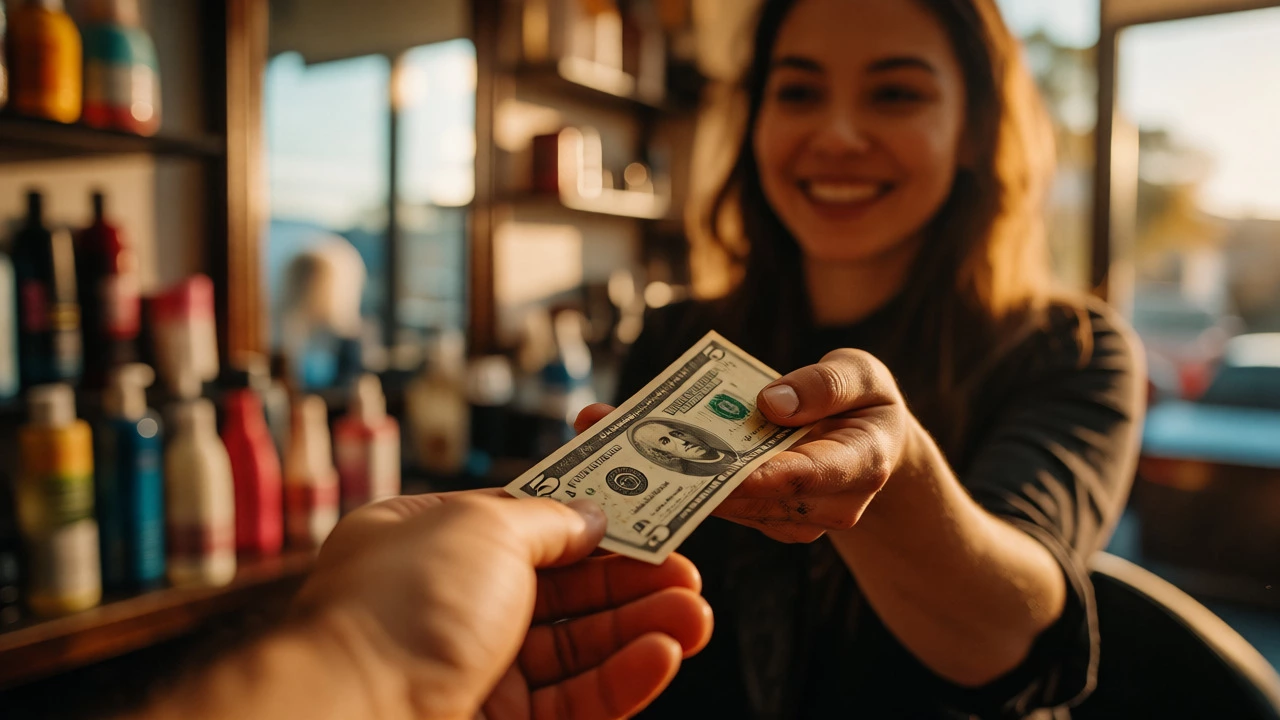
How you tip matters almost as much as how much. Many salons now use tablet-based point-of-sale systems that prompt you to add a tip after entering your PIN. These interfaces often default to pre-set options like 18%, 20%, or 25%. This "anchoring effect" nudges you toward higher amounts. If you plan to tip $5 on a $20 cut (25%), you’ll likely hit one of these buttons easily. But if you prefer to leave cash, ensure it’s crisp and placed directly in the stylist’s hands or the designated tip jar, not left on the counter where it might mix with change.
There’s a practical reason to favor cash: stylists often receive tips immediately, whereas digital tips may take days to process and could incur processing fees deducted from the stylist’s pocket. In some establishments, credit card tips are pooled and distributed weekly, meaning the person who actually cut your hair might not see that money for a week or two. Cash puts money directly into their hands, which feels more immediate and appreciative.
When to Tip More (or Less)
Life happens, and sometimes the math doesn’t reflect the experience. Here are scenarios where you should deviate from the standard percentage:
- Exceptional Service: Did they fix a bad cut from another salon? Did they listen carefully to your vague description and nail it? Add an extra $2-$5 to show gratitude.
- Assistants Involved: If an apprentice washed your hair or helped with styling, include them in the tip. Splitting a $5 tip between two people leaves everyone short. Aim for $6-$8 if multiple staff members worked on you.
- Long Appointments: Even if the cut itself was cheap, if you were in the chair for an hour, the opportunity cost for the stylist is high. Round up generously.
- Poor Experience: If the stylist talked on the phone constantly, ignored your requests, or left uneven bangs, you can drop to 10% ($2). Don’t zero it out unless the service was truly terrible, as this burns bridges permanently.
Beyond the Cut: Other Services
Haircuts aren’t the only service in a salon. If you’re getting a shampoo, blowout, or beard trim, the same principles apply but with adjustments. For a simple blowout ($20-$30), a 15-20% tip is standard. For a beard trim ($10-$15), rounding up to $2 or $3 is polite. For color treatments, which are labor-intensive and expensive, stick strictly to 20%. Never tip less than 15% for color, regardless of the total bill, because the chemical application requires significant skill and caution.
Remember that tipping is ultimately a gesture of appreciation for skilled labor. Hair stylists stand on their feet for eight hours a day, breathe in chemicals, and manage difficult personalities. A $5 tip on a $20 haircut is objectively a strong tip in most contexts. It says, "I value your time and skill." If you’re worried about affordability, consistency matters more than size. Regular customers who tip fairly build relationships that often lead to better scheduling priority and personalized attention. If you’re tight on cash, communicate openly. Stylists understand economic pressures. Just don’t skip the tip entirely without explanation.
Is $5 too much for a $20 haircut?
No, $5 is not too much; it represents a 25% tip, which is above the standard 15-20% range. It is considered a generous and appropriate tip for quality service, especially if the appointment took longer than 20 minutes or involved complex styling.
Should I tip my barber in New Zealand?
In New Zealand, tipping is not mandatory because service charges are typically included in the price. However, if you receive exceptional service, leaving a small amount (like $1-$2) or rounding up is a nice gesture. A $5 tip would be considered very generous.
Do I tip if I have a coupon or discount?
Yes, you should tip based on the original full price of the service, not the discounted amount. The stylist performed the same amount of work regardless of the promotional offer. For example, if a $40 cut is discounted to $20, tip based on $40.
What if I forget to tip?
If you realize later that you forgot to tip, you can return to the salon with cash or send a digital payment via the salon's app if available. Alternatively, you can increase your next tip to cover the previous oversight. Communication is key; most stylists appreciate honesty.
Is it rude to tip with coins?
It depends on the context. Leaving loose change from a large transaction is generally acceptable. However, deliberately digging through pockets for quarters and dimes to scrape together a tip can feel dismissive. Crisp bills or a rounded-up amount via card are usually perceived as more respectful.