
Is $30 Too Much for a Haircut? A Realistic Price Guide
 Oct, 18 2026
Haircut Cost Estimator & Breakdown
Enter your details to see the estimated total cost and a breakdown of where that money typically goes.
Fill in the form and click Calculate to see your breakdown.
You’re sitting in the chair, cape on, looking at the mirror. The stylist asks if you want to add a treatment or just stick to the cut. Then they mention the price: $30. Your brain does a quick calculation. Is that fair? Is it a rip-off? Or are you getting a bargain? It’s a question every one of us has asked while watching our bank account balance shrink.
Here is the truth: there is no single "right" number. But there is a right number for you, based on where you live, who cuts your hair, and what you actually need. Let’s break down why a haircut costs what it does, so you never feel guilty about tipping-or annoyed by the bill-again.
The Short Answer: Context is Everything
| Service Type | Average Cost | What You're Paying For |
|---|---|---|
| Basic Buzz/Trim | $15 - $25 | Speed, basic tools, minimal consultation |
| Standard Cut (Barber/Salon) | $30 - $50 | Consultation, precision cutting, styling time |
| Premium Stylist Cut | $60 - $90+ | Advanced technique, brand reputation, luxury experience |
| Complex Color & Cut | $100 - $200+ | Chemicals, long processing time, expertise |
If you are paying $30 for a simple trim with clippers in a small town, that might be high. If you are paying $30 for a detailed scissor cut with washing and blow-drying in a major city like New York or London, that is suspiciously cheap. In Wellington, NZ, for example, $30 might get you a quick men's clipper cut, but likely not a full women's style service.
Where Does the Money Go?
When you hand over cash, you aren't just buying the act of cutting hair. You are funding an entire ecosystem. Think of the price tag as a pie chart.
- Labor (40-60%): This is the biggest chunk. Skilled stylists spend years training. They pay for licenses, insurance, and continuing education. If you pay $30, roughly $12-$18 goes directly to the person holding the scissors.
- Rent and Overhead (20-30%): Salons are expensive places to run. High foot traffic locations demand higher rent. Utilities, cleaning supplies, and front desk staff all come out of this slice.
- Product and Tools (10-15%): Quality shears can cost hundreds of dollars. Shampoos, conditioners, sprays, and disposables add up quickly per client.
- Profit Margin (10-20%): The owner needs to make money to keep the lights on and expand.
So when someone complains that a $30 haircut is "too much," they are often ignoring the labor value. Would you pay $30 for an hour of skilled manual labor elsewhere? Probably not. But hair cutting is specialized labor.
Location Drives Price More Than Skill
Geography is the invisible hand guiding your wallet. A haircut in rural Ohio will cost significantly less than the same haircut in Manhattan. Why? Rent. A salon in SoHo might pay $10,000 a month in rent. A salon in a suburban strip mall might pay $1,500. That difference gets passed to you.
Consider these factors:
- Urban vs. Rural: City centers have higher operating costs. Expect to pay 20-40% more in metropolitan areas compared to rural towns.
- Neighborhood Vibe: Trendy neighborhoods charge a premium for the "experience." You’re paying for the aesthetic, the music, and the clientele.
- Local Economy: Areas with a higher cost of living generally have higher service rates across the board, from coffee to haircuts.
If you move to a new city, don’t assume the old prices apply. Ask around. Check local review sites. The baseline shifts.
Gender Pricing: The Pink Tax on Hair
It’s a controversial topic, but real. Many salons charge different rates for men’s and women’s cuts. Often, women pay more even for similar lengths. Why? Traditionally, women’s cuts involve more complex layering, longer consultation times, and more product usage. However, many modern barbershops now offer unisex pricing based on length and complexity rather than gender.
If you have short hair and identify as male, you might find cheaper rates at traditional barbershops. If you have long, layered hair requiring intricate texturizing, a salon specialist might charge more because the work takes longer. Always ask about pricing structures before booking. Some shops charge by the inch; others charge by the hour.
Barber vs. Salon: Which Gives Better Value?
This depends entirely on your hair type and desired style.
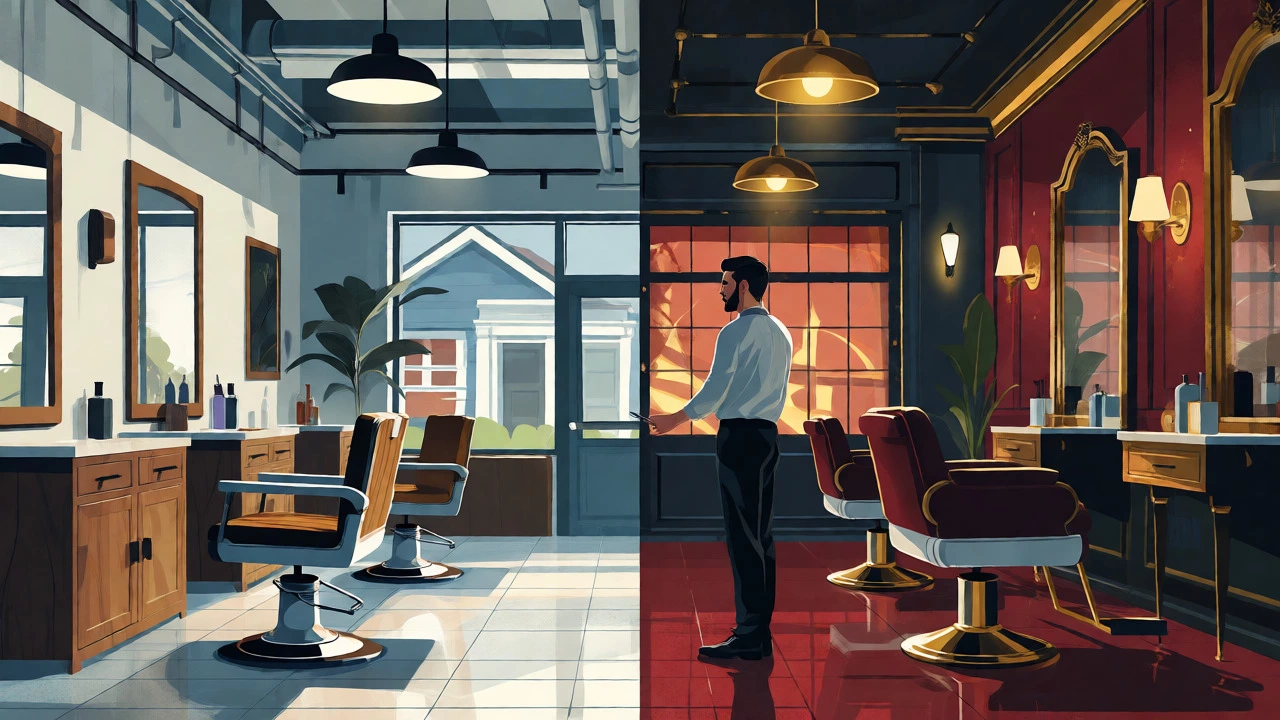
Barbers specialize in short hair, fades, and beard grooming. Their tools are designed for speed and precision on shorter lengths. If you want a clean fade or a buzz cut, a barber is usually faster and cheaper. A $30 barber cut is standard in many US cities.
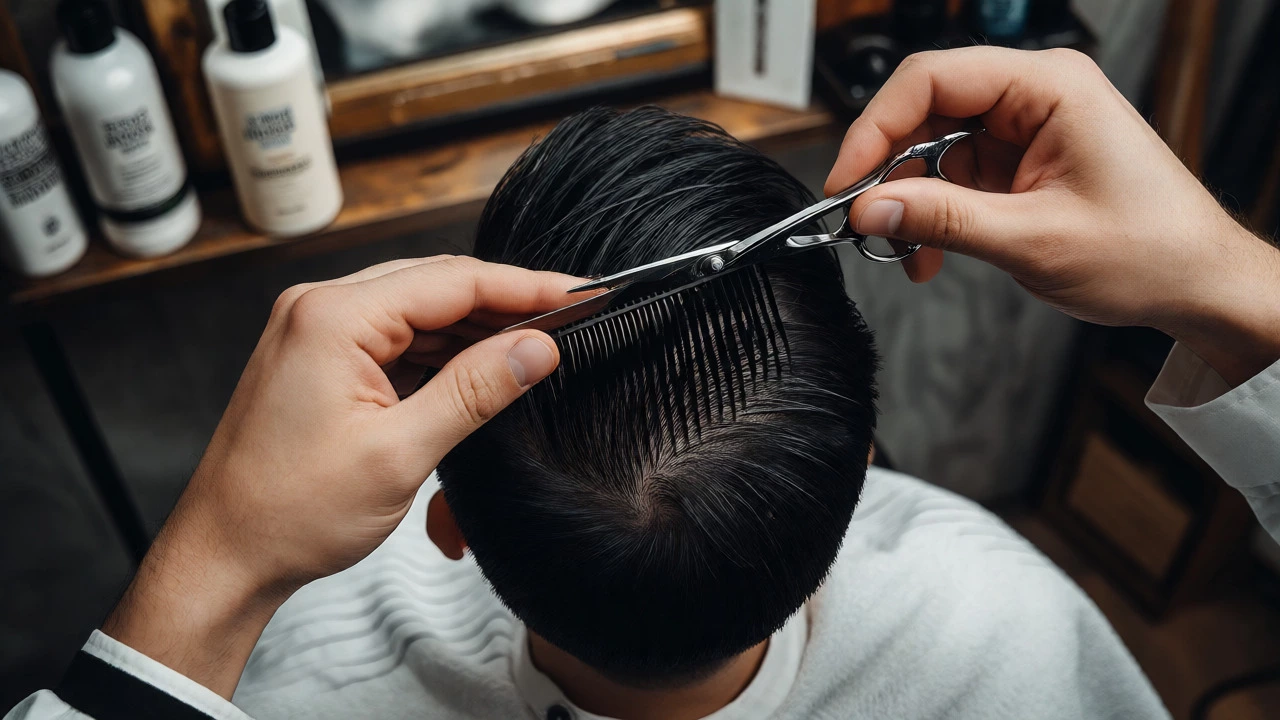
Hair Stylists focus on longer hair, coloring, and intricate styling techniques. They use different tools, like thinning shears and razors, and spend more time on consultation and finishing styles. If you want layers, bangs, or a perm, you need a stylist. A $30 stylist cut is rare unless it’s a junior stylist or a special promo.
Don’t go to a salon for a buzz cut expecting a bargain. Don’t go to a barber for a complex balayage expecting professional results. Match the provider to the task.
How to Spot a Good Deal (Without Sacrificing Quality)
You don’t have to break the bank to look good. Here are practical ways to save money without ending up with a bad haircut.
- Visit Beauty Schools: Students supervised by licensed instructors perform services at 50-70% off market rates. It takes longer, but the quality is often surprisingly high because students are eager to prove themselves.
- Book Off-Peak Hours: Some salons offer discounts for Tuesday mornings or late afternoons when chairs are empty.
- Find a Junior Stylist: Senior stylists charge premium rates for their reputation. Junior stylists are trained and licensed but charge less to build their client base. Ask if you can book with a newer team member.
- Bring Your Own Style Reference: Clear communication saves time. If the stylist spends 10 minutes guessing what you want, that’s unpaid labor for them, which might drive up future prices or lead to rushed cuts.
When Is Actually Cheap?
In some contexts, $30 is a steal. If you live in a major global city like Sydney, London, or San Francisco, finding a competent, licensed stylist for under $40 is difficult. In these markets, $30 might mean:
- A quick line-up or edge-up only.
- A discount coupon or first-time customer offer.
- A chain salon with high volume and lower individual attention.
Conversely, in smaller towns or regions with lower costs of living, $30 might buy you a premium experience with tea, coffee, and a 45-minute service.
The Hidden Costs: Tips and Products
Remember, the sticker price isn’t the final price. Tipping is customary in many countries, including the US, Canada, and Australia. Standard tip is 15-20%. So a $30 haircut becomes $36-$39. Factor that into your budget.
Also, watch out for upsells. Stylists are often commissioned on retail products. If they push a $25 shampoo on you, your total jumps to $55+. Decide beforehand if you want to buy products home-care wise. If you already have a routine, politely decline. If you’re open to suggestions, ask for a recommendation that fits your hair type, not just the most expensive bottle.
Making the Right Choice for Your Wallet
So, is $30 too much? Only you can answer that. Look at your monthly budget. If hair care eats up 10% of your disposable income, maybe you need to extend the time between cuts or switch to a cheaper provider. If $30 feels like loose change, then prioritize skill and experience over price.
The best haircut isn’t the cheapest or the most expensive. It’s the one that makes you feel confident and lasts until your next appointment. Communication is key. Tell your stylist your budget upfront. Many will adjust the service scope to fit your price point. For example, skipping the blow-dry can save $10-$15.
Ultimately, value is subjective. For some, a haircut is a necessary chore. For others, it’s self-care. Both perspectives are valid. Just know what you’re paying for, and don’t let shame stop you from asking questions about the bill.
Why do some haircuts cost $15 and others $100?
The price difference reflects labor intensity, overhead costs, and stylist expertise. A $15 cut is usually a quick clipper job with minimal styling. A $100 cut involves a lengthy consultation, complex scissor work, chemical treatments, or a highly sought-after stylist in a high-rent area. Time is money; longer services cost more.
Is it rude to ask how much a haircut costs before booking?
Not at all. It is smart consumer behavior. Most salons list prices online or on menus. Asking clarifies expectations and prevents awkwardness at checkout. It also helps you choose the right stylist level for your budget.
Do I have to tip for a $30 haircut?
In countries like the US, Canada, and Australia, yes, tipping is expected, typically 15-20%. In some European countries or parts of Asia, service charges may be included, or tipping is optional. Check local customs. If the service was exceptional, tipping more is appreciated.
Can I get a good haircut at a chain salon?
Yes, but consistency varies. Chain salons train staff to a standard, but turnover can be high. You might get a great cut one visit and a mediocre one the next. Building a relationship with one specific stylist within a chain ensures better results over time.
How often should I get a haircut to save money?
This depends on your style. Short fades need trimming every 2-3 weeks. Longer styles can wait 8-12 weeks. Extending intervals reduces annual costs. Use dry shampoo and proper home maintenance to stretch the time between professional visits.