
How to Repair Damaged Hair Fast at Home: A Practical Guide
 Nov, 2 2026
Hair Damage Diagnostic & Repair Quiz
Your Hair Diagnosis
Recommended Treatment
Avoid These Habits
You know the feeling. You run your fingers through your hair, expecting silk, but you hit a snag. Maybe it’s frizz from yesterday’s humidity, or maybe it’s that brittle snap when you try to detangle. It’s frustrating. But here’s the good news: damaged hair is not necessarily dead hair. The cuticle-the outer protective layer of your strand-can be smoothed, sealed, and temporarily fortified with the right ingredients and techniques.
You don’t need a salon appointment costing hundreds of dollars to see immediate improvement. With a few targeted steps and common household or drugstore items, you can restore moisture, reduce breakage, and make your hair look healthier by morning. Let’s get straight to what actually works.
Understand What “Damaged” Really Means
Before you buy another bottle of shampoo, you need to diagnose the problem. Not all damage is the same, and treating dryness like heat damage is a waste of time. Hair damage generally falls into three categories: mechanical (from brushing or styling), chemical (from dyeing or relaxing), and environmental (from sun, chlorine, or wind).
- Mechanical Damage: This looks like frizz, tangles, and split ends. It happens when you brush wet hair too aggressively or use rough towels.
- Chemical Damage: Your hair feels gummy when wet or snaps easily when dry. This means the protein bonds inside the hair shaft have been broken down by bleach or color.
- Environmental Damage: Your hair feels straw-like and dull. This is usually due to lack of moisture retention caused by UV exposure or hard water.
If your hair is gummy, stop using protein-heavy products immediately; they will make it worse. If it’s just dry and frizzy, it needs moisture. Knowing which one you have saves you from making things worse.
The Power of Deep Conditioning Masks
A regular conditioner sits on the surface for two minutes and rinses off. A deep conditioner penetrates the cortex-the middle layer of the hair-to fill in gaps in the cuticle. For fast results, you need something richer than your daily routine.
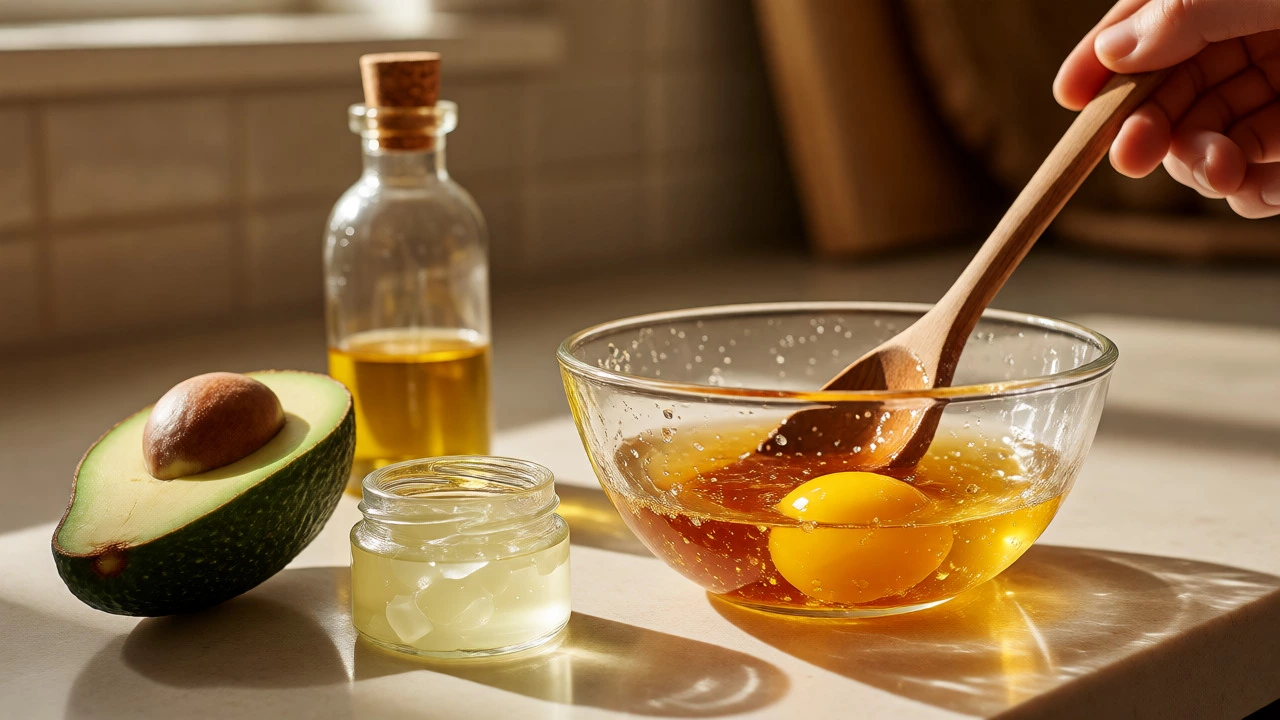
You can buy a high-quality mask, but you can also make an effective one at home. Here is a simple, proven recipe that works for most hair types:
| Ingredient | Function | Best For |
|---|---|---|
| Coconut Oil | Penetrates hair shaft to prevent protein loss | Dry, porous hair |
| Honey | Natural humectant that draws moisture in | Frizzy, dull hair |
| Egg Yolk | Provides proteins and fats for strength | Brittle, breaking hair |
| Aloe Vera Gel | Soothes scalp and adds lightweight hydration | All hair types, especially fine hair |
To use this: mix equal parts coconut oil and honey. Apply to damp hair, focusing on the mid-lengths and ends. Cover your head with a shower cap. The key? Heat. Wrap a warm towel around the cap or sit under a dryer for 15-20 minutes. Heat opens the cuticle, allowing the oils to penetrate deeper. Rinse thoroughly with cool water to seal the cuticle back down.
Stop Doing These Things Immediately
You can’t repair hair if you keep damaging it. If you want fast results, you have to pause certain habits while your hair recovers.
Put down the hot tools. Flat irons and curling wands operate at temperatures above 300°F (150°C). At this temperature, the water inside your hair literally boils, creating bubbles in the cortex that weaken the structure. If you must style, use the lowest setting and always apply a heat protectant spray first. Better yet, embrace air-drying or heatless curls for a week.
Switch your towel. Rubbing your hair with a standard cotton bath towel causes friction that lifts the cuticle and creates frizz. Instead, gently squeeze excess water out with a microfiber towel or an old cotton T-shirt. These materials are smoother and less likely to snag fragile strands.
Be gentle with wet hair. Hair is at its weakest when wet because hydrogen bonds are broken. Never brush soaking wet hair with a standard paddle brush. Use a wide-tooth comb or a flexible detangling brush, starting from the ends and working your way up to the roots. Pulling from the top down snaps wet strands instantly.
Seal the Ends to Prevent Splitting
Split ends cannot be repaired once they’ve formed. No serum can glue them back together permanently. However, you can prevent them from traveling further up the shaft. Trimming is the only true fix, but if you’re trying to grow length, you might not want to cut much.
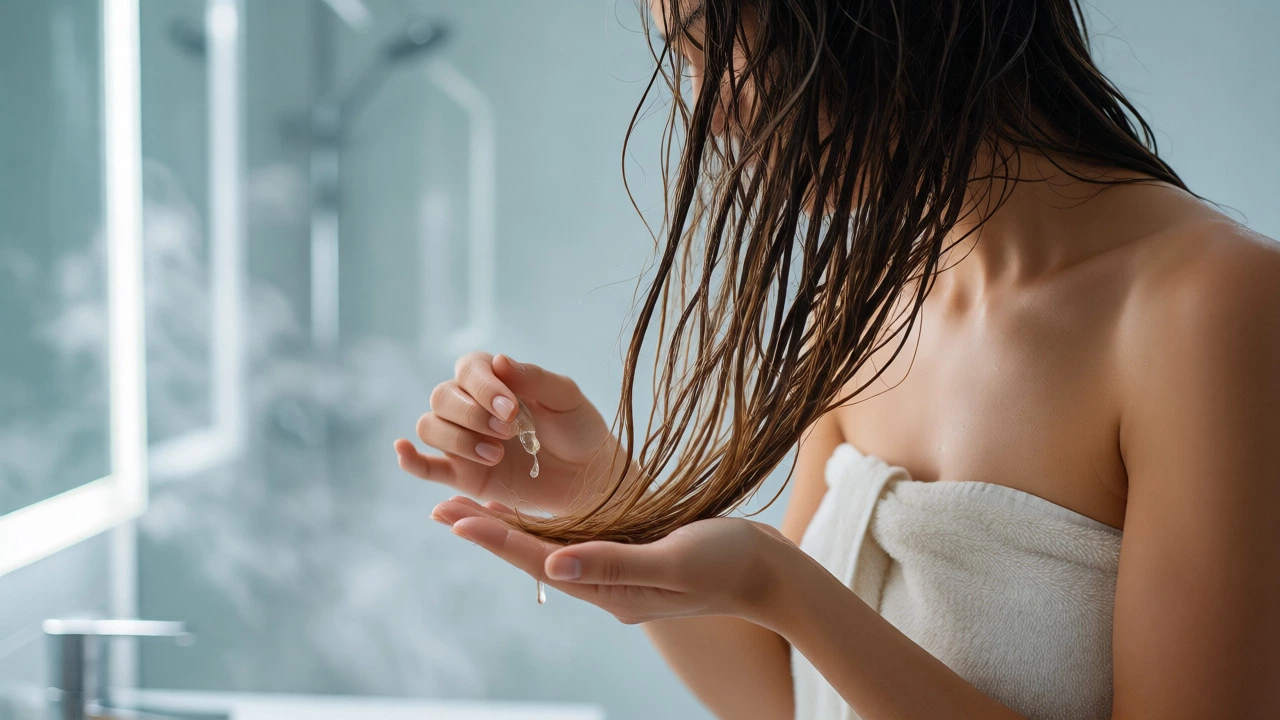
In the meantime, use a hair oil or serum containing silicones like dimethicone or natural oils like argan or jojoba. Apply a pea-sized amount to your palms and lightly smooth over the very ends of your hair. This acts as a temporary bandage, reducing friction between strands so splits don’t worsen. Do this every night before bed.
Cold Water Rinses Are Worth the Discomfort
We often skip this step because we’re cold or in a rush. But ending your wash routine with a blast of cold water makes a tangible difference. Warm water opens the hair cuticle to allow cleansing and conditioning. Cold water shocks the cuticle shut, locking in moisture and smoothing the surface.
Smooth cuticles reflect light better, making hair look shinier. They also create less friction, meaning less tangling throughout the day. Try it for just 30 seconds. It’s uncomfortable, sure, but the payoff in shine and manageability is immediate.
Nourish From the Inside Out
Topical treatments help, but your hair is made of keratin, a protein. If you aren’t eating enough protein, vitamins, or healthy fats, your body prioritizes vital organs over hair growth. You might notice new growth coming in weaker or slower.
Focus on these nutrients for the next few weeks:
- Biotin and B-Vitamins: Found in eggs, almonds, and sweet potatoes. Essential for hair cell production.
- Omega-3 Fatty Acids: Found in salmon, walnuts, and flaxseeds. These lubricate the hair shaft from within, adding elasticity.
- Vitamin E: An antioxidant found in avocados and spinach. It protects hair follicles from oxidative stress caused by pollution and sun.
Hydration matters too. Dehydrated bodies produce dehydrated skin and scalp. Drink more water. It sounds cliché, but it affects the health of the follicle environment where your hair grows.
Create a Recovery Schedule
Consistency beats intensity. One miracle mask won’t fix months of neglect. Here is a simple weekly plan to accelerate repair:
- Monday: Wash with a sulfate-free shampoo. Focus shampoo on the scalp only. Condition heavily on ends.
- Tuesday: Air dry. Apply leave-in conditioner to damp hair. Sleep on a silk pillowcase.
- Wednesday: Rest day. No washing. Just moisturize ends with oil if needed.
- Thursday: Wash again if necessary. Or do a co-wash (conditioner-only wash) to refresh without stripping oils.
- Friday: Deep treatment day. Apply the DIY mask or store-bought mask. Use heat. Rinse with cold water.
- Saturday/Sunday: Gentle styling. Avoid tight ponytails or clips that pull on the hairline.
This schedule minimizes mechanical stress and maximizes moisture intake. Stick to it for two weeks, and you should feel a noticeable difference in texture and softness.
When to See a Professional
Home remedies work for mild to moderate damage. If your hair is falling out in clumps, if your scalp is red and flaky, or if your hair breaks off at the root rather than the end, you might have an underlying medical issue. Thyroid problems, iron deficiency, or hormonal imbalances can cause hair thinning that no amount of coconut oil will fix.
In those cases, see a dermatologist. They can check blood levels and prescribe treatments like minoxidil or specific supplements. But for typical dryness, frizz, and split ends caused by styling and coloring, your bathroom cabinet is likely all you need.
Can split ends be repaired without cutting?
No, split ends cannot be permanently repaired. Once the hair shaft splits, the structural integrity is gone. Products can temporarily bind the split together visually, making it look less frayed, but the split will eventually travel up the hair shaft. The only permanent solution is trimming the affected area.
How often should I do a deep conditioning treatment?
For severely damaged hair, start with twice a week for the first month. Once the hair feels softer and stronger, scale back to once a week or every other week. Over-conditioning can lead to "hygral fatigue," where the hair becomes overly elastic and weak, so listen to your hair's response.
Is coconut oil good for all hair types?
Coconut oil is great for low-porosity or normal hair because it penetrates the shaft. However, people with high-porosity or coarse, curly hair may find it too heavy or protein-rich, leading to stiffness. If your hair feels crunchy after using coconut oil, switch to lighter oils like argan, jojoba, or almond oil.
Does cold water really help hair?
Yes. Cold water helps flatten the hair cuticle, which reduces frizz and increases shine. It also locks in the moisture from your conditioner. While it doesn't change the internal structure of the hair, it significantly improves the external appearance and manageability immediately after drying.
What is the best ingredient for protein damage?
If your hair is chemically damaged (bleached or relaxed), look for hydrolyzed proteins like keratin, wheat, or silk amino acids in conditioners. These molecules are small enough to penetrate the hair shaft and temporarily reinforce broken bonds. Egg masks are a natural source, but commercial hydrolyzed proteins are more consistent and easier to rinse out.