
How to Rebuild Collagen in Your Face: Topical, Oral & Professional Methods
 Jul, 23 2026
Collagen Health Score Calculator
Assess Your Habits
Daily Skincare Routine
Nutrition & Hydration
Lifestyle Factors
Your Result
Based on your inputs
Key Recommendation:
Start by improving your weakest area.
That first fine line near your eye or the slight sagging along your jawline isn’t just a cosmetic annoyance; it’s a biological signal. Your body is telling you that collagen, the structural protein responsible for keeping skin firm and elastic, is depleting faster than it can be replaced. The good news? You don’t have to accept this as an inevitable sentence. While you can’t rewind the clock entirely, modern dermatology and skincare science offer proven ways to stimulate new collagen production and protect what you have left.
The challenge lies in the sheer volume of conflicting advice. One influencer swears by drinking bone broth, while another insists on expensive laser procedures. So, how do you actually rebuild collagen in your face without wasting money on myths? The answer requires a three-pronged approach: topical actives that penetrate the skin barrier, oral nutrients that provide the building blocks, and professional interventions that trigger deep repair mechanisms.
The Biology of Collagen Loss: Why It Happens
To fix the problem, you first need to understand the mechanism. Collagen is a fibrous protein that makes up about 80% of your skin's dermis. Think of it as the scaffolding that holds your skin up. From around age 25, your body produces about 1% less collagen each year. By age 40, many people have lost nearly half their original collagen density.
This decline accelerates due to two main factors: intrinsic aging (genetics and time) and extrinsic aging (environmental damage). The biggest culprit in extrinsic aging is UV radiation. When ultraviolet rays hit your skin, they activate enzymes called matrix metalloproteinases (MMPs). These enzymes literally chew up existing collagen fibers. This process is known as photoaging. If you haven't been wearing sunscreen daily, you’ve likely experienced significant collagen degradation regardless of your actual age.
Another major factor is glycation. When you consume excess sugar, glucose molecules bind to proteins like collagen, forming harmful compounds called advanced glycation end products (AGEs). This makes collagen stiff and brittle, leading to wrinkles and loss of elasticity. Understanding these triggers helps you prioritize which interventions will actually work versus those that are merely marketing hype.
Topical Ingredients That Stimulate Production
Creams alone cannot replace lost collagen because most collagen molecules are too large to penetrate the skin barrier. However, certain ingredients can trick your skin into producing more of its own. Here are the most effective topicals backed by clinical data:
- Retinoids (Vitamin A derivatives): Retinol, retinaldehyde, and prescription tretinoin are the gold standard. They work by binding to nuclear receptors in skin cells, accelerating cell turnover and stimulating fibroblasts to produce new collagen. Studies show consistent use over six months can increase collagen synthesis by up to 30%. Start with a low concentration (0.1% - 0.3%) to avoid irritation.
- Vitamin C (L-Ascorbic Acid): This antioxidant is essential for collagen synthesis. It acts as a cofactor for the enzymes prolyl hydroxylase and lysyl hydroxylase, which stabilize collagen fibers. Without sufficient Vitamin C, collagen strands are weak and unstable. Look for stabilized formulations at concentrations between 10% and 20%.
- Bakuchiol: For those who find retinoids too harsh, bakuchiol is a plant-based alternative derived from the Psoralea corylifolia seed. Clinical trials suggest it mimics retinol’s effects on gene expression related to collagen production without the same level of sensitivity or peeling.
- Peptides: Signal peptides like Matrixyl (palmitoyl pentapeptide-4) send messages to fibroblasts to ramp up collagen production. While less potent than retinoids, they are excellent for maintenance and sensitive skin types.
Consistency is key here. Applying these ingredients sporadically yields little result. You need to integrate them into a nightly routine, allowing the active ingredients time to work during your skin’s natural repair cycle.
Nutritional Support: Feeding Your Skin from Within
You can apply the best serums in the world, but if your body lacks the raw materials to build collagen, results will plateau. Collagen is made primarily of amino acids, specifically glycine, proline, and hydroxyproline. Ensuring adequate intake of these nutrients is non-negotiable for rebuilding efforts.
| Nutrient | Function in Collagen Production | Best Food Sources |
|---|---|---|
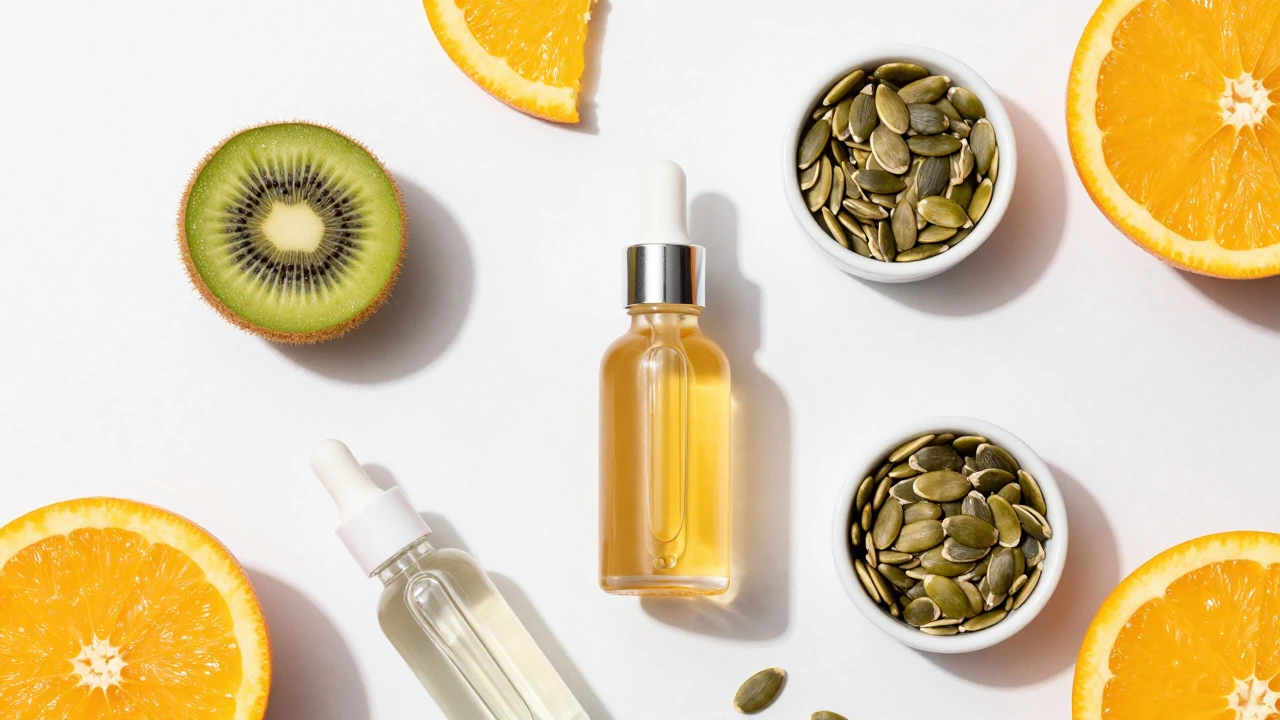
| Vitamin C | Essential cofactor for collagen stabilization | Citrus fruits, bell peppers, broccoli, kiwi |
| Zinc | Supports enzyme function in wound healing and tissue repair | Oysters, pumpkin seeds, beef, lentils |
| Copper | Activates lysyl oxidase, critical for collagen cross-linking | Dark chocolate, cashews, sunflower seeds |
| Amino Acids (Glycine/Proline) | Building blocks of the collagen triple helix structure | Bone broth, chicken skin, fish scales, egg whites |
Hydration also plays a subtle but vital role. Dehydrated skin appears thinner and more prone to wrinkling. Aim for at least 2 liters of water daily to maintain the turgor pressure that keeps skin plump. Additionally, reducing sugar intake minimizes the formation of AGEs, preserving the integrity of existing collagen fibers.
Professional Treatments for Deep Repair
If topical and nutritional methods feel too slow, professional treatments offer a more aggressive path. These procedures create controlled micro-injuries or thermal damage, triggering the body’s wound-healing response. This response includes a surge in collagen and elastin production.
- Microneedling: Tiny needles puncture the skin, creating microscopic channels. This stimulates fibroblasts directly. Most patients see visible improvement after three sessions spaced four weeks apart. It works well for acne scars and mild laxity.
- Laser Resurfacing (CO2 or Erbium): These ablative lasers remove the outer layers of skin and heat the underlying dermis. The resulting inflammation drives robust collagen remodeling. Recovery time is longer (7-14 days), but results are dramatic and long-lasting.
- Radiofrequency (RF) Microneedling: Combines microneedling with RF energy. The heat delivered deeper into the dermis tightens existing collagen and stimulates new growth. It’s particularly effective for jawline definition and neck laxity.
- Chemical Peels: Stronger peels (like TCA) reach the mid-dermis, encouraging cellular turnover and collagen induction. Superficial peels mainly improve texture but have minimal impact on deep collagen structures.
Consultation with a board-certified dermatologist is crucial here. Choosing the wrong treatment for your skin type can lead to hyperpigmentation or scarring, especially in darker skin tones.
Lifestyle Factors That Sabotage Efforts
You can spend thousands on treatments, but certain habits will undo your progress. Smoking is perhaps the most destructive habit for skin health. Nicotine constricts blood vessels, reducing oxygen and nutrient delivery to the skin. Meanwhile, chemicals in cigarette smoke generate free radicals that break down collagen. Smokers often develop "smoker’s lines" around the mouth prematurely.
Sleep deprivation is another silent killer. During deep sleep, your body releases human growth hormone (HGH), which aids in tissue repair and collagen synthesis. Chronic lack of sleep elevates cortisol levels, a stress hormone that breaks down collagen. Aim for 7-9 hours of quality sleep per night.
Finally, chronic stress itself contributes to collagen degradation through elevated cortisol. Managing stress through exercise, meditation, or hobbies isn’t just good for mental health; it’s a legitimate anti-aging strategy.

Myths vs. Reality in Collagen Restoration
The beauty industry is rife with misinformation. Let’s clear up some common misconceptions:
- Myth: Eating collagen supplements directly adds collagen to your face.
Reality: Oral collagen peptides are broken down into amino acids during digestion. While studies show they may improve skin hydration and elasticity, they don’t travel intact to your face. They provide the building blocks, not the finished product. - Myth: Expensive creams guarantee better results.
Reality: Price does not equal efficacy. A $20 retinol serum with proper formulation can outperform a $200 cream lacking active penetration enhancers. Focus on ingredient lists, not brand prestige. - Myth: Sunscreen prevents all aging.
Reality: Sunscreen prevents photoaging, which accounts for up to 80% of visible facial aging. However, it doesn’t stop intrinsic chronological aging. It’s a protective measure, not a regenerative one.
Understanding these distinctions saves you money and sets realistic expectations. Rebuilding collagen is a marathon, not a sprint. Visible changes typically take 3 to 6 months of consistent effort.
Building Your Personalized Protocol
There is no one-size-fits-all solution. Your protocol should depend on your age, skin type, budget, and tolerance for downtime. For beginners in their late 20s to early 30s, focus on prevention: daily broad-spectrum SPF 30+, a Vitamin C serum in the morning, and a gentle retinol at night. Supplement with a balanced diet rich in antioxidants.
For those in their 40s and beyond, consider adding professional treatments like microneedling or RF therapy every 6-12 months. Increase retinoid strength gradually and incorporate peptide-rich moisturizers. Monitor your sugar intake and prioritize sleep hygiene.
Remember, consistency beats intensity. Applying a modest routine diligently for years yields better results than an aggressive regimen abandoned after a month. Listen to your skin. If it becomes red, flaky, or irritated, scale back. Barrier health is foundational; you can’t rebuild collagen on compromised skin.
How long does it take to see results from collagen-building efforts?
Visible improvements typically appear after 3 to 6 months of consistent topical application and lifestyle changes. Professional treatments may show initial tightening within weeks, but full collagen remodeling takes several months. Patience is essential because biological processes cannot be rushed significantly.
Can I really reverse deep wrinkles naturally?
Deep wrinkles caused by significant volume loss and structural collapse are difficult to reverse fully with natural methods alone. Topicals and nutrition can improve skin quality and reduce depth slightly, but severe cases often require fillers or surgical intervention for dramatic correction. Natural methods excel at prevention and mild-to-moderate improvement.
Is retinol safe for sensitive skin?
Retinol can be irritating, but it can be used safely with caution. Start with a low concentration (0.1%) applied once or twice a week, gradually increasing frequency. Use the "sandwich method": apply moisturizer, then retinol, then more moisturizer to buffer irritation. Alternatively, try bakuchiol as a gentler plant-based alternative.
Do collagen supplements actually work?
Clinical studies indicate that hydrolyzed collagen peptides can improve skin hydration, elasticity, and density when taken consistently for 8-12 weeks. They provide amino acids necessary for synthesis but do not directly add collagen to the skin. They are a supportive measure, not a standalone cure.
What is the best time to apply Vitamin C serum?
Morning application is ideal. Vitamin C neutralizes free radicals generated by UV exposure and pollution throughout the day. It also boosts the efficacy of your sunscreen. Apply it to clean, dry skin before moisturizer and sunscreen for maximum protection and brightening benefits.