
How to Know if a Skincare Product Is Organic: A Simple Guide for Real Results
 Dec, 21 2025
Organic Skincare Product Checker
Is Your Skincare Truly Organic?
Check if your product meets real organic standards based on certification, ingredients, and labeling claims.
Product Certification
Ingredient Analysis
Red Flags Check
Check for ingredients that indicate non-organic products
You picked up a bottle labeled "100% Organic" at the store, but when you checked the ingredients, you saw something like phenylpropanol or fragrance listed. That’s not organic. It’s greenwashing. And you’re not alone-most people don’t know how to tell real organic skincare from fake. The truth is, there’s no government law in New Zealand or the U.S. that says a product must be 95% organic to call itself "organic." That’s why you need to know what to look for.
Look for a Certified Organic Label
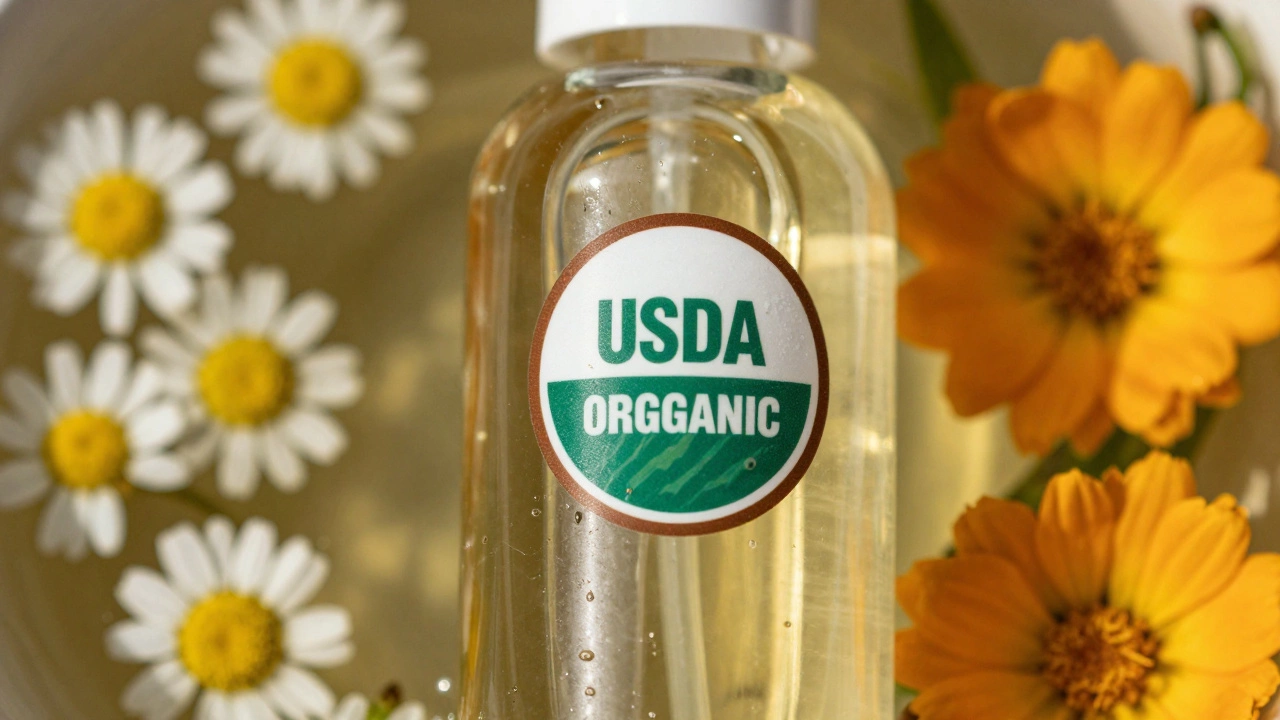
The only way to know a skincare product is truly organic is to find a third-party certification logo on the packaging. These aren’t just marketing terms-they’re regulated standards. In New Zealand, look for BioGro or AsureQuality. In the U.S., it’s USDA Organic. In Europe, it’s ECOCERT or Soil Association. These organizations test ingredients, farming practices, and manufacturing processes. If the product doesn’t display one of these logos, don’t assume it’s organic.
For example, a product that says "Made with Organic Ingredients" might only contain 70% organic material. But if it says "Certified Organic," it must be at least 95% organic by weight, excluding water and salt. That’s the difference between a marketing claim and a verified standard.
Check the Ingredient List Like a Detective
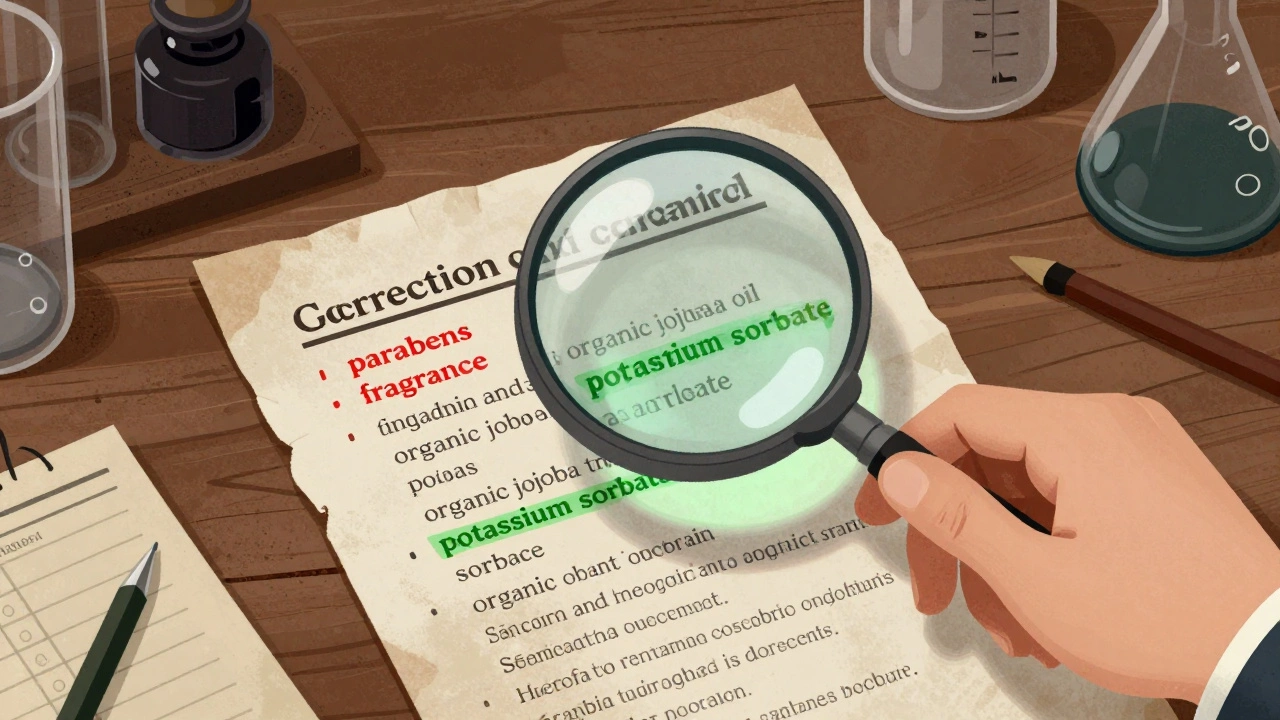
Organic skincare doesn’t mean "natural" or "plant-based." It means the ingredients were grown without synthetic pesticides, herbicides, or genetically modified organisms (GMOs). So if you see alcohol denat., sodium lauryl sulfate, or parabens on the list, it’s not organic-even if the brand uses words like "botanical" or "pure" on the front.
Here’s what to look for in the ingredient list:
- Organic plant oils: Cold-pressed organic jojoba, argan, or rosehip oil
- Organic extracts: Organic chamomile, calendula, or green tea
- Mineral-based preservatives: Zinc oxide, potassium sorbate (from fermented fruit)
- Essential oils: Only if they’re certified organic (not "natural fragrance")
Watch out for hidden chemicals. "Fragrance" or "parfum" can mean dozens of synthetic compounds. Organic brands must list each essential oil individually, like Rosmarinus officinalis leaf oil instead of "fragrance." If they don’t, it’s not organic.
Understand the Difference Between "Natural" and "Organic"
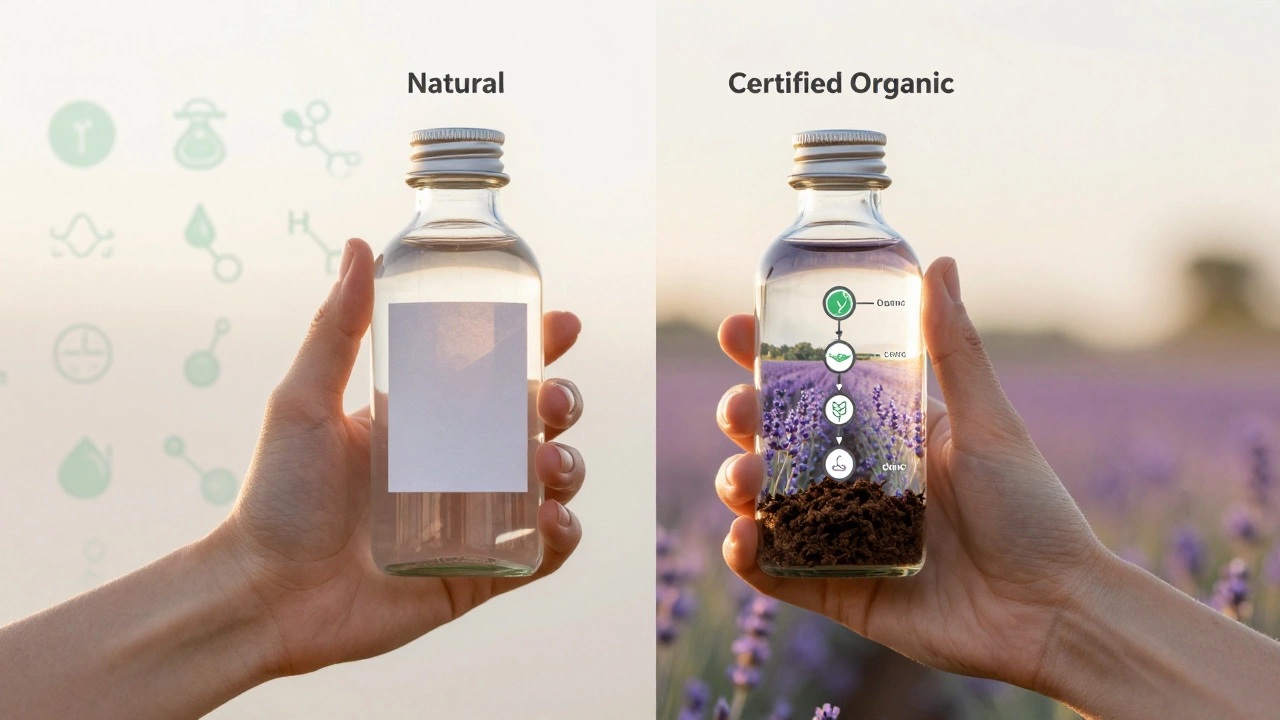
"Natural" means nothing. A product can be 99% natural and still contain synthetic preservatives, petrochemicals, or artificial dyes. Organic means the raw materials were grown under strict farming rules. A cucumber grown with chemical fertilizers is natural. A cucumber grown without them, using compost and crop rotation, is organic.
Think of it like this: natural is what you find in the wild. Organic is what you grow with care. Skincare brands love to use "natural" because it sounds good and costs less. Organic certification costs money-so brands that invest in it usually mean it.
Read the Full Ingredient Declaration
Organic skincare brands are required to list all ingredients in descending order by weight. That means the first five ingredients make up most of the product. If water is first (which it often is), that’s fine-it’s not an ingredient you’re buying. But if you see propylene glycol, ethanolamine, or polyethylene glycol in the top 10, walk away. These are petroleum-derived and not allowed in certified organic products.
Also, look for certifications on the back or side panel. Some brands bury the logo in tiny print. Flip the bottle. Zoom in on the label. If you can’t find a certification, contact the company. Ask: "Which certifying body approved your organic claim?" Reputable brands will reply with the name and certification number.
Watch Out for Common Organic Skincare Scams
Here are the top five tricks brands use to fool you:
- "Made with Organic Ingredients" - Only 70% organic. The rest could be synthetic.
- "No Parabens" or "No Sulfates" - Just a buzzword. Doesn’t mean organic.
- Green packaging - A brown bottle doesn’t make the formula organic.
- Using "wildcrafted" as a substitute - Wild plants aren’t certified unless tested and traced.
- Using a non-recognized logo - Some brands make up their own "certifications" like "EcoPure Certified." Check if it’s a real organization.
There’s a reason why brands like Dr. Hauschka, True Botanicals, and Weleda charge more. They pay for certification, use organic farming partners, and avoid synthetic fillers. You’re paying for transparency, not just ingredients.
Where to Buy Real Organic Skincare
Don’t rely on big-box stores or Amazon listings unless you verify the certification. The best places to buy certified organic skincare are:
- Specialty organic retailers (like Earthwise Beauty or Green People)
- Local farmers’ markets with certified skincare vendors
- Brand websites that link to their certification documents
- Pharmacies that carry certified organic lines (in New Zealand, look for Pharmacy2U or Health Post)
Some brands even let you scan a QR code on the bottle to see the full supply chain-from the farm where the lavender was grown to the lab where it was tested. That’s real transparency.
What to Do If You’re Still Unsure
If you’re staring at a label and can’t tell if it’s organic, use this quick checklist:
- Is there a recognized certification logo (USDA, ECOCERT, BioGro)?
- Are the top 5 ingredients organic plant oils or extracts?
- Is there a "fragrance" listed? If yes, it’s not organic.
- Is the brand willing to provide certification documents on request?
- Does the product have a shelf life under 12 months? Organic products don’t use synthetic preservatives, so they spoil faster.
If you answer "no" to more than two of these, it’s not truly organic. Save your money and your skin.
Why This Matters for Your Skin
Organic skincare isn’t just about avoiding chemicals. It’s about what you’re putting on your largest organ. Synthetic ingredients like phthalates and parabens can disrupt hormones. Even if they’re in small amounts, daily use adds up. Organic ingredients are gentler, more nutrient-dense, and often better tolerated by sensitive skin.
People with eczema, rosacea, or acne often see improvement when switching to certified organic products-not because they’re magically healing, but because they’re free of irritants and fillers that trigger reactions. A 2023 study in the Journal of Clinical Dermatology found that 78% of participants with sensitive skin reported fewer flare-ups after switching to certified organic skincare over six months.
You’re not buying luxury. You’re buying safety. And that’s worth knowing.
Can a product be organic if it has water in it?
Yes. Water is not counted as an ingredient when calculating organic percentage. Certified organic skincare can contain water, but the active plant-based ingredients must be 95% or more organic by weight. Water is just the carrier.
Is organic skincare better for acne-prone skin?
It can be. Organic products avoid synthetic fragrances, alcohol, and harsh surfactants that clog pores and trigger inflammation. Ingredients like organic tea tree oil, chamomile, and calendula have natural anti-inflammatory and antibacterial properties. But organic doesn’t automatically mean non-comedogenic-always patch test.
Why do organic skincare products cost more?
Because organic farming is more expensive. No synthetic pesticides, no GMO seeds, manual weeding, smaller yields, and third-party certification all add cost. Also, organic brands don’t use cheap fillers like mineral oil or silicones. You’re paying for quality ingredients and ethical practices, not just packaging.
Do organic skincare products expire faster?
Yes. Without synthetic preservatives like parabens or phenoxyethanol, organic products rely on natural preservatives like vitamin E, rosemary extract, or potassium sorbate. These work well but don’t last as long. Most have a shelf life of 6 to 12 months after opening. Check the PAO symbol (jar with an open lid and number like 12M).
Are all plant-based ingredients organic?
No. A plant can be natural but grown with chemical fertilizers and pesticides. Organic means the plant was grown without synthetic inputs, using sustainable farming methods. Look for the certification-don’t assume.