
How Much to Tip on a $30 Haircut: The 2026 Guide
 Aug, 3 2026
Salon Tipping Calculator
Recommended Tip
Standard tip for a great job.
| Role | Responsibility | Estimated Share |
|---|---|---|
| Stylist/Barber | Cuts and styles hair (Primary) | $ |
| Assistant/Shampooer | Washes and preps hair | $ |
| Colorist | Applies dye/highlights (if separate) | $ |
You just left the salon. Your hair looks great, but that receipt staring back at you has one blank line that feels heavier than the bill itself: tip. You paid $30 for the cut. Now what? Do you throw in five bucks and hope for the best? Leave ten and feel like a hero? Or stick to the old rules you heard years ago?
Tipping culture in the beauty industry has shifted significantly over the last few years. With inflation affecting service costs and stylists facing higher overhead, the unwritten rules are becoming written ones. If you are wondering how much to tip on a $30 haircut, the short answer is usually between $5 and $10. But the real answer depends on the quality of the service, the type of professional, and where you live.
The Golden Rule: 15% to 20%
In the United States, the standard expectation for personal services like haircuts is to tip between 15% and 20% of the pre-tax subtotal. This isn't just a suggestion; it's often baked into how many salons operate. Many stylists work on commission or as independent contractors who rent their chairs, meaning tips make up a significant portion of their take-home pay.
Let’s break down the math for your $30 haircut:
- 15% (The Baseline): $4.50. Round this up to $5 if you want to keep it simple. This is appropriate if the service was adequate-nothing went wrong, nothing went exceptionally right.
- 20% (The Standard): $6.00. This is the sweet spot for most people. It shows appreciation for a job well done without breaking the bank.
- 25%+ (The Exceptional): $7.50 or more. Did they listen perfectly to what you wanted? Did they spend extra time blending layers or styling your hair after the cut? This is when you go above and beyond.
If you are paying cash, handing over a crisp $5 or $10 bill and saying "keep the change" is a universally appreciated gesture. It’s quick, clear, and ensures the stylist gets the full amount immediately.
Who Gets Tipped? The Salon Hierarchy
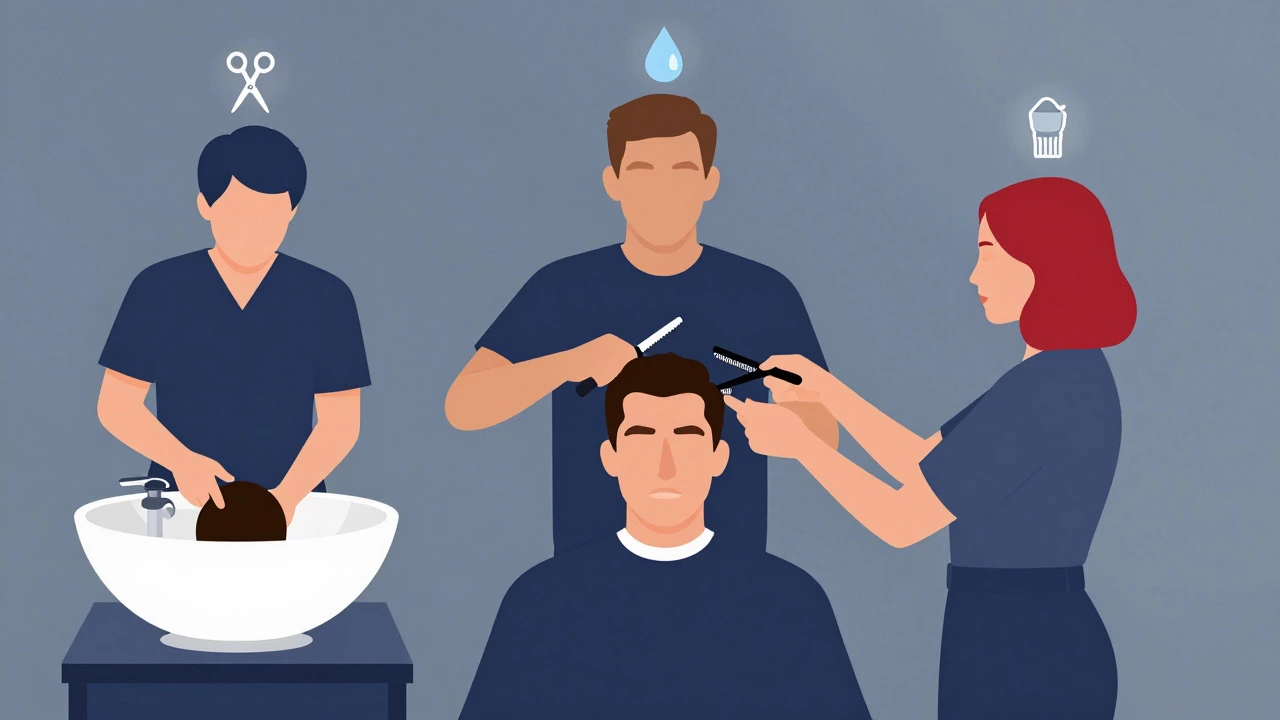
A common mistake clients make is tipping only the person who held the scissors. In a typical salon environment, there is a team behind every good haircut. Understanding who deserves a tip helps ensure everyone is compensated fairly.
| Role | Responsibility | Tip Amount ($) | Percentage |
|---|---|---|---|
| Stylist/Barber | Cuts and styles your hair | $5 - $6 | 15-20% |
| Assistant/Shampooer | Washes and preps hair | $2 - $3 | 5-10% of total |
| Colorist | Applies dye/highlights (if separate from stylist) | $3 - $4 | 15-20% of color cost |
If your $30 haircut included a wash by an assistant, don’t forget them. They often earn less per hour than the lead stylist. A small $2 bill left for them goes a long way. If the same person washed, cut, and styled your hair, give the entire tip to them.
Barbershop vs. Salon: Does the Setting Matter?
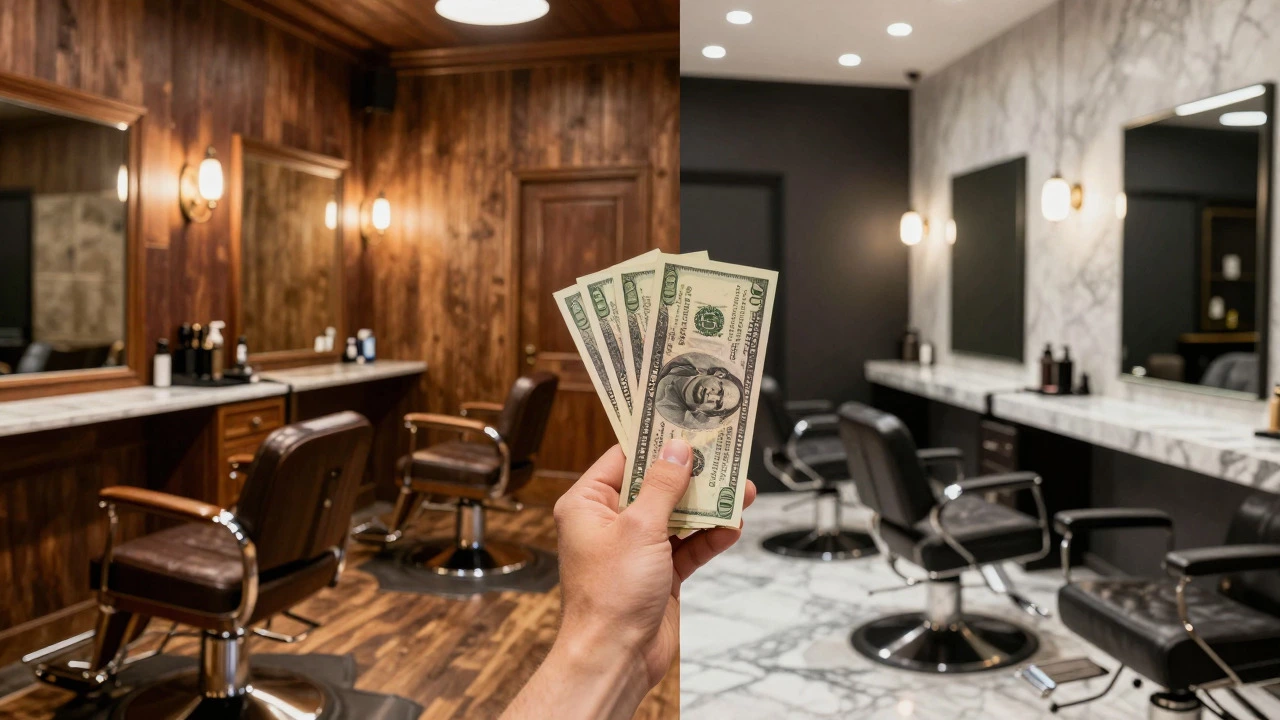
Yes, the setting changes the vibe, but not necessarily the math. Whether you walk into a high-end boutique salon or a neighborhood barbershop, the 15-20% rule holds true. However, cultural norms can vary slightly.
In traditional barbershops, especially those with a long-standing community presence, tipping might be viewed through a lens of regularity. If you see the same barber every month, consistency matters more than a single large tip. Leaving $5 on a $30 cut is perfectly acceptable here, provided the service was standard. In contrast, upscale salons may have higher overheads and expect closer to 20% as a baseline because the ambiance, products, and expertise are priced into the experience.
Also, consider the payment method. Some older barbershops prefer cash tips because they avoid credit card processing fees. Digital tipping via Square or other POS systems is now common, but remember that some platforms take a small percentage before the money hits the stylist’s account. Cash is king for ensuring 100% of your tip reaches the worker.
When to Tip More (or Less)
Not every haircut is created equal. Sometimes you get lucky; sometimes you don’t. Your tip should reflect the value you received.
Tip More When:
- It’s a complex cut: Texturizing, layering, or correcting a bad previous cut takes more skill and time.
- Holiday Season: During December, many clients add an extra 10-15% to help their stylists end the year strong. This is known as a "holiday bonus."
- You’re late or changed your mind: If you arrived late and they stayed past closing, or if you asked for multiple adjustments, show gratitude for their flexibility.
Tip Less (or Not At All) When:
- The service was poor: If you left unhappy, it’s okay to reduce the tip to 10% or even 0%. However, communicate this first. Tell the manager or the stylist directly. Silence can be interpreted as satisfaction.
- They were rude: Professionalism is part of the service. Disrespect warrants no tip.
Remember, tipping is a conversation starter. If you under-tip due to dissatisfaction, use it as feedback. If you over-tip due to delight, let them know why. It builds a better relationship for next time.
What About Online Booking Fees?
Many modern salons charge a small fee (often $1-$3) for online booking to prevent no-shows. This fee is usually non-refundable unless you cancel within a specific window. This fee is distinct from the tip. Pay the booking fee to secure your slot, then tip based on the service rendered. Don’t deduct the booking fee from your tip; they serve different purposes.
Regional Differences in Tipping Culture
While 15-20% is the national standard in the U.S., local economies influence expectations. In major metropolitan areas like New York City, San Francisco, or Los Angeles, 20% is increasingly seen as the minimum for good service. In smaller towns or rural areas, 15% might still be the norm due to lower cost of living. Always gauge the local atmosphere. If you’re unsure, asking a friend who lives nearby or checking recent reviews for mentions of service quality can guide your decision.
Practical Tips for Tipping Smoothly
Make tipping effortless so you don’t stress in the moment:
- Carry small bills: Keep a few $5 and $1 bills in your wallet specifically for tips. It avoids the awkwardness of waiting for change.
- Use digital wallets wisely: Apps like Apple Pay or Venmo allow you to send tips directly. Ensure you have the correct contact info beforehand.
- Leave a note: If you leave cash in a jar, write your name on the envelope or slip. Salons often split tips or track them for payroll, and anonymity can cause confusion.
- Round up generously: For a $30 cut, handing over a $10 bill and saying "keep the change" ($10 tip = 33%) is a fantastic way to reward exceptional service without calculating percentages.
Common Mistakes to Avoid
Even well-meaning clients make errors that can hurt relationships with their stylists.
Mistake 1: Tipping on the discounted price. If you used a coupon or Groupon that brought your $30 cut down to $20, tip based on the original retail price ($30), not the discounted amount. Stylists often receive a lower commission on discounted services, so tipping on the full value helps balance their income.
Mistake 2: Forgetting the shampooer. As mentioned earlier, assistants do hard physical work. Ignoring them can create tension in the salon.
Mistake 3: Tipping too early. Wait until the service is complete and you’ve seen the final result. If you tip before the blow-dry is finished, you lose leverage if something goes wrong during the styling phase.
Is it rude to tip only $5 on a $30 haircut?
No, it is not rude. $5 represents a 16.6% tip, which falls comfortably within the standard 15-20% range. It is considered a fair and acceptable tip for a standard service. If you want to be more generous, rounding up to $6 or $7 is also great.
Should I tip more if my stylist is the owner of the salon?
Traditionally, owners did not need tips because they owned the business. However, many modern stylists who own their shops still rely on tips to supplement their income, especially if they pay rent for their chair. It is always safe to tip the owner 15-20% unless they explicitly state otherwise. When in doubt, tip.
What if I hate my haircut? Should I still tip?
If the service was genuinely poor or the stylist was rude, you are not obligated to tip. However, it is best to speak to the manager or the stylist before leaving. Explain what went wrong. They may offer to fix it. If they do not resolve the issue, a reduced tip (e.g., 10%) or no tip is justified, but communication is key to avoiding misunderstandings.
Does the tip include sales tax?
Tips should be calculated on the pre-tax subtotal of the service. For example, if your haircut is $30 and tax is $2.50, base your tip on the $30. Tipping on the total including tax gives the stylist slightly more, which is fine, but it is not required.
Is cash better than digital tipping?
Cash is generally preferred by stylists because it is immediate and avoids processing fees charged by credit card companies or third-party apps. However, digital tipping is convenient and widely accepted. If you tip digitally, ensure the platform doesn't deduct a significant fee, or add a little extra to compensate.