
How Many Makeup Products Are There? A Real Count of What’s on the Market
 Feb, 15 2026
Makeup Product Count Calculator
How Many Makeup Products Exist?
Estimate the total number of unique makeup products using industry data from the article.
Estimated Product Count
Based on industry data540,000 unique makeup products
Industry Note: Actual count exceeds 700,000 when including limited editions and regional releases.
The beauty industry adds over 230 new products daily.
Think you know how many makeup products there are? You’ve probably used a dozen or so in your daily routine-lipstick, mascara, foundation, maybe a blush. But the real number? It’s way bigger than you think.
There’s no single answer, but here’s what’s actually out there
The beauty industry doesn’t keep one master list. No global registry tracks every lipstick shade or eyeliner pencil ever made. Instead, we’re looking at thousands of brands, each releasing new products every season. Estimating the total means breaking it down by category, then adding up what’s actually being sold today.
Let’s start with the basics. There are 11 core categories of makeup you’ll find in every major drugstore, department store, or online beauty shop. These aren’t just vague labels-they’re real, distinct product types with specific functions.
- Foundation (liquid, powder, cream, stick)
- Concealer (under-eye, full-coverage, color-correcting)
- Setting powder and spray
- Blush (powder, cream, gel)
- Bronzer and highlighter
- Eyebrow products (pencils, powders, gels, pomades)
- Eyeshadow (palettes, singles, cream, liquid)
- Eyeliner (pencil, liquid, gel, marker)
- Mascara (waterproof, volumizing, lengthening, colored)
- Lipstick (matte, glossy, liquid, stain, balm)
- Lip liner and gloss
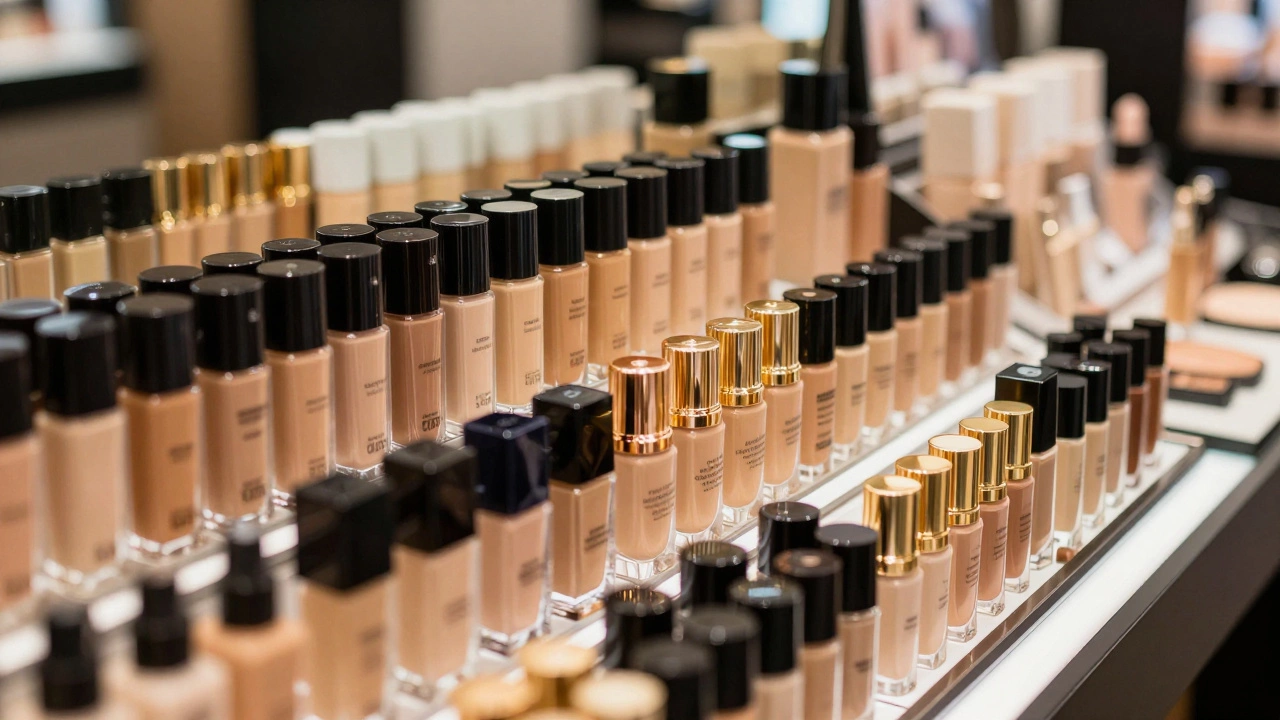
That’s 11 types. But each one has dozens of variations. Take foundation alone. You’ve got water-based, silicone-based, mineral, tinted moisturizer, BB cream, CC cream, DD cream, cushion compact, stick, and serum foundation. That’s 10 different forms of just one category.
Shades and formulas multiply the count
Here’s where the numbers explode. A single brand like Fenty Beauty launched with 50 foundation shades. By 2026, they’ve expanded to 65. MAC has over 100. Urban Decay offers 30+ in their Naked palettes alone. Multiply that across 100+ brands, and you’re talking tens of thousands of unique shades just for foundation and concealer.
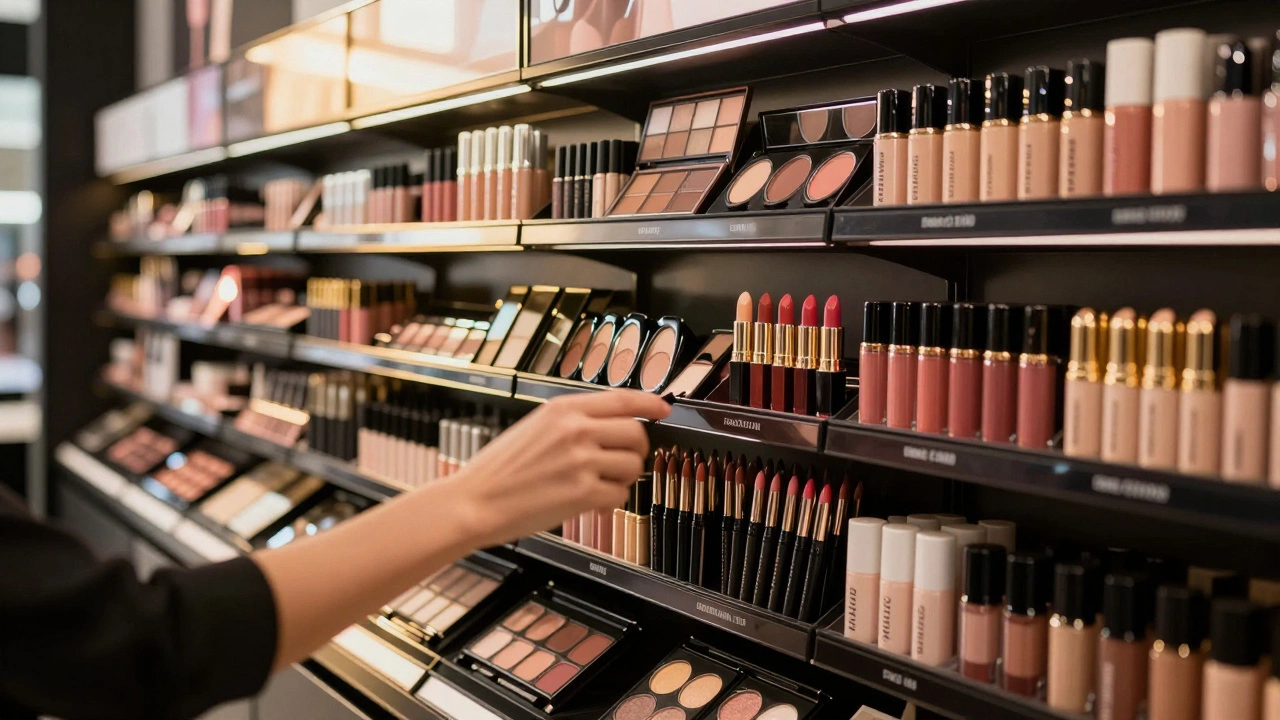
And that’s not even counting texture. A lipstick isn’t just one thing. There’s matte, satin, cream, metallic, sheer, long-wear, transfer-proof, hydrating, glitter-infused, and more. Each texture is treated like a separate product by retailers and consumers.
Some brands release limited editions every month. Think: holiday collections, celebrity collabs, seasonal palettes. In 2025, over 800 new lipstick shades hit shelves globally. That’s more than two new shades every day.
What about niche and specialty products?
Beyond the basics, there’s a whole world of specialized makeup you might not even think of as "makeup."
- Color correctors (green for redness, purple for sallowness, orange for dark circles)
- Makeup primers (pore-filling, hydrating, mattifying, illuminating)
- Setting sprays with skincare benefits (niacinamide, hyaluronic acid, SPF)
- Makeup for sensitive skin, acne-prone skin, or rosacea
- Waterproof makeup for swimming or sweating
- Makeup for men (grooming sticks, tinted moisturizers, brow pomades)
- Makeup for cosplay, drag, or special effects (cream-based, prosthetic-friendly, highly pigmented)
- Makeup for dark skin tones, deep brown skin, olive undertones
- Makeup for aging skin (light-diffusing, non-creasing, radiant finish)
- Makeup for medical conditions (camouflage for vitiligo, scarring, post-surgery)
These aren’t just variations-they’re entire product lines built around specific needs. Brands like Dermablend, Kryolan, and Kat Von D have entire ranges dedicated to these uses. And they’re not niche anymore. They’re mainstream.
How many products exist in total?
Let’s do a rough math.
There are about 1,200 active makeup brands globally. Not every brand makes all 11 core categories, but on average, each brand carries 18 distinct product types. That’s 21,600 product types.
Now, multiply that by average SKUs per type. A foundation line might have 40 shades. A mascara might come in 8 colors. An eyeshadow palette might have 12 shades. Even conservative estimates put the average number of variations per product type at 25.
21,600 × 25 = 540,000 unique SKUs.
That’s the number of individual products you can buy right now-different formulas, different shades, different packaging. And that’s just what’s on the shelves. Add in online exclusives, regional releases, and limited drops, and the real number likely exceeds 700,000.
And it’s growing. Every week, a new brand launches. Every month, a new shade drops. In 2025 alone, the global makeup market added over 12,000 new products. That’s 230 new items every single day.
Why does this matter?
It’s not just about quantity. It’s about choice-and overwhelm. The average person doesn’t need 20 different lipsticks. But the market keeps pushing innovation: longer wear, better pigmentation, skincare-infused formulas, inclusive shades.
What’s surprising is how much overlap there is. Two brands might have nearly identical products with different names. A "plumping gloss" from one brand is functionally the same as a "volume enhancer" from another. The differences are often in marketing, not performance.
At the same time, the rise of clean beauty, cruelty-free labels, and refillable packaging means some products are being redesigned, not just added. So while the total count climbs, the industry is also evolving.
What’s next?
Makeup is no longer just about covering up. It’s about customization, care, and confidence. Brands are using AI to match skin tones, 3D printing custom lipsticks, and developing biodegradable packaging. The number of products will keep rising-but the focus is shifting from more, to better.
If you’re trying to build a routine, you don’t need to own them all. But knowing how vast the landscape is helps you pick what actually works-for your skin, your style, and your life.
Are all makeup products considered cosmetics?
Yes, all makeup products fall under the broader category of cosmetics. According to the FDA, cosmetics are products intended to cleanse, beautify, promote attractiveness, or alter appearance. This includes lipstick, eyeliner, foundation, and even shampoo or deodorant. Makeup is a subset of cosmetics focused specifically on color and enhancement of facial features.
How many makeup products does the average person use daily?
Most people use between 4 and 8 makeup products daily. A typical routine includes foundation or tinted moisturizer, concealer, setting powder, mascara, eyeliner, brow product, blush, and lipstick or lip gloss. Some skip a few, others add primer, highlighter, or setting spray. It varies by lifestyle, skin type, and personal preference.
Do all makeup brands make every type of product?
No. Many brands specialize. Some focus only on lips-like Fenty Beauty’s lipstick line. Others focus on eyes, like Urban Decay’s eyeshadow palettes. Drugstore brands like Maybelline cover most categories, while indie brands often release just one or two products. Niche brands like Pat McGrath Labs or Rare Beauty may offer 10-15 items total, but each one is highly curated.
Is the number of makeup products increasing or decreasing?
It’s increasing rapidly. In 2020, there were roughly 450,000 unique makeup SKUs globally. By 2025, that number jumped to over 700,000. The rise of social media, influencer collaborations, and direct-to-consumer brands has fueled constant innovation. Even with sustainability trends pushing for fewer products, new launches far outpace discontinued ones.
What’s the most common type of makeup product?
Mascara is the most commonly owned and used makeup product worldwide. According to 2025 market data from Statista, over 85% of women globally own at least one mascara. Foundation and lipstick follow closely, but mascara consistently ranks as the #1 item in beauty bags across all age groups and regions.