
Beauty Products vs. Cosmetics: What's the Real Difference?
 Aug, 31 2026
Cosmetic vs. Beauty Product Classifier
Enter the name of a product or key ingredients found on the label to determine if it is primarily a cosmetic, a beauty/skincare product, a hybrid, or an OTC drug.
Result
CategoryPrimary Function
Regulatory Note (US)
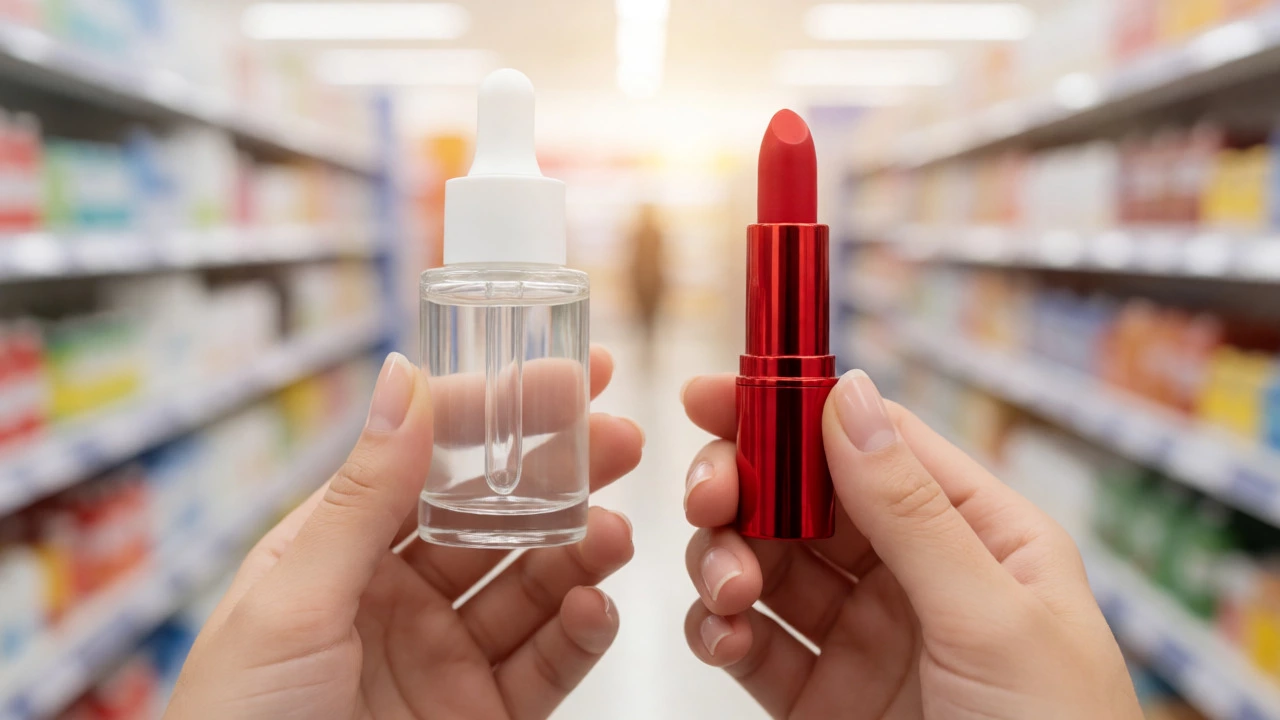
You’re standing in the aisle of a drugstore, holding a tube of moisturizer in one hand and a lipstick in the other. Your brain tries to categorize them both under "things I put on my face," but your intuition says they are different. One feels like health maintenance; the other feels like decoration. You aren’t imagining it. While we often use cosmetics and beauty products interchangeably in casual conversation, they represent two distinct categories with different goals, regulations, and chemical compositions. Understanding this split saves you money, clarifies your routine, and helps you read labels without needing a chemistry degree.
The confusion usually stems from marketing. Brands love to blur lines because it makes their entire shelf look cohesive. But if you want to build a routine that actually works, you need to know which bottle is doing medical or hygienic work and which one is just adding color or scent. Here is how to tell them apart, why the distinction matters for your skin barrier, and how to shop smarter by knowing exactly what you are buying.
The Core Distinction: Function Over Form
At its simplest level, the difference comes down to intent. Cosmetics are primarily designed to alter appearance. They clean, perfume, change the look of, or protect the human body. Think mascara, foundation, eyeshadow, and nail polish. Their job is aesthetic enhancement. If you wash it off, you return to your natural state, perhaps slightly improved by conditioning agents, but the primary goal was visual change.
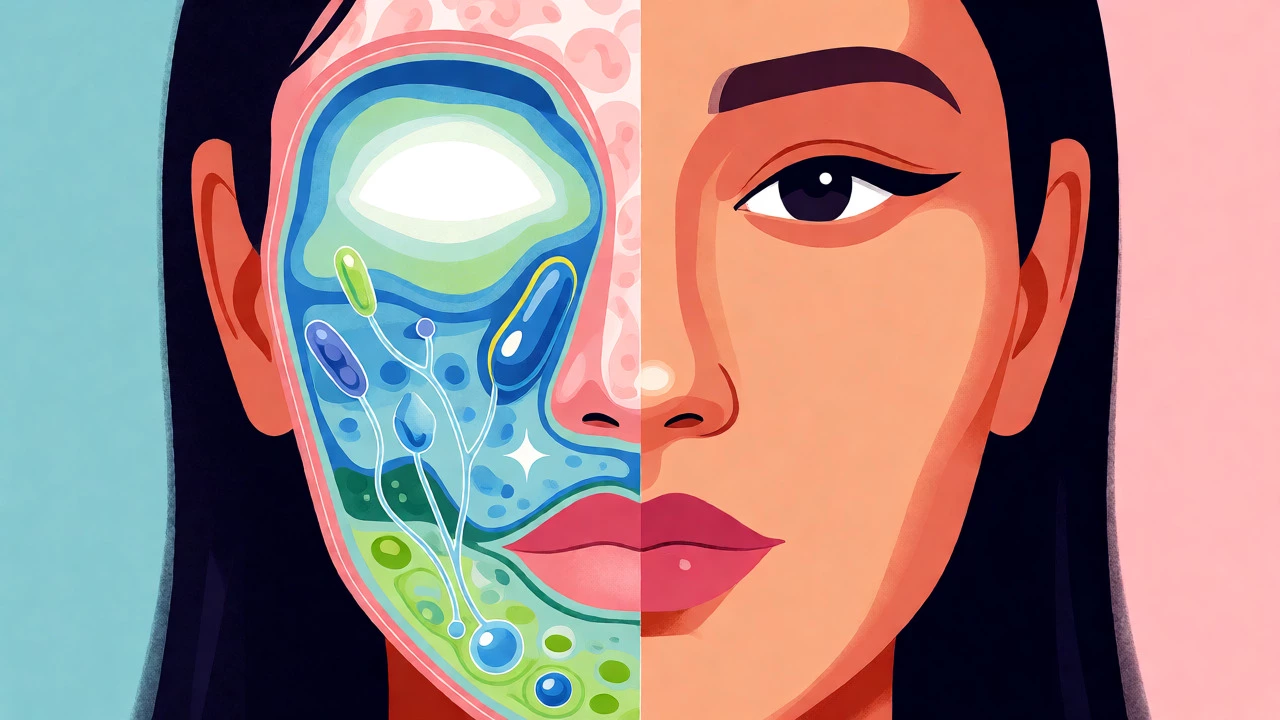
Beauty products, particularly those falling under the umbrella of skincare, focus on maintaining or improving the condition of the skin, hair, or nails. This includes serums, moisturizers, cleansers, and treatments. These products aim to penetrate the skin barrier, hydrate tissues, reduce inflammation, or stimulate collagen. You don’t wear a vitamin C serum for the color; you wear it because it changes the biology of your skin cells over time.
This isn’t just semantics. The US Food and Drug Administration (FDA) and similar bodies globally regulate these differently. A cosmetic claim might be "makes lips look fuller." A beauty product claim might be "reduces fine lines by 15% in 4 weeks." The latter requires more rigorous substantiation because it implies a physiological change, not just an optical illusion.
Decoding the Ingredient Lists
If you flip the bottle over, the ingredients list tells the real story. Cosmetics rely heavily on pigments, binders, and preservatives that keep colors stable. You will see terms like Iron Oxides, Titanium Dioxide (when used as pigment), Mica, and various synthetic dyes. These are inert materials meant to sit on top of the skin. They rarely interact deeply with living tissue.
Beauty products, especially active skincare, feature functional ingredients. Look for Hyaluronic Acid, Niacinamide, Retinol, Salicylic Acid, or Peptides. These are bioactive compounds. They are formulated at specific pH levels and concentrations to ensure they can penetrate the stratum corneum (the outermost layer of skin). When you buy a serum, you are paying for delivery systems-like liposomes or encapsulation-that help these actives reach where they need to go. Cosmetics generally lack this sophisticated delivery architecture because they don’t need it.
Consider a tinted moisturizer. It sits in the gray area. It contains hydrating ingredients (beauty function) and pigments (cosmetic function). However, if the concentration of actives is too low to provide measurable skin benefits, it is legally and practically a cosmetic with added hydration. Always check the order of ingredients. In cosmetics, pigments often appear higher up. In beauty products, water and humectants dominate the top spots.
Regulatory Lines and Safety Standards
It’s worth noting that regulatory definitions vary by country, which can be frustrating if you travel or shop internationally. In the United States, the FDA defines cosmetics broadly to include anything applied to the body to cleanse, beautify, promote attractiveness, or alter appearance. Interestingly, soap is technically excluded from the cosmetic definition unless it claims to moisturize or deodorize, pushing it into a separate regulatory bucket. Sunscreen, however, is classified as an over-the-counter drug in the US because it prevents disease (sunburn/skin cancer), yet many people lump it in with daily moisturizers.
In the European Union, the regulation is stricter. Any product claiming to treat a skin condition (like acne treatment) may fall under medicinal products rather than cosmetics. This means an EU-labeled "acne cream" might have different testing requirements than a US-labeled "blemish control lotion." For consumers, this means a product labeled as a "treatment" in one region might just be a "makeup primer" in another. Always read the specific claims on the packaging, not just the category name.
When the Lines Blur: Hybrid Products
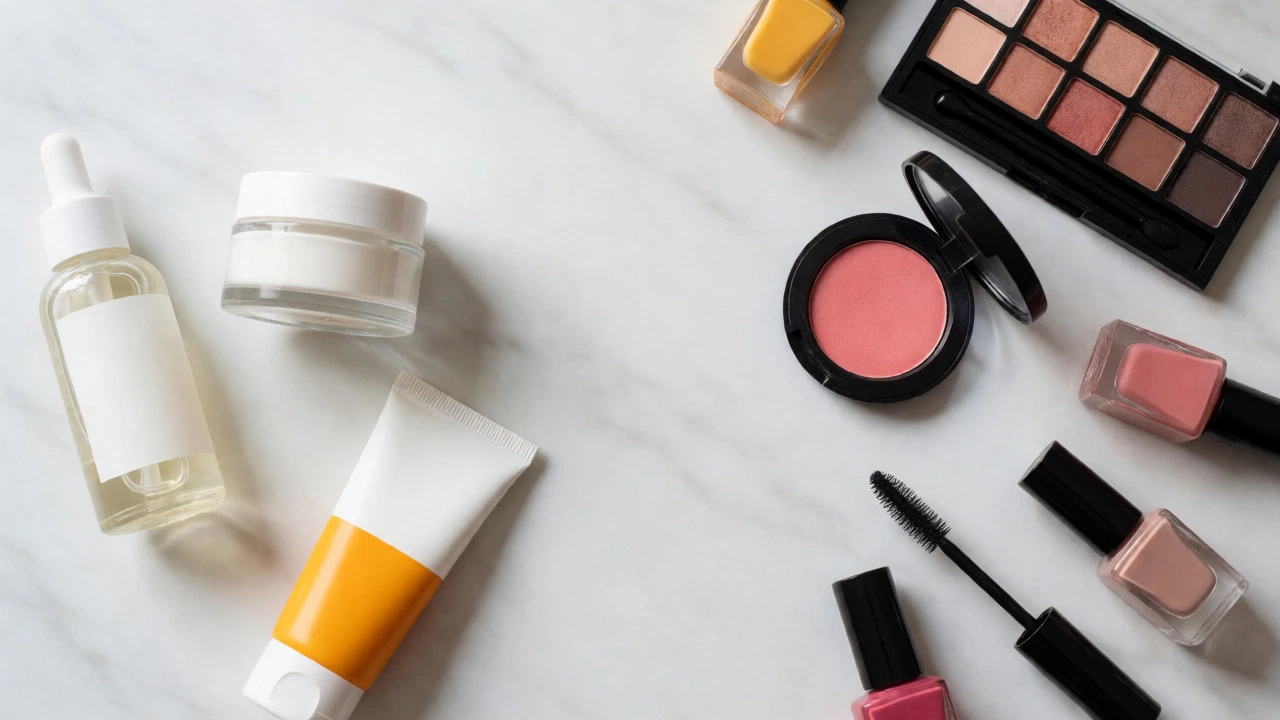
The market has exploded with hybrid products, often called "skin-makeup hybrids." These are designed to offer the immediate visual gratification of cosmetics with the long-term benefits of beauty products. BB creams, CC creams, and tinted sunscreens are prime examples. They contain SPF (a protective beauty benefit) and coverage (a cosmetic benefit).
Are these better? Not necessarily. Often, you pay a premium for the convenience of skipping steps. A dedicated sunscreen (beauty product) applied generously provides better protection than a foundation with SPF 30 (cosmetic) applied thinly. Similarly, a dedicated retinol night cream (beauty) will likely outperform a day cream with trace amounts of retinol mixed with heavy pigments (hybrid). If you have specific skin concerns-like hyperpigmentation or severe dryness-dedicated beauty products usually deliver stronger results. Hybrids are excellent for busy mornings or minimalists who want a quick fix.
| Feature | Cosmetics | Beauty Products (Skincare) |
|---|---|---|
| Primary Goal | Alter appearance, add color, mask imperfections. | Improve skin health, texture, and long-term condition. |
| Key Ingredients | Pigments, mica, talc, waxes, oils. | Acids, antioxidants, peptides, ceramides, vitamins. |
| Skin Interaction | Mostly sits on the surface; occlusive. | Penetrates layers; interacts with cells. |
| Duration of Effect | Immediate but temporary (washes off). | Cumulative and lasting (requires consistency). |
| Examples | Lipstick, Eyeliner, Blush, Nail Polish. | Serums, Moisturizers, Cleansers, Toners. |
How to Build a Routine Using Both
Now that you know the difference, how do you use them together? Most effective routines follow a logical order based on product density and absorption needs. You start with the most lightweight, penetrative beauty products and end with the heavier, protective cosmetics.
- Step 1: Cleanse (Beauty Product). Remove dirt and oil. This prepares the canvas.
- Step 2: Treat (Beauty Product). Apply serums or essences with active ingredients like Vitamin C or Niacinamide. Let these absorb fully.
- Step 3: Moisturize (Beauty Product). Lock in hydration. This strengthens the skin barrier.
- Step 4: Protect (Beauty Product/Hybrid). Apply sunscreen. This is non-negotiable for skin health.
- Step 5: Enhance (Cosmetic). Apply foundation, concealer, or blush. These sit on top of the prepared skin.
A common mistake is applying thick cosmetics before thin beauty products. If you put foundation on first, then try to rub in a serum, you’ll just smear your makeup and prevent the serum from absorbing. Order matters because cosmetics form a barrier. Once that barrier is set, few things can get through it effectively.
Why Mislabeling Hurts Your Wallet
Marketing teams know that "beauty" sounds scientific and trustworthy, while "cosmetic" sounds superficial. So, brands often label basic moisturizers as "anti-aging treatments" even if they only contain glycerin and water. Conversely, some high-end makeup brands charge luxury prices for simple pigments because they package them in sleek glass bottles.
To avoid getting ripped off, ignore the front-of-packaging hype. Turn the box around. If you are buying a "wrinkle eraser" cream, does it list Retinol or Bakuchiol? If no, it’s just a moisturizer. If you are buying a "glow-enhancing powder," does it contain light-reflecting particles like Mica? Yes? Then it’s a cosmetic doing its job well. Don’t expect a bronzer to tighten your pores. Don’t expect a basic cleanser to erase dark spots. Align your expectations with the product’s actual classification.
Special Cases: Hair and Body
The distinction extends beyond the face. Shampoo is technically a cosmetic because its primary role is cleansing and perfuming. However, shampoos with ketoconazole for dandruff are often regulated as drugs or therapeutic beauty products. Conditioners are cosmetics that improve manageability and appearance, while hair masks with protein structures can repair damage, leaning toward beauty/treatment products.
For body care, lotions are beauty products focused on hydration. Self-tanners are cosmetics that stain the top layer of skin temporarily. Deodorants are cosmetics that mask odor, while antiperspirants are often considered OTC drugs because they physically block sweat glands. Knowing this helps you troubleshoot issues. If your deodorant isn’t working, switching to a stronger fragrance won’t help-you might need an antiperspirant (drug) or a clinical strength formula.
Final Thoughts on Shopping Smarter
You don’t need to choose between beauty products and cosmetics. You need both. Cosmetics give you confidence today; beauty products invest in your future self. The key is awareness. Stop looking for a single "magic potion" that does everything. Accept that your lipstick won’t cure your eczema, and your night cream won’t cover your dark circles. By separating these roles in your mind, you stop wasting money on ineffective hybrids and start building a regimen that respects the science of your skin.
Next time you shop, pause before the checkout. Ask yourself: Am I trying to change how I look right now, or am I trying to change how my skin behaves tomorrow? The answer determines whether you should head to the makeup counter or the skincare aisle. And sometimes, that’s all the clarity you need.
Is sunscreen a cosmetic or a beauty product?
In the United States, sunscreen is classified as an over-the-counter (OTC) drug because it prevents sunburn and reduces the risk of skin cancer. However, in many other countries, it is regulated as a cosmetic. Regardless of legal classification, functionally it acts as a protective beauty product essential for long-term skin health, distinct from purely decorative cosmetics.
Can makeup cause acne?
Yes, certain cosmetics can clog pores, leading to breakouts. This is often referred to as "cosmetic acne." Ingredients like coconut oil, cocoa butter, or certain heavy waxes can be comedogenic (pore-clogging). To minimize this, look for products labeled "non-comedogenic" or "oil-free," which are formulated to be less likely to cause acne.
Do I need both a moisturizer and a foundation?
Generally, yes. A moisturizer is a beauty product that hydrates and protects the skin barrier, which is crucial for skin health. Foundation is a cosmetic that evens out skin tone and covers imperfections. While some foundations contain hydrating ingredients, they rarely provide enough moisture to replace a dedicated moisturizer, especially for dry skin types.
What is the difference between skincare and cosmetics?
Skincare refers to beauty products designed to maintain or improve the condition of the skin, such as cleansers, toners, and serums. Cosmetics are products used to enhance or alter physical appearance, such as makeup, nail polish, and perfumes. Skincare focuses on biological health and long-term improvement, while cosmetics focus on immediate aesthetic enhancement.
Are expensive beauty products always better?
Not necessarily. Price often reflects branding, packaging, and marketing rather than ingredient quality. Many affordable pharmacy brands use the same active ingredients (like Niacinamide or Hyaluronic Acid) as luxury brands. Focus on the ingredient list and formulation stability rather than the price tag when choosing effective beauty products.