
Are serums really necessary for your skincare routine?
 Dec, 22 2025
Skincare Serum Selector
Find Your Perfect Serum
Answer a few questions to get personalized serum recommendations based on your skin type and concerns.
You’ve seen them in every skincare ad: sleek glass bottles, fancy ingredients, prices that make you blink. Serums promise to fix everything-fine lines, dullness, breakouts, redness. But here’s the real question: are serums actually necessary, or are they just expensive hype?
What even is a serum?
A serum is a lightweight, concentrated skincare product designed to deliver active ingredients deep into your skin. Unlike creams and lotions, which sit mostly on the surface to hydrate and protect, serums have smaller molecules that can penetrate further. They’re packed with things like vitamin C, hyaluronic acid, retinol, niacinamide, or peptides-ingredients meant to target specific concerns.
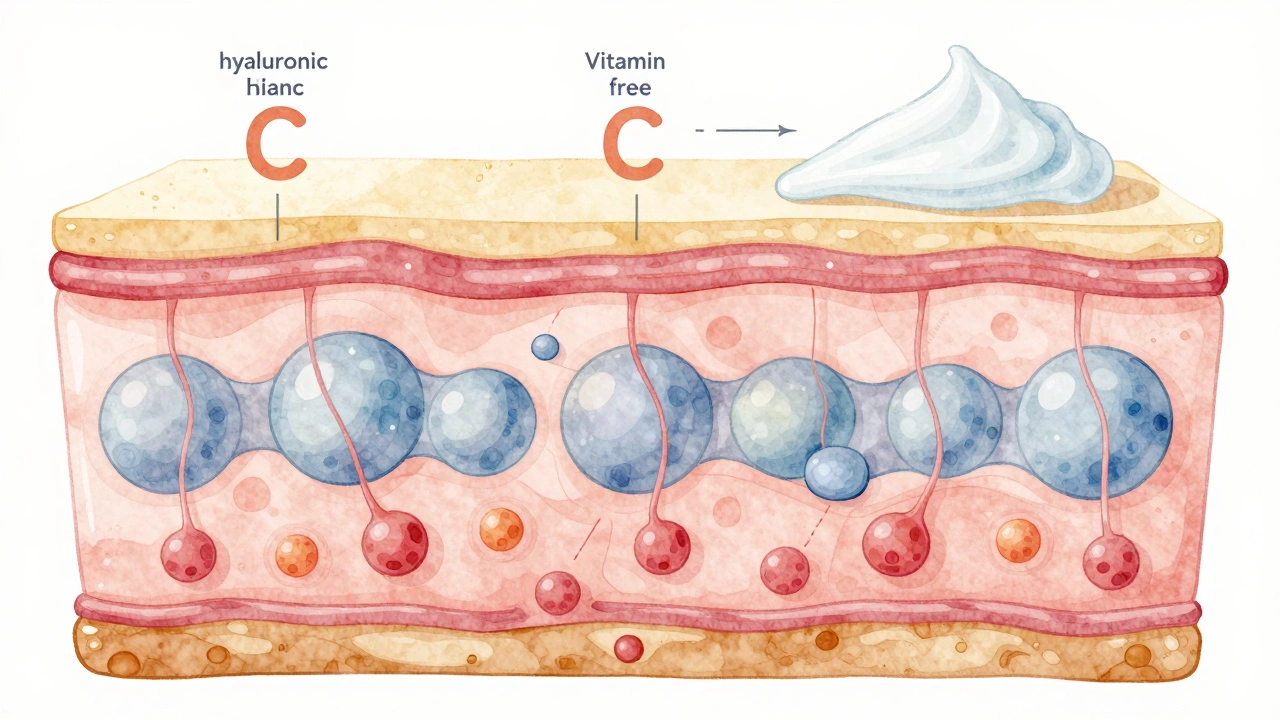
Think of your skin like a layered cake. Moisturizers are the frosting-they seal everything in. Serums are the filling-they’re where the real action happens. If you’re trying to brighten dark spots, boost collagen, or calm inflammation, a serum is often the most efficient way to get those ingredients where they need to go.
Do you need one if your skin is fine?
If your skin feels good, looks even, and doesn’t bother you, you might not need a serum. Simple routines work for a lot of people. Cleanse, moisturize, sunscreen-that’s it. Many people in their 20s and early 30s with healthy skin get by perfectly well without serums.
But here’s the catch: skin changes. As you age, your natural production of collagen, hyaluronic acid, and cell turnover slows down. Environmental stressors-sun, pollution, stress-add up. What worked at 25 might not cut it at 35. That’s when targeted ingredients start making a difference.
A 2023 study in the Journal of Clinical and Aesthetic Dermatology showed that participants using a daily vitamin C serum for 12 weeks saw a 34% reduction in hyperpigmentation and improved skin texture compared to those using only moisturizer. That’s not magic. That’s science.
What serums actually do
Not all serums are created equal. Their job depends on what’s inside:
- Hyaluronic acid: Holds up to 1,000 times its weight in water. Gives skin that plump, dewy look without oiliness.
- Vitamin C: Fights free radicals, fades dark spots, and boosts collagen. Best used in the morning under sunscreen.
- Retinol: The gold standard for anti-aging. Speeds up cell turnover, smooths fine lines, unclogs pores. Use at night-can irritate if overdone.
- Niacinamide: Calms redness, minimizes pores, balances oil. Works for acne-prone and sensitive skin.
- Peptides: Signal skin to produce more collagen. Gentle, effective for mature skin.
These aren’t filler ingredients. They’re clinically proven to change skin at a cellular level. If you’re not using a serum and you’re struggling with persistent dullness, uneven tone, or early signs of aging, you’re missing out on targeted treatment.
The myth of "more is better"
Just because you can layer five serums doesn’t mean you should. Overloading your skin leads to irritation, breakouts, and wasted money. Most people only need one or two serums, max.
For example: if you’re dealing with dark spots and dullness, a vitamin C serum in the morning is enough. At night, if you’re seeing fine lines, a low-dose retinol serum does the job. You don’t need both at the same time. In fact, mixing them can make your skin sensitive.
And don’t fall for the "10-step Korean routine" pressure. That’s not a rule-it’s a trend. Real results come from consistency, not complexity.
When serums aren’t worth it
There are times when skipping serums makes sense:
- You have very sensitive skin and react to everything. Start with a gentle moisturizer and sunscreen first.
- Your budget is tight. A good moisturizer and daily SPF do more for your skin than three expensive serums.
- You’re using outdated or poorly formulated serums. Some brands charge $80 for a serum with 0.1% of the active ingredient. That’s not science-it’s marketing.
Check the ingredient list. If the active ingredient is buried near the bottom (after water, alcohol, fragrance), it’s probably not strong enough to matter. Look for serums where the key ingredient is one of the first five ingredients.
Real-world example: Two women, two routines
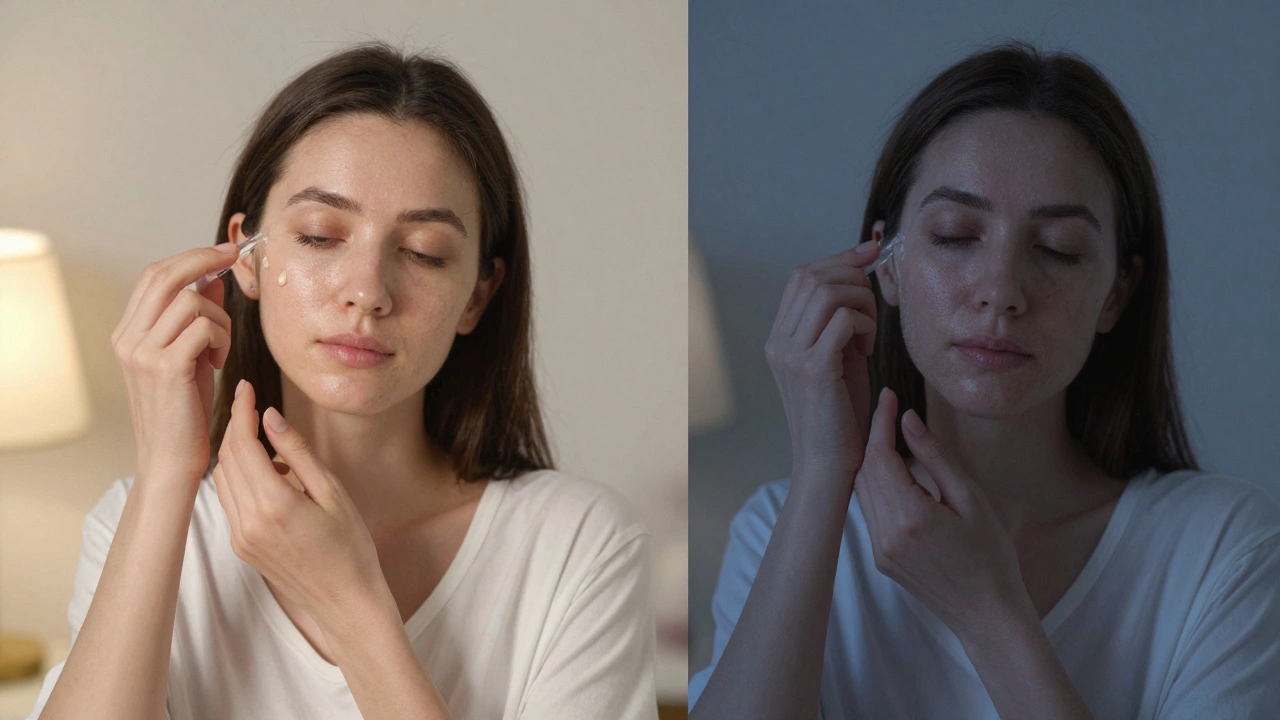
Meet Sarah, 28. She has oily skin and occasional breakouts. Her routine: cleanser, niacinamide serum, moisturizer, SPF. Within six weeks, her pores looked smaller, her skin was less shiny, and her breakouts dropped by 70%.
Now, Maria, 42. She’s noticed fine lines around her eyes and dullness. Her routine: cleanser, vitamin C serum in the morning, retinol serum at night, moisturizer. After four months, her skin looked brighter, her texture improved, and her makeup applied smoother.
Both women skipped serums for years. Both saw noticeable changes once they added one. Neither needed five.
How to pick the right serum
Start by asking yourself: what’s your biggest skin concern?
- Dullness or dark spots? Try vitamin C.
- Dryness or dehydration? Go for hyaluronic acid.
- Breakouts or enlarged pores? Niacinamide is your friend.
- Wrinkles or loss of firmness? Retinol or peptides.
Then, pick one. Start slow. Use it every other night (or morning, if it’s vitamin C) to see how your skin reacts. Wait at least four weeks before deciding if it’s working. Skin doesn’t change overnight.
And always follow with moisturizer. Serums are potent, but they don’t hydrate or protect. Moisturizer seals them in. Sunscreen in the morning? Non-negotiable.
The bottom line
Serums aren’t mandatory. But they’re not just luxury either. They’re precision tools. If you have a specific skin goal-brighter tone, smoother texture, fewer breakouts, fewer fine lines-a well-chosen serum can get you there faster than a basic moisturizer ever could.
Think of it like this: you don’t need a power drill to hang a picture. But if you’re building a bookshelf? It makes the job easier, cleaner, and more effective.
If your skin is happy and you’re not chasing big changes? Keep it simple. But if you’ve been wondering why your skin isn’t improving, even with good moisturizers? A serum might be the missing piece.
Start with one. Be patient. Stick with it. And skip the 10-step routine. Less is often more.
Do I need a serum if I already use a moisturizer?
You don’t *need* a serum if your moisturizer is working for you-but serums do something moisturizers can’t. Moisturizers hydrate and protect the skin’s surface. Serums deliver concentrated active ingredients deeper into the skin to target concerns like dark spots, fine lines, or acne. Think of moisturizer as the foundation and serum as the upgrade. You can use both.
Can I use a serum every day?
Most serums can be used daily, but it depends on the ingredient. Hyaluronic acid and niacinamide are gentle enough for morning and night. Retinol and strong vitamin C can irritate skin if used too often. Start with every other night and build up. Always listen to your skin-if it stings or flakes, cut back.
Are expensive serums better than cheap ones?
Not always. Price doesn’t guarantee effectiveness. What matters is the concentration and stability of the active ingredient. A $15 niacinamide serum with 10% niacinamide as the second ingredient can outperform a $120 serum with 0.5% of the same ingredient buried under fragrances and fillers. Always check the ingredient list, not the label.
Can serums cause breakouts?
Yes, sometimes. If a serum contains irritating ingredients, heavy oils, or alcohol, it can trigger breakouts-especially in sensitive or acne-prone skin. Retinol and strong acids can also cause purging (temporary worsening) before improvement. If you get a breakout right after starting a serum, wait two weeks. If it doesn’t improve, stop using it.
Should I use serum in the morning or at night?
It depends on the ingredient. Vitamin C and niacinamide work best in the morning to protect against pollution and UV damage. Retinol, AHAs, and BHAs should go on at night because they make skin more sensitive to sunlight. Always follow with sunscreen in the morning, no matter what serum you use.
How long does it take to see results from a serum?
Most people start noticing changes after 4 to 6 weeks. Collagen-boosting ingredients like retinol and peptides take longer-up to 12 weeks. Don’t expect overnight miracles. Skincare is a long game. Consistency beats intensity every time.
If you’re unsure where to start, pick one concern and one serum. Stick with it. Your skin will thank you.