
Are Organic Products Really 100% Chemical-Free? The Truth About Skincare
 Nov, 23 2026
Skincare Label Decoder
Don't trust the front of the bottle. Use this tool to analyze common skincare claims and ingredient lists to see what they actually mean for your skin.
Claim Analysis
Ingredient Insight
You’ve probably seen the label: "100% Chemical-Free." It sounds perfect, right? No harsh synthetics, no hidden toxins, just pure nature in a jar. But here is the kicker: that claim is scientifically impossible. In fact, it’s a marketing trick designed to make you feel safer while buying something more expensive.
Water is a chemical. Oxygen is a chemical. Your skin cells are made of chemicals. If a product were truly free of chemicals, it would be nothing-just empty space. So, when brands say their organic skincare is chemical-free, they aren’t talking about science. They’re talking about perception. They mean the product doesn't contain synthetic chemicals or man-made additives. But even that distinction gets messy fast.
The Big Lie Behind "Chemical-Free" Labels
Let’s break down why this term exists if it makes no sense. For decades, the word "chemical" has been demonized in pop culture. We hear "chemicals" and think of pesticides, plasticizers, or lab-created compounds with unpronounceable names. Meanwhile, we hear "natural" and think of flowers, fruits, and safety.
This binary thinking ignores reality. Arsenic is natural. Cyanide comes from apple seeds. Both are toxic. Conversely, many synthetic compounds are safe and highly effective. The problem isn’t whether an ingredient is natural or synthetic; it’s whether it’s safe for your specific skin type at the concentration used.
When a brand claims to be chemical-free, they are usually trying to signal one of two things:
- No Synthetic Fragrances: They use essential oils instead of parfum.
- No Petrochemicals: They avoid mineral oil, petrolatum, or silicones derived from petroleum.
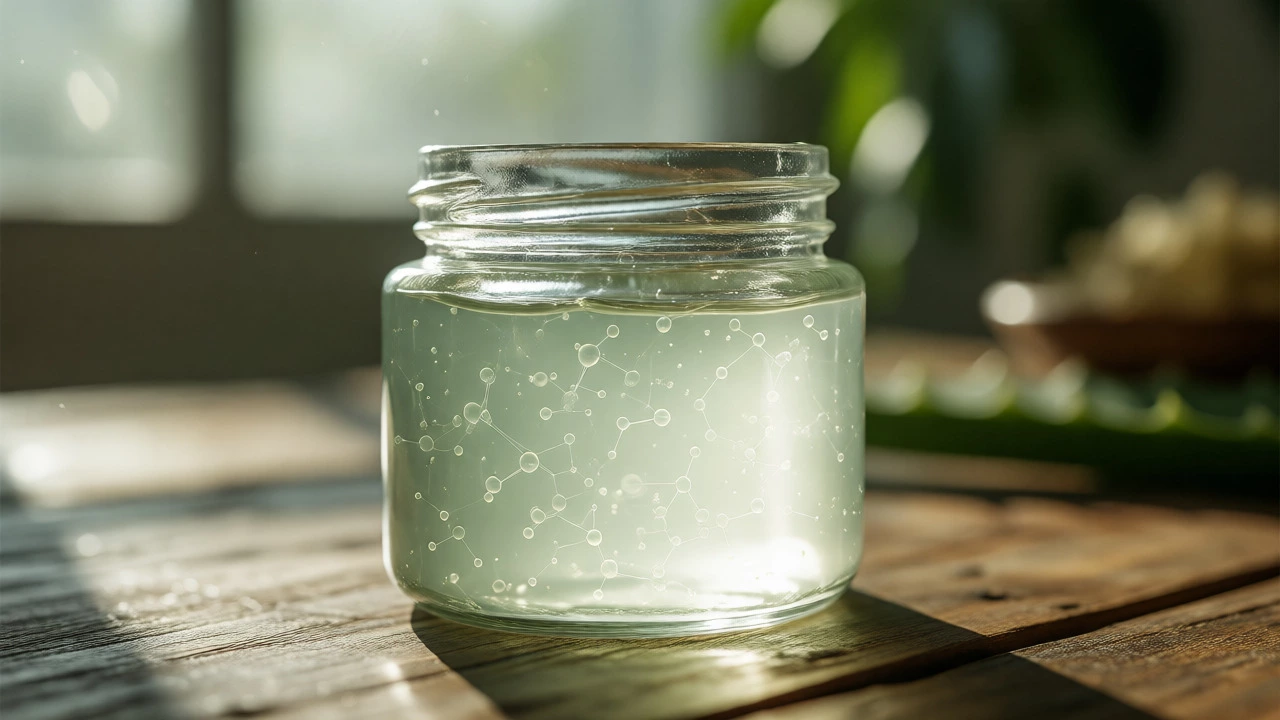
But even these products contain hundreds of chemicals. A simple organic aloe vera gel contains water (H₂O), polysaccharides, vitamins, enzymes, and minerals. All of these are chemicals. The label is misleading because it suggests that anything not listed as a "chemical" is inherently good, which simply isn’t true.
What Does "Organic" Actually Mean?
If "chemical-free" is a myth, what does "organic" actually guarantee? This depends entirely on where you live and who certifies the product. In the United States, the USDA National Organic Program (NOP) sets strict standards. In the EU, similar regulations exist under EC Regulation 834/2007.
To carry the official USDA Organic seal, a product must meet rigorous criteria:
- 95%+ Organic Ingredients: By weight (excluding water and salt), the agricultural ingredients must be certified organic.
- No Prohibited Substances: The crops cannot be treated with synthetic fertilizers, sewage sludge, irradiation, or genetic engineering (GMOs).
- Processing Standards: Any non-agricultural ingredients (like preservatives) must be approved by the NOP list. There are only a handful of allowed synthetic preservatives, such as tocopherols (Vitamin E) and certain salts.
Notice that the standard allows some synthetic substances. It doesn’t ban all synthetics. It bans specific ones deemed harmful or environmentally damaging. This means an "organic" face cream might still contain a tiny amount of a synthetic emulsifier to keep the oil and water mixed. That emulsifier is a chemical. Therefore, the product is not chemical-free, but it is compliant with organic standards.
| Claim | Regulated Definition | What It Actually Means | Risk Level |
|---|---|---|---|
| Chemical-Free | None (Marketing term) | No added synthetic fragrances or petrochemicals. | High (Misleading) |
| Natural | Vague (No universal standard) | Ingredients are plant-derived, but may include processed derivatives. | Medium |
| USDA Organic | Strict Federal Standard | 95%+ certified organic agricultural ingredients; limited approved synthetics. | Low |
| Cosmos Organic | International Standard | Similar to USDA but includes stricter processing rules for cosmetics. | Low |
The Danger of Essential Oils in Organic Skincare
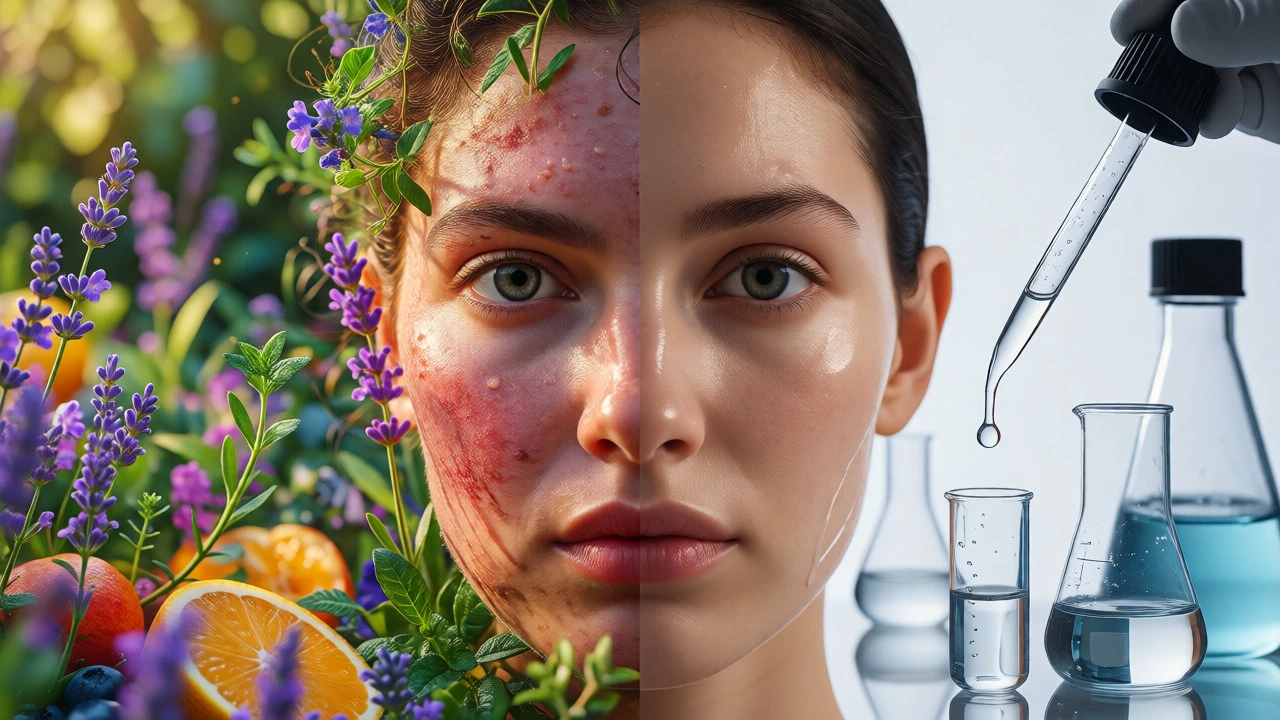
Here is where many consumers get burned. They switch to organic skincare to avoid irritation, assuming natural equals gentle. Then they develop redness, itching, or contact dermatitis. Why?
Because essential oils are potent chemical mixtures. Lavender, tea tree, and citrus oils contain terpenes and aldehydes. These are volatile organic compounds (VOCs). While they smell amazing, they are known allergens for many people. In fact, studies show that fragrance sensitivity is one of the most common causes of cosmetic contact dermatitis.
A synthetic fragrance molecule can be engineered to remove the allergenic parts. A natural lavender oil contains linalool and limonene, which oxidize over time. When they oxidize, they become more likely to cause reactions. So, a "chemical-free" organic serum might actually be more irritating than a well-formulated synthetic one.
If you have sensitive skin, look for products labeled "fragrance-free" rather than just "organic." Note that "unscented" is different from "fragrance-free." Unscented products often use masking agents to hide the smell of base ingredients, which can still be irritating.
Preservatives: The Unsung Heroes
One of the biggest fears in the clean beauty movement is parabens. Many organic brands boast "Paraben-Free." But what do they use instead?
Water-based products need preservatives. Without them, bacteria, mold, and yeast grow rapidly. You don’t want to put moldy cream on your face. Natural preservation systems often rely on:
- Phenoxyethanol: Often combined with ethylhexylglycerin. It is widely considered safe but is technically synthetic.
- Potassium Sorbate & Sodium Benzoate: Food-grade preservatives that work best in acidic environments.
- Radish Root Ferment: A newer alternative that mimics natural antimicrobial peptides.
Some ultra-natural brands skip preservatives entirely. These products are usually anhydrous (waterless), like solid oils or balms. If a product contains water and says "no preservatives," check the expiration date carefully. It likely expires in weeks, not years. Using expired skincare can lead to breakouts and infections.
The irony? Some natural preservatives are less stable than synthetic ones. This forces manufacturers to use higher concentrations, which can increase the risk of irritation. It’s a trade-off between shelf life and purity.
How to Read an Ingredient List Like a Pro
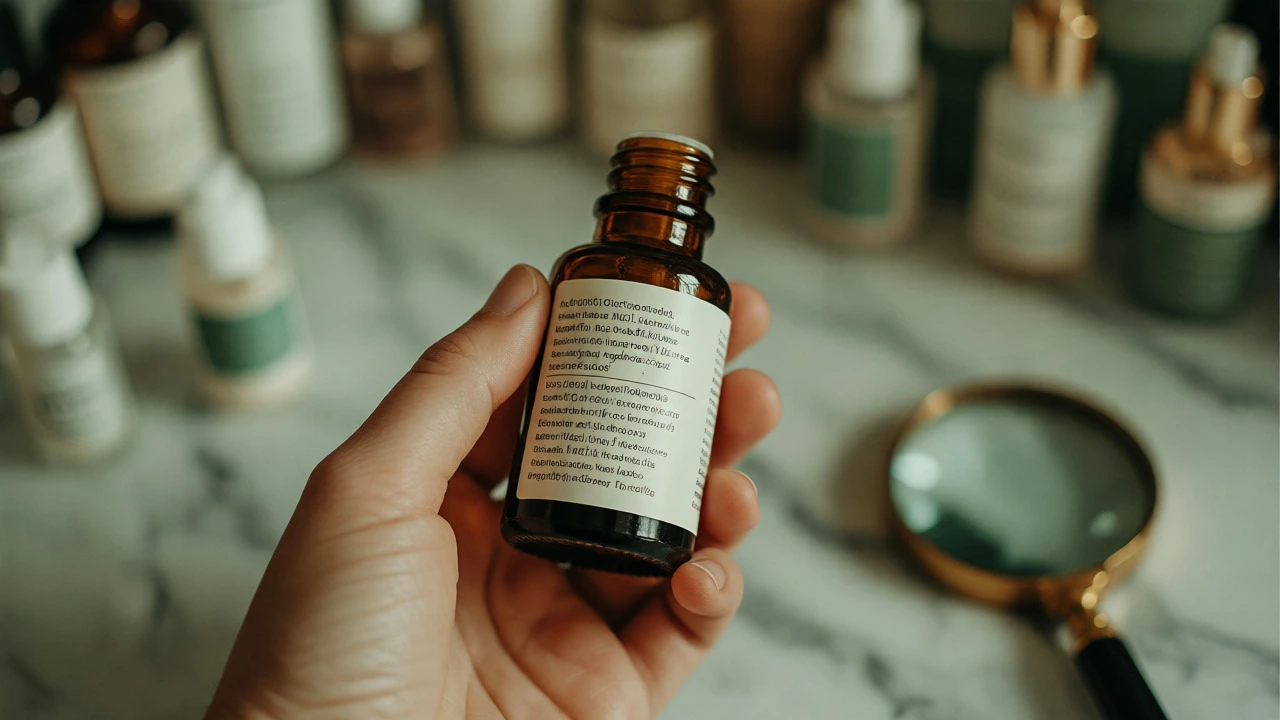
Don’t trust the front of the bottle. Trust the back. The International Nomenclature of Cosmetic Ingredients (INCI) system requires brands to list ingredients in descending order of concentration. The first five ingredients usually make up 80-90% of the formula.
Here’s how to spot greenwashing:
- Look for Botanical Extracts Low on the List: If "Aloe Barbadensis Leaf Juice" is the last ingredient, it’s mostly water and thickeners. The "organic" benefit is negligible.
- Check for "Fragrance" or "Parfum": Even in organic products, this term can hide dozens of undisclosed compounds. If it’s high on the list, proceed with caution.
- Identify Certified Organic Marks: Look for asterisks (*) next to ingredients. These indicate certified organic status. If you see *Aqua, *Aloe Barbadensis, etc., it confirms the source.
Remember, a long ingredient list isn’t bad. Complex formulas often perform better. A short list isn’t automatically better either. Simplicity can mean poor stability or efficacy.
When Organic Makes Sense (And When It Doesn’t)
So, should you ditch all synthetic skincare? Not necessarily. Here is a practical framework for deciding when to go organic:
Go Organic If:
- You are pregnant or nursing and want to minimize exposure to endocrine disruptors like phthalates and certain parabens.
- You prioritize environmental sustainability. Organic farming reduces pesticide runoff and supports soil health.
- You prefer plant-based antioxidants like Vitamin C from Kakadu Plum over synthetic Ascorbic Acid, provided the formulation is stable.
Stick With Synthetics If:
- You need proven anti-aging results. Retinoids (like Tretinoin) are synthetic and gold-standard for collagen production. No natural ingredient matches their potency yet.
- You have severe acne. Benzoyl Peroxide and Salicylic Acid (even if naturally derived, often synthesized for purity) are highly effective.
- You have extremely reactive skin. Well-tolerated synthetic ceramides and hyaluronic acid are often safer bets than complex botanical blends.
The goal isn’t purity for purity’s sake. The goal is healthy skin. Sometimes, a lab-created molecule does that job better than a crushed leaf.
Troubleshooting Common Organic Skincare Issues
If you’ve recently switched to organic products and your skin is acting up, here is what might be happening:
Problem: Breakouts after switching.
Solution: Give it 4-6 weeks. Your skin barrier needs time to adjust. However, if you see pustules, you might be reacting to a heavy plant oil like coconut or olive oil, which are comedogenic for some. Switch to lighter oils like jojoba or squalane.
Problem: Product feels greasy or separates.
Solution: Natural emulsifiers are weaker than synthetic ones. Shake the bottle before use. Store it in a cool, dark place. Heat breaks down natural formulations faster.
Problem: Strong scent causes headaches.
Solution: Essential oils are powerful. Dilution matters. Try a product with fewer botanical actives or choose a fragrance-free line within the organic category.
Is everything natural safe for my skin?
No. Poison ivy is natural, but it causes rashes. Lemon juice is natural, but its low pH can damage your skin barrier and cause phytophotodermatitis when exposed to sun. Safety depends on chemistry, concentration, and individual sensitivity, not origin.
Why do organic products expire faster?
Many synthetic preservatives are highly stable and broad-spectrum. Natural alternatives may degrade faster or require stricter storage conditions (cool, dark places). Additionally, plant extracts contain enzymes that can continue to react over time, altering the product's texture and scent.
Does "organic" mean the product is vegan?
Not necessarily. Organic refers to how plants were grown. Vegan means no animal-derived ingredients. An organic honey mask is organic but not vegan. Always check for both labels if these factors matter to you.
Can I mix organic and conventional skincare?
Yes. Layering is common. Many people use a conventional sunscreen (for reliable UV protection) over an organic moisturizer. Just ensure the formulations are compatible so they don't pill or separate on your skin.
Are parabens really dangerous?
Current scientific consensus says parabens are safe for most people in the concentrations used in cosmetics. Concerns arose from studies showing weak estrogenic activity, but subsequent research found the effect is minimal compared to natural hormones. Avoiding them is a personal preference, not a medical necessity.